
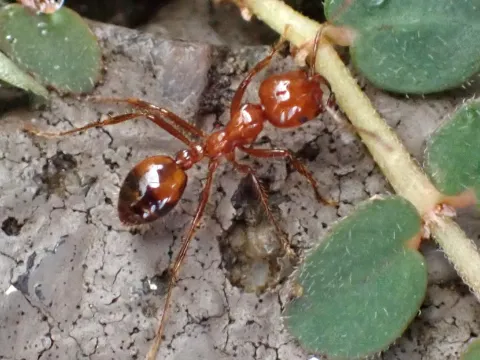
Tropical fire ant
Solenopsis saevissima
The tropical fire ant is a species belonging to the Hymenoptera order and Formicidae family. Adult workers typically exhibit a reddish-brown color, which is a key identification feature for this pest species.
What the section contains
Tropical fire ant
This species is known for its polymorphic workers, meaning individuals within the same colony vary significantly in size. They possess a potent stinger on the abdomen capable of injecting a toxin that causes painful reactions.
Nests are constructed as loose mounds of soil in open areas. These colonies are highly resilient, often featuring multiple queens, which allows the population to recover quickly after disturbances.
Field identification can be challenging due to their similarity to other Solenopsis species. However, their highly aggressive behavior when a nest is disturbed serves as a reliable indicator of their presence.
To confirm the species identity, specialists examine morphological characteristics such as the propodeum and antennae under a microscope. Their organized defense mechanism makes them easily distinguishable from non-aggressive native ant species.
Tropical fire ants cause severe damage to agricultural crops by feeding on seedling tissues and roots. This activity often leads to poor stand establishment and reduced overall crop vigor.
A primary form of damage is the mutualistic relationship they maintain with sucking insects, particularly aphids and scale insects. By protecting these pests from natural enemies, fire ants accelerate the spread of viral and fungal plant diseases.
They can also damage root systems by tunneling through the soil directly around the plant base. This disrupts the plant's ability to absorb water and essential nutrients, leading to wilting and stunted growth.
Seed predation is a significant concern for large-scale farming. Ants frequently collect seeds from the soil surface and transport them to their mounds, resulting in substantial losses during the planting season.
The aggressive nature of the ants poses a significant safety risk to agricultural workers. The pain and swelling caused by their stings often hinder field maintenance, weeding, and harvesting activities.
The activity level of the tropical fire ant is highly dependent on soil temperature and moisture levels. They are most active and proliferate rapidly during warm, humid conditions.
In tropical and subtropical environments, their activity can be year-round, but peaks are often observed following periods of rain. Optimal development occurs between 25 and 35 degrees Celsius.
During extreme heat or prolonged drought, these ants retreat deep into the soil profile to find more stable temperatures. Once conditions improve, they quickly resume surface activity.
Daily activity cycles typically see workers foraging in the early morning and late evening to avoid the intense midday sun. This behavior helps them maintain proper moisture levels within the colony.
The establishment of new colonies is often linked to the nuptial flights of winged queens, which frequently occur at the onset of rainy seasons, leading to rapid expansion across agricultural lands.
The presence of characteristic soil mounds in open fields is the most visible sign of an infestation. These mounds tend to grow in size as the colony matures over time.
An unexpected increase in aphid populations on crops, often accompanied by soot mold growth on leaves, indicates active ant maintenance of these sap-sucking pests.
Sparse crop stands or bare patches in the field where seedlings have been destroyed or seeds have been removed are clear indicators of subterranean damage.
Plants showing symptoms of nutrient deficiency or inexplicable wilting often have nests at their roots. Digging around the base of such plants will reveal ant tunnels and galleries.
Immediate and aggressive swarming behavior by the ants when a surveyor or worker enters the field is a definitive warning sign of a heavy fire ant presence.
Effective management requires an integrated approach using bait-based insecticides. These baits allow workers to carry the toxin back to the queen, effectively eliminating the entire colony.
Mechanical control, such as frequent tilling and cultivation of fields, can disrupt nest structures and discourage new colony establishment. This is most effective when performed systematically.
Biological control agents, including specialized parasitic flies, are being studied and utilized to reduce ant populations naturally. These agents help keep the numbers below the economic injury level.
Monitoring the boundaries of fields and neighboring areas is crucial for early detection. Promptly treating small mounds prevents the spread of the infestation to the entire crop area.
- Slow-acting bait insecticides
- Regular soil cultivation
- Biological control measures
- Constant field monitoring