
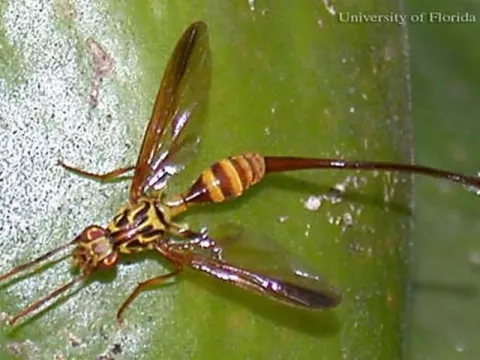
Papaya fruit fly
Toxotrypana
The papaya fruit fly Toxotrypana curvicauda is a significant pest belonging to the Tephritidae family. It is easily recognized by its wasp-like appearance, characterized by yellow and black markings and a long ovipositor.
What the section contains
Papaya fruit fly
Adult flies have transparent wings with a distinct brown pattern. The female's ovipositor is exceptionally long, adapted specifically for piercing the thick skin of papaya fruits to lay eggs deep inside.
The larvae are typically cream-colored, legless, and reach about 10–15 mm in length. They are the primary damaging stage, consuming the internal parts of the fruit as they develop.
The insect thrives in tropical and subtropical climates, where generations can overlap. The life cycle consists of egg, larval, pupal, and adult stages, with pupation occurring in the soil.
Environmental factors like humidity and temperature regulate the fly's activity. Understanding these patterns is essential for predicting the timing of pest control interventions.
Papaya is the primary host for this pest. The female fly drills through the fruit's skin, which allows larvae to feed on the developing seeds and the surrounding pulp.
As the larvae grow, they tunnel through the fruit, causing tissue destruction. This damage promotes rapid decay and secondary infections by fungi and bacteria.
Infested fruits often show signs of premature ripening or yellowing, followed by premature fruit drop. This leads to substantial economic loss for growers, as fruits become unmarketable.
Severe infestations can result in the loss of the entire harvest on a tree. In many cases, internal damage remains hidden until the fruit is opened or starts to liquefy.
Other host plants may exist, but the economic impact is most pronounced in commercial papaya orchards, where high density of hosts facilitates rapid pest reproduction.
The most reliable sign of an infestation is the presence of small puncture marks on the skin of the fruit, which are made by the female's ovipositor during egg-laying.
Another early indicator is the premature drop of green or ripening fruits. If these fruits are examined, they often reveal the presence of larvae inside the flesh.
Internal examination of suspected fruits often shows tunnels and brown, rotting areas caused by larval feeding and associated microbial activity.
Adult flies can be observed resting on leaves or fruits, especially during the early morning hours. Monitoring traps are frequently used to confirm their presence before symptoms appear.
Rapid yellowing of the fruit stem or the fruit itself without clear external mechanical injury is often a sign of internal larval damage.
Strict sanitation is the foundation of management. All dropped and infested fruits should be collected and destroyed immediately to prevent larvae from exiting and pupating in the soil.
Chemical control focuses on targeting adults using insecticides. Applications must be timed carefully to reach the flies before they oviposit in the fruit.
The use of synthetic pheromone traps or food-based attractants helps in monitoring and reducing the population of adult flies within the orchard.
Physical protection, such as bagging individual fruits with protective covers, creates an effective barrier that prevents the female from accessing the fruit surface.
Biological control options, including the use of parasitic wasps that attack the fly larvae or pupae, can be integrated into the management plan to provide a sustainable long-term solution.