
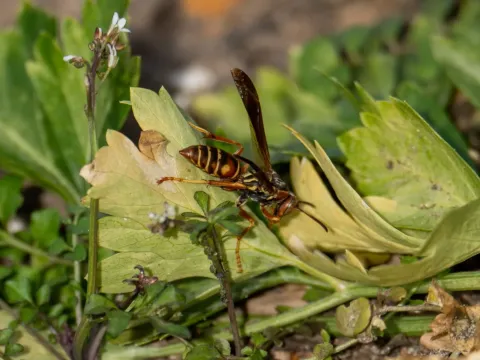
Paper wasp
Polistes fuscatus
The paper wasp (Polistes fuscatus) is a social insect belonging to the family Vespidae. They are well-known for constructing nests from wood fibers mixed with saliva, which creates a paper-like material.
What the section contains
Paper wasp
Adult paper wasps are generally slender, measuring between 15 and 20 mm in length. Their coloration ranges from dark brown to black with yellow or reddish markings, and they lack the bright, vivid yellow-and-black stripes of the common yellowjacket.
A distinctive feature of these wasps is their nest structure: they build open, umbrella-shaped combs that lack a protective paper envelope, making the larvae clearly visible from the bottom.
The colony cycle begins in the spring when a single queen emerges from hibernation to start a new nest. Throughout the summer, the population grows as workers take over tasks like foraging and nest maintenance.
While generally less aggressive than other wasp species, they will defend their nests vigorously if disturbed, so caution is advised when working near hedge rows or eaves.
Paper wasps primarily cause economic damage by feeding on ripening fruits and berries. They chew through the skin of the fruit, allowing them to extract the sugar-rich pulp inside.
Vineyards are particularly susceptible to paper wasp damage. Their activity can lead to significant yield losses and compromise the marketability of table grapes due to the open wounds on the berries.
Beyond grapes, these insects frequently attack stone fruits like peaches and plums, as well as berries like raspberries. Once the skin is broken, the fruit is prone to rapid decay and fungal infections.
The presence of damaged fruit often serves as a secondary attraction for other pests, such as fruit flies, beetles, and ants, creating a more complex pest control issue for the orchardist.
While paper wasps are technically beneficial predators that consume other insect larvae in the garden, their direct damage to fruit crops often necessitates intervention in late summer.
The activity cycle of the paper wasp begins in early spring, typically April or May, as queens emerge to select nesting sites and begin the foundation of their colony.
June and July mark the expansion phase of the nest. During this time, the number of workers increases significantly, and their foraging range expands across the garden and orchard areas.
Late summer, specifically August and September, represents the period of highest risk for growers. During these months, wasps are highly active in searching for sugar sources to sustain the colony.
As temperatures drop in late autumn, the worker population declines. The new queens leave the nest to find protected overwintering sites, such as tree bark or gaps in structures.
Understanding this seasonal progression allows gardeners to implement preventative measures before the fruits reach peak maturity.
Early season scouting for nests is the most effective management strategy. Locating and removing small nests in the spring prevents the establishment of larger colonies.
For high-value crops like grapes, individual bagging of fruit clusters is the most effective and eco-friendly method to completely exclude wasps from the fruit.
Homemade or commercial traps containing sweet lures, such as fermented fruit juice or sugar water, can be deployed around the perimeter of the orchard to intercept foraging wasps.
Chemical control should be reserved for nests found in structures rather than those in trees, to avoid chemical residues on consumable agricultural produce.
- Clear away all overripe or fallen fruit from the orchard floor immediately.
- Use protective netting over trees to physically block access to fruit.
- Seal cracks and crevices in sheds and structures to reduce potential nesting sites.