
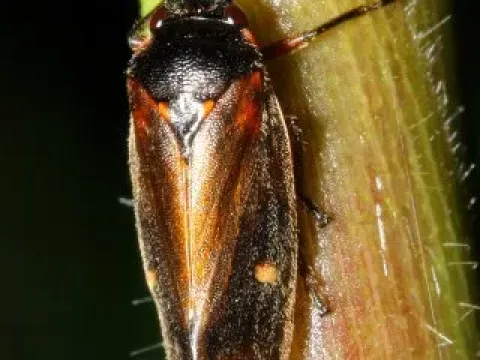
Tomaspis indicata
Tomaspis indicata
Tomaspis indicata is a species of spittlebug belonging to the order Hemiptera and the family Cercopidae. Adult insects are characterized by their sturdy, compact bodies and specialized mouthparts adapted for piercing and sucking plant sap.
What the section contains
Tomaspis indicata
The nymphal stage is the most distinctive for identification purposes, as these insects produce a thick, white foam. This "spittle" mass encases the nymph, protecting it from desiccation, ultraviolet radiation, and predation throughout its development.
Adults possess strong jumping legs, enabling them to move rapidly between host plants. Their coloration often serves as effective camouflage against the green tissues of their hosts, making them elusive during initial infestations.
Systematically, this species is categorized within the superfamily Cercopoidea. Their development involves an incomplete metamorphosis, where nymphs undergo several instars before reaching the adult winged stage.
In a field setting, experts identify the presence of these pests by examining the morphology of the spittle masses and, when necessary, performing morphological analysis on adult genitalia to confirm the species among other similar Cercopidae.
Tomaspis indicata primarily targets grass species, including rice and sugarcane. It can also thrive on various wild grasses, which act as alternate hosts during periods when primary crops are not available.
Both nymphs and adults contribute to crop damage. By inserting their stylets into the plant's vascular tissue, they extract essential sap, which deprives the plant of nutrients and water required for normal growth and development.
The removal of sap leads to severe physiological stress. As the plant loses vital nutrients, photosynthesis rates decline, leading to reduced vigor and, in severe cases, plant death or total crop failure.
Furthermore, the feeding sites often become entry points for secondary infections by fungi and bacteria. These infections can cause lesions and tissue rot, further complicating the impact on the agricultural yield.
- Chlorosis and yellowing of the leaves.
- Stunting and abnormal growth patterns.
- Leaf wilting, particularly in younger, more tender tissues.
- Reduced sugar content in stems (in the case of sugarcane).
- Lower overall grain quality and harvest volume.
The life cycle of Tomaspis indicata is highly synchronized with the seasonal availability of its host plants. Activity typically begins in the early growing season when temperatures rise and humidity remains favorable.
Depending on the climatic zone, the pest may complete multiple generations per year. Warm, humid environments significantly accelerate the nymphal development period, leading to potential population explosions.
The peak of infestation usually correlates with the active vegetative stage of crops. High humidity levels are particularly beneficial for nymph survival, as they rely on moisture to maintain their protective foam.
As the season shifts towards autumn or cooler conditions, the insects prepare for dormancy. Eggs are deposited in soil debris or at the base of plants, ensuring survival through the winter or adverse weather conditions.
Understanding this seasonal progression is critical for agricultural planning. Farmers must time their field monitoring and intervention efforts to match the most vulnerable stages of the insect's life cycle.
The most recognizable sign of an infestation is the presence of frothy, white spittle masses on the stems, leaf axils, or crown areas of the plants. These masses are most visible during the cool, early morning hours.
Heavily infested plants often exhibit widespread yellowing or "browning" of the foliage. This discoloration is a direct result of the insect's continuous feeding and the resulting disruption of the plant’s nutrient transport.
When walking through a field, one might observe a sudden flurry of activity as adults jump away from the disturbed plants. This jumping behavior, combined with the presence of foam, confirms the presence of the pest.
Stunting is another key indicator. Field crops affected by these insects often appear uneven in height and maturity compared to healthy sections of the field, highlighting the pest's impact on development.
Upon closer inspection of the plant tissues, one may find small necrotic spots or lesions. These represent the localized damage caused by the insect's probing, which often persists long after the insect has moved on.
Managing Tomaspis indicata requires an Integrated Pest Management (IPM) approach. Regular scouting for spittle masses is the foundation of an effective control strategy, allowing for early detection.
Cultural practices are essential for long-term control. Techniques such as deep plowing after harvest, crop rotation, and rigorous weed control eliminate potential breeding grounds and nesting sites for overwintering eggs.
Chemical control should be applied strategically when scouting reveals populations above the economic threshold. Systemic insecticides are generally preferred as they travel through the plant's vascular system, reaching the pests even within their protective foam.
Biological control agents, such as specific entomopathogenic fungi or predatory insects, offer a sustainable alternative. Encouraging natural predator populations can provide significant suppression of spittlebug numbers.
It is important to ensure proper coverage when using insecticides. Because the nymphs are often well-protected by their foam, applying treatments at the right time—usually when nymphs are young or early in the season—is critical for maximum effectiveness.