
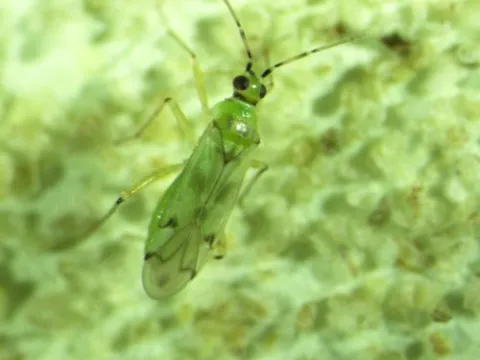
Tomato bug
Cyrtopeltis crassicornis
The tomato bug (Cyrtopeltis crassicornis) is a small insect belonging to the family Miridae (plant bugs). Adult bugs are typically 3–4 mm long, with a slender, light green body that blends perfectly with tomato foliage.
What the section contains
Tomato bug
They possess elongated antennae and legs, which are distinctive features of this species. The adults are capable of flight and are often found in greenhouses or sheltered garden areas.
Nymphs resemble the adults in color and shape but lack fully developed wings. They are extremely difficult to spot due to their size and camouflage, usually staying on the undersides of leaves.
The lifecycle is rapid, especially in warm, protected environments, allowing the bug to complete multiple generations within a single growing season.
Regular scouting is essential, as these bugs tend to hide in leaf axils and crevices where they are protected from direct exposure.
Tomato bugs primarily attack Solanaceous crops, with tomatoes being their preferred host. They may also infest peppers, eggplants, and various weeds in the same botanical family.
These insects are piercing-sucking feeders. They insert their mouthparts into the plant tissue to extract sap, which deprives the plant of necessary nutrients and reduces its overall vigor.
A major impact of their activity is the abortion of flowers and fruit set, which significantly lowers the harvestable yield if left uncontrolled.
The feeding sites often result in the development of chlorotic or necrotic spots on the leaves, leading to yellowing and premature leaf drop in severe cases.
The growth of the plant is stunted because the bug feeds not only on mature leaves but also on developing apical shoots and floral structures.
Early symptoms include tiny, pale stippling or pinprick-like marks on the leaves, which are the result of the bug's probing and feeding activities.
Curling, twisting, or deformation of young leaves and shoots is a clear sign that the tomato bug population is reaching damaging levels.
Evidence of infestation is often visible as small black fecal droplets found on the underside of leaves and stems where the insects congregate.
Widespread flower drop and the shriveling of buds are significant indicators that the pest is actively feeding on the reproductive parts of the plant.
Plants may show reduced growth rates and an overall unhealthy appearance, leading to poor fruit development and lower quality of the final produce.
Integrated Pest Management (IPM) is the most effective approach. This starts with excellent sanitation, including the removal of weeds that can host the bugs during the off-season.
Biological control is highly successful in greenhouse settings; predatory mirids such as Macrolophus pygmaeus are effective natural enemies that keep tomato bug populations in check.
If chemical intervention is necessary, select insecticides that are labeled for tomato production and prioritize those that are least harmful to beneficial insects.
- Monitor the crop frequently using yellow sticky traps to detect early arrival.
- Ensure greenhouse environments are clean and free of leftover debris from previous crops.
- Avoid over-fertilization, as succulent growth can attract and support higher bug populations.
Rotation of chemical classes is vital to ensure that the pest does not develop resistance, keeping control measures sustainable and long-term effective.