
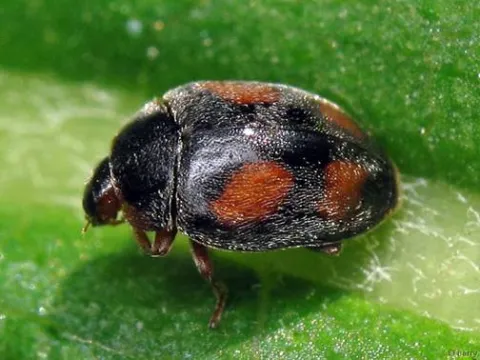
Scymnus pumilio
Scymnus pumilio
Scymnus pumilio is a species of minute lady beetle belonging to the family Coccinellidae and the order Coleoptera, recognized for its role as a natural predator.
What the section contains
Scymnus pumilio
These beetles are characterized by their extremely small size, usually measuring between 2 and 3 millimeters in length, with a compact, oval body shape.
The larvae are typically covered in waxy secretions, which act as a form of camouflage, allowing them to move undetected within colonies of prey insects.
Taxonomically, they are part of the diverse group of coccinellids, which are globally known for their positive contribution to plant protection.
Distinguishing this species requires entomological expertise and a magnifying lens, as they are easily overlooked due to their diminutive stature.
It is critical to clarify that Scymnus pumilio is not a plant pest; rather, it is a highly beneficial predator that aids in the control of harmful insect populations.
This beetle specifically targets sap-sucking pests, including various species of aphids, mealybugs, and scale insects that damage agricultural crops.
There is no evidence that this species causes harm to crops; it does not feed on leaf tissue, stems, or fruit, making it an ally of the professional grower.
In many agricultural landscapes, these beetles serve as a vital component of the natural ecosystem, providing essential services in pest suppression.
Farmers often mistakenly treat them as pests, leading to the use of unnecessary chemicals that destroy these beneficial populations and trigger pest outbreaks.
The activity of Scymnus pumilio typically begins in the early spring, coinciding with the rise in temperatures and the emergence of early-season aphid colonies.
Peak population density usually occurs during the height of the growing season, particularly when prey abundance is highest, supporting rapid reproduction.
In greenhouse environments, these beetles can remain active throughout the year, provided there is a constant supply of food and suitable climate conditions.
As temperatures drop in autumn, adults seek shelter for diapause, commonly hiding in bark crevices or among debris in the soil.
The life cycle encompasses multiple developmental stages, with the duration of each phase heavily dependent on ambient temperature and prey availability.
The most visible sign of Scymnus pumilio presence is the gradual decline in aphid or mealybug populations within a specific crop area.
Careful observation of infested leaves may reveal the predatory larvae feeding on prey, often appearing as small, waxy-coated creatures among the pests.
If you observe natural pest control in progress without the application of insecticides, it is a strong indicator that predatory beetles are at work.
During warm, sunny days, adult beetles can sometimes be seen moving actively across the surfaces of foliage in search of prey.
The absence of typical plant damage, despite the presence of sap-sucking pests in the past, often suggests successful regulation by these natural enemies.
Conservation of Scymnus pumilio is a key element of Integrated Pest Management (IPM), as they provide a cost-effective and sustainable solution for pest control.
The primary measure for protecting this species is to minimize the use of broad-spectrum insecticides that are highly toxic to beneficial insects.
Implementing a diverse landscape with flowering plants can provide necessary nectar resources and refuge for these beetles throughout the season.
When chemical control for other pests is absolutely necessary, select products that are classified as safe or low-impact on beneficial coccinellid populations.
- Maintain field margins to provide overwintering sites for beneficials.
- Adopt threshold-based spraying to avoid unnecessary pesticide exposure.
- Encourage biodiversity to support stable predator-prey dynamics.