
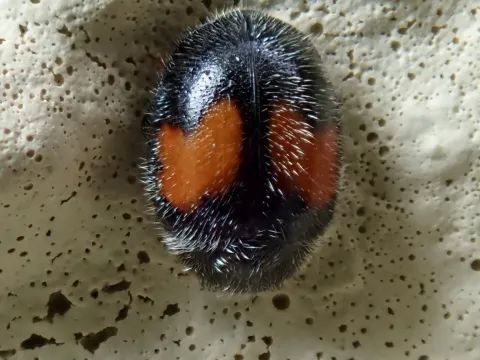
Scymnus notescens
Scymnus notescens
Scymnus notescens is a member of the ladybird beetle family (Coccinellidae) in the order Coleoptera. It is widely recognized not as a plant pest, but as a beneficial predator that plays a crucial role in regulating aphid populations.
What the section contains
Scymnus notescens
The adult beetle is very small, typically reaching only a few millimeters in length. Its body shape is generally round or oval, often dark in color, sometimes displaying subtle patterns on the elytra.
The larvae are distinct in their appearance and are often covered with white, waxy secretions. This physical trait provides a form of protective mimicry, causing them to resemble mealybugs.
Identification often requires a specialist's examination, as the Scymnus genus contains many species with similar morphological characteristics that are difficult to distinguish in the field.
Understanding that this insect is a natural enemy of plant pests is essential for any agricultural management strategy, as it helps in avoiding unnecessary chemical treatments.
Scymnus notescens does not damage plants. On the contrary, it provides valuable ecosystem services by actively hunting aphids, scale insects, and other soft-bodied pests that damage agricultural crops.
Both the larvae and the adult beetles possess mouthparts adapted for predation. They actively search for colonies of aphids on leaves, stems, and fruits, significantly reducing the pest load.
In many cropping systems, the presence of these beetles is a positive indicator of a healthy and balanced agroecosystem capable of self-regulating pest levels.
They are particularly effective in protected cultivation and orchards where they can suppress aphid outbreaks before they reach economic injury levels.
By consuming harmful pests, they reduce the necessity for synthetic chemical intervention, thereby contributing to sustainable agricultural practices and healthier crop yields.
Conservation of Scymnus notescens is the primary goal of any control strategy. Farmers should avoid broad-spectrum insecticides that would inadvertently destroy this beneficial predator.
The implementation of Integrated Pest Management (IPM) programs is strongly recommended, focusing on the use of selective insecticides that spare predatory coccinellids.
Creating refuges and maintaining flower strips within or around agricultural fields provides necessary shelter and supplemental food sources like nectar for adult beetles.
Reduced tillage practices can help protect overwintering sites, ensuring that populations of these beneficial insects are sustained from one season to the next.
Farmers should monitor the fields not just for pest presence, but also for the presence of natural enemies like Scymnus notescens to make informed decisions about intervention.