
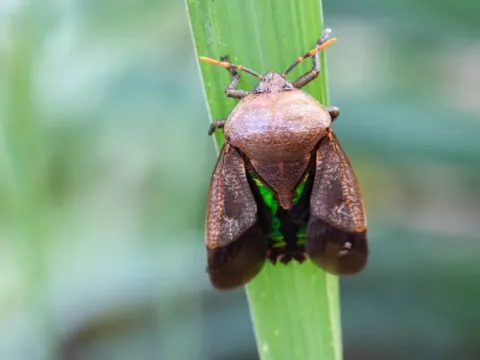
Rice black bug
Scotinophara depunctalis
The rice black bug, Scotinophara depunctalis, is a member of the order Hemiptera and the family Pentatomidae. These insects are characterized by their shield-shaped bodies, which typically measure 8–10 mm in length and possess a dark brown to black coloration.
What the section contains
Rice black bug
The head features piercing-sucking mouthparts, which the insect uses to feed on plant sap. The pronotum is wide with distinct lateral corners, serving as a reliable taxonomic characteristic for distinguishing this species from other stink bugs found in rice ecosystems.
Eggs are typically deposited in compact clusters on the underside of rice leaves or on stem bases near the water level. The eggs are creamy or pale green in color, turning darker as they approach hatching.
Nymphs go through five distinct instars, gradually increasing in size and developing wing pads. Their morphology is similar to adults but they are wingless and often exhibit variations in color pattern during different growth stages.
The life cycle is closely linked to the water availability of the rice paddy. High humidity and standing water are preferred environmental conditions that facilitate rapid population growth throughout the cropping season.
The rice plant is the primary host for Scotinophara depunctalis. Both nymphs and adults feed by inserting their stylets into the plant stems to extract nutrients, which significantly drains the plant's resources.
Feeding at the base of the plant leads to "bug burn," a condition where the foliage turns yellowish-brown and the plant begins to wither. Severe infestations during the vegetative stage often result in stunted growth.
The plant's inability to thrive during the tillering stage leads to reduced tiller formation. This physiological stress directly impacts the plant's capacity to produce high-quality grains, resulting in lower yield per hectare.
In addition to sap extraction, the insect's saliva contains enzymes that can cause localized necrosis. This weakens the plant structure and makes it more susceptible to secondary pathogens such as fungi and bacteria.
Infestations occurring during the reproductive phase can lead to the formation of empty or malformed grains, as the plant lacks the necessary energy to properly fill the panicles due to previous damage.
The pest's seasonal activity is synchronized with the irrigation of rice paddies. Adult bugs migrate from their overwintering sites, such as grassy areas and crop residues, as soon as the fields are flooded.
The breeding season peaks during the vegetative stages of the rice crop. Multiple generations can occur within a single cropping season, especially in tropical climates where temperatures remain consistently favorable.
Nighttime behavior is critical for the spread of the insect. Adults are strong flyers and are highly attracted to light sources, which they use to navigate between paddy fields in search of fresh feeding sites.
As the harvest approaches and the fields are drained, the bugs leave the rice paddies. They seek out moisture-retaining shelters in the soil or base of weeds to undergo a period of dormancy.
The survival of the population through the off-season depends on their ability to find suitable host plants near the fallow fields, ensuring that the cycle can begin again when the next crop is planted.
The most noticeable sign of infection is the appearance of white, discolored spots on the stem, which represent the locations where the bug has pierced the plant tissue to feed.
Another classic symptom is "deadheart," where the central shoot of the rice plant turns yellow and dies. This diagnostic sign can be easily observed as it contradicts the healthy green color of the surrounding foliage.
A distinctive, pungent, and unpleasant odor is often present in heavily infested areas. This scent is produced by the bugs' scent glands as a defense mechanism when they are disturbed.
Close inspection of the base of the rice plants during the early morning hours often reveals colonies of nymphs and adults huddled together near the water surface.
- Yellowing and drying of the leaf tips.
- Stunted plant development.
- Localized stem necrosis at feeding sites.
- Presence of bug clusters during morning hours.
Cultural control strategies include the deep plowing of fields after harvest. This physically destroys the soil-dwelling stages of the insect and reduces the availability of shelter for overwintering adults.
Maintaining a clean field environment by removing weeds and alternative grass hosts is essential for reducing the initial population that migrates onto the newly planted rice crop.
Water management plays a role in pest control; adjusting water levels at critical stages can sometimes expose the nymphs to environmental stress or make the crop less attractive to colonization.
When the economic threshold is reached, chemical control using targeted insecticides should be implemented. It is important to apply these treatments during the early hours or evening when the bugs are most active.
Conservation of natural enemies, such as egg parasitoids and predatory beetles, is a cornerstone of integrated pest management. Avoiding broad-spectrum pesticides helps maintain these beneficial predator populations.