
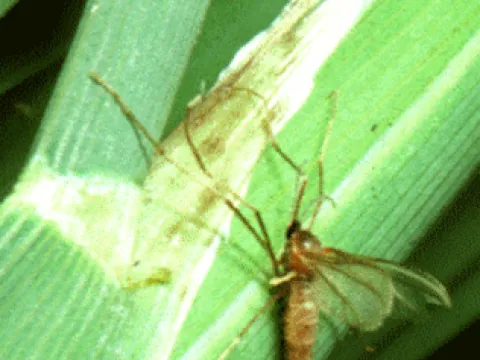
Rice gall midge
Sitodiplosis oryzae
The rice gall midge (Sitodiplosis oryzae) is a small insect belonging to the family Cecidomyiidae (gall midges) within the order Diptera. Adults are minute, delicate flies measuring approximately 2–3 mm in length.
What the section contains
Rice gall midge
Their coloration typically ranges from yellowish to orange, providing effective camouflage against the green leaves of the rice plant, which makes them difficult to spot in the field.
The larvae, which are the destructive stage of the life cycle, are spindle-shaped and distinctively orange or reddish in color, making them identifiable upon close inspection of plant tissues.
The life cycle is closely linked to rice phenology. Eggs are deposited near the leaf ligules or growing points, and the larvae migrate into the plant tissues to feed.
As a highly specialized pest, it requires specific environmental conditions, particularly high humidity and water availability, which are naturally provided by the flooded paddy environment.
The rice gall midge specifically targets rice (Oryza sativa) crops. The primary damage is caused by the larvae feeding inside the stems, which disrupts the normal growth of the plant.
The feeding activity prevents the formation of the panicle, leading to a condition often referred to as "silver shoot" or "onion leaf," where the leaf sheath elongates into a hollow tube.
This feeding damage stunts the plant's growth and suppresses tiller development, resulting in a significantly reduced number of productive panicles per plant.
In addition to direct damage, the entry points created by the larvae can facilitate the entry of secondary pathogens, further compromising the health and vitality of the rice crop.
High infestation levels can lead to total crop failure in affected areas, significantly reducing overall harvest yields and negatively impacting the economic stability of the farm.
The infestation typically begins during the tillering stage of the rice plant. This period is critical for monitoring as the plant is most vulnerable to midge damage.
The first generation of the season usually emerges shortly after the transplantation of rice into flooded fields, triggered by favorable temperature and humidity levels.
Several overlapping generations can occur throughout the growing season, especially in tropical regions, allowing for rapid population buildup if left unchecked.
The pest overwinters as larvae in the soil or in rice stubble, remaining dormant until conditions become suitable for pupation and adult emergence in the following season.
Producers should monitor for adult midges using light traps and check for the first signs of symptoms in the field during the early vegetative growth phase.
The most diagnostic sign of an infestation is the appearance of 'silver shoots', which are pale, tube-like leaves that form instead of normal, healthy leaf blades.
Infested plants appear stunted, with a bluish-green or yellowish hue, and show a characteristic delay in maturation compared to healthy surrounding plants.
When the leaf sheath is opened, one can often find a single, bright orange larva located near the base of the damaged shoot, which is the direct cause of the symptom.
Affected plants often increase their compensatory tillering, but these secondary tillers are frequently small and fail to produce viable grain, leading to poor overall yield.
In severe cases, fields may exhibit a patchy appearance where large areas of the crop are failing to reach the heading stage due to the continuous presence of the pest.
Managing the rice gall midge requires an Integrated Pest Management (IPM) approach that prioritizes prevention and the preservation of natural ecosystem balances.
A key agronomic practice is the use of resistant rice cultivars, which is the most effective and sustainable strategy for preventing damage and maintaining yield levels.
Proper field sanitation, including the destruction of rice stubble and weeds that may harbor the pest during the off-season, significantly reduces the initial population pressure.
Chemical control with systemic insecticides should be used only as a last resort, when monitoring confirms that the pest population has exceeded the economic threshold.
- Adjusting planting dates to avoid the peak flight period of the midge.
- Promoting natural biological control agents like parasitic wasps.
- Applying balanced fertilizers to improve the plant's vigor and regenerative capacity.