
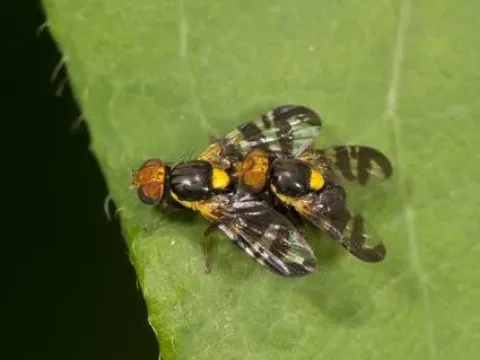
Fruit fly
Rhagoletis perruginea
The fruit fly, belonging to the Tephritidae family, is a significant agricultural pest known for its distinctive appearance and specialized behavior.
What the section contains
Fruit fly
The adults typically measure about 5 to 7 millimeters in length and feature unique, dark transverse bands on their wings, which serve as a primary identification mark.
These flies possess a robust head with complex compound eyes, allowing them to navigate effectively within dense orchard canopies while searching for suitable fruit.
The larvae of the fruit fly are legless and creamy-white in color, specifically adapted to thrive within the pulp of various ripening fruits.
During the pupal stage, the pest transforms into a barrel-shaped structure known as a puparium, which is usually dark brown and buried in the soil beneath the host plant.
This pest primarily attacks fruit-bearing trees such as cherries, plums, and various berries, causing substantial economic damage to commercial orchards and home gardens alike.
Adult females use their sharp ovipositors to pierce the fruit skin and deposit eggs, providing a nutrient-rich environment for the hatching larvae.
As the larvae feed on the internal tissues, the fruit quality degrades rapidly, becoming soft, discolored, and eventually rotting from the inside out.
The feeding activity creates entry points for secondary pathogens like fungi and bacteria, which accelerate the decay process of the entire crop.
Significant infestations lead to premature fruit drop, leaving the gardener or farmer with a harvest that is both visually unappealing and unsafe for consumption.
The emergence of adult flies coincides with the fruit ripening period, typically occurring during late spring and summer months when temperatures are optimal.
The development of the insect is highly dependent on ambient temperatures and soil humidity, which trigger the transition from puparium to the flying adult stage.
The seasonal activity span usually covers several weeks, during which the flies mate and complete multiple egg-laying cycles on developing fruit.
Overwintering occurs in the soil, where the pupae remain dormant until the warmth of the following spring initiates the next generation's life cycle.
Monitoring seasonal patterns is crucial, as the timing of control measures must be precise to catch the flies before they successfully infect the fruit.
Early warning signs include the appearance of tiny dark punctures on the skin of nearly ripe fruits, often accompanied by small dimples.
Internal examination of suspicious fruits often reveals the presence of larvae or tunnels created by the pest, which confirms a clear infestation.
A change in fruit texture, specifically localized softening, often indicates that the larvae are actively feeding beneath the epidermis.
Premature ripening and the sudden drop of fruits that appear otherwise healthy are classic symptoms of fruit fly damage within an orchard.
Using yellow sticky traps is a standard method to identify the arrival and density of the fly population, allowing for timely intervention.
Effective management of fruit flies requires an integrated pest management approach that combines cultural, mechanical, and chemical strategies.
- Cultivating the soil under trees during autumn and spring helps destroy the overwintering pupae by exposing them to birds and cold.
- Removing and destroying all fallen fruit immediately prevents larvae from completing their development and entering the soil.
- Deploying yellow sticky traps in the canopy can serve as both a monitoring tool and a way to reduce adult fly numbers.
- Applying systemic insecticides specifically labeled for fruit fly control while respecting safety intervals before harvest.
- Selecting resistant or early-maturing cultivars that reach harvestable stages before the peak fly activity begins.