
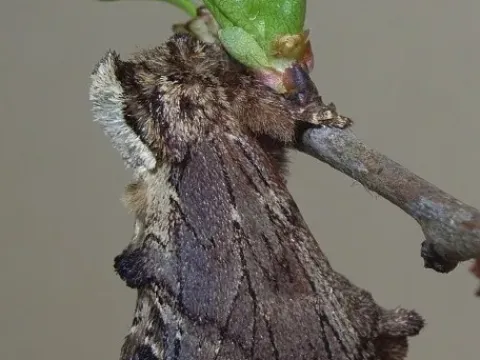
Coxcomb prominent
Ptilodon capucina
The Coxcomb prominent (Ptilodon capucina) is a moth belonging to the Notodontidae family. Its wingspan typically reaches 40–45 mm, and its coloration is brown with intricate patterns that resemble tree bark, providing excellent camouflage.
What the section contains
Coxcomb prominent
The name comes from a distinct tuft of scales on the dorsal side of the abdomen. When at rest, the moth folds its wings, mimicking a dried leaf or a piece of wood, which protects it from predators during the day.
The larvae are easily recognizable by their unique appearance, featuring two reddish protrusions at the rear end of the body. These caterpillars grow up to 50 mm in length and can range from light green to brown in color.
The pupal stage occurs in firm, silk-lined cocoons. These are usually found in the soil, leaf litter, or crevices in bark, allowing the insect to survive the winter safely.
The species usually completes one or two generations per year, depending on the climatic conditions. The adults are nocturnal and are frequently attracted to artificial lights during their flight period.
This moth is a significant defoliator that prefers deciduous trees. Common host plants include beech, birch, alder, oak, and hazel, as well as several species of fruit trees like apple and pear.
Young larvae feed on the underside of leaves, creating small holes or skeletonizing them. As they mature, they consume the entire leaf lamina, leaving only the main veins untouched.
Severe infestations can lead to total defoliation of branches. This significantly inhibits the plant's ability to photosynthesize, leading to reduced vitality and growth stagnation.
Weakened trees become susceptible to secondary infections and infestations by wood-boring insects, such as bark beetles. Long-term defoliation can cause significant forest and orchard productivity loss.
In nursery settings, damage to young saplings can be fatal, making monitoring crucial during the larval development stages in mid-summer.
Adult moths are typically active from May to July. During this time, they mate and lay eggs on the leaves of host trees. They are strictly nocturnal and are highly active during warm summer evenings.
The caterpillars are most active and damaging during the summer months, specifically from June through August. This is when they undergo rapid growth and intensive feeding on foliage.
By the end of summer, the mature larvae descend to the ground to pupate. The overwintering stage takes place in the soil or protected surface debris until the following spring cycle.
Monitoring for adults can be done using light traps in late spring. This provides early warning signs for the potential population density of caterpillars in the upcoming season.
Inspecting foliage in early summer is recommended for early detection. Spotting the larvae early allows for localized management before they spread across the entire canopy.
The primary symptom is the presence of eaten foliage, where leaves appear tattered or skeletonized. The ground beneath the tree may be covered with caterpillar frass, indicating a high level of activity.
- Jagged leaf edges and missing chunks of leaf tissue.
- Presence of larvae with two characteristic spikes at the tail.
- Reduced crown density compared to healthy surrounding trees.
- Silky webbing or leaf rolling in localized feeding areas.
- Increased bird activity in the canopy as birds prey on the larvae.
Biological control using Bacillus thuringiensis (Bt) products is the preferred method for managing infestations. This approach is effective against larvae while being safe for non-target beneficial insects.
Mechanical removal of caterpillars can be practiced on small or young trees in gardens. Manual inspection and disposal of clusters can prevent the need for chemical intervention.
When populations exceed economic thresholds, contact or systemic insecticides may be necessary. Application timing should coincide with the active feeding stage of young larvae.
Cultural practices like autumn soil cultivation around the base of trees help destroy pupae. This disrupts their life cycle and exposes them to predators and freezing temperatures.
Encouraging natural predators, including parasitic wasps and predatory beetles, maintains long-term balance. Biodiversity in and around the garden is the best defense against major outbreaks.