
Cotton seed moth
Earias huegeli
Description
How to identify
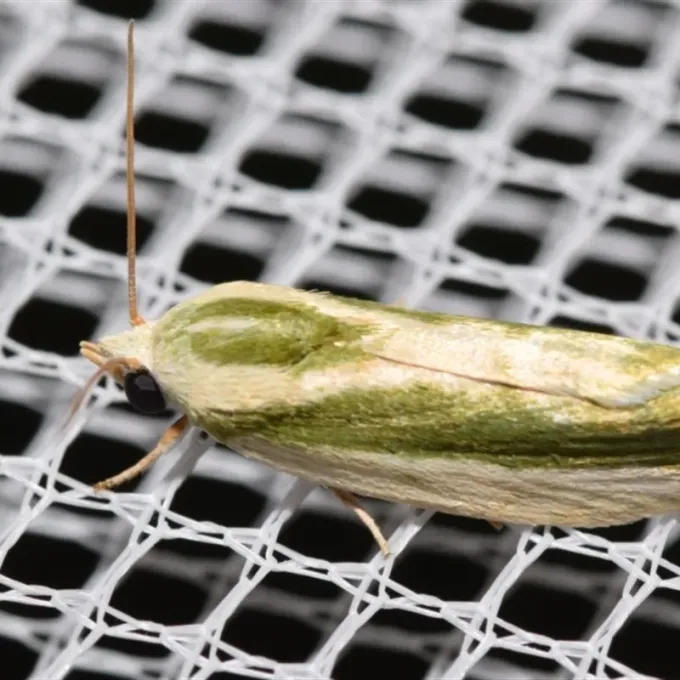
The cotton seed moth is a small moth, with adult wingspans typically ranging from 20 to 25 mm. The forewings display a variable color pattern, often featuring shades of green, yellow, and brown to mimic their environment.
Larvae pass through several developmental instars, changing color and appearance as they grow. A defining characteristic is the presence of short, stiff hairs covering the body, which aids in identification during scouting.
Pupation occurs within a tough, silken cocoon often hidden in crop debris or the soil surface. This cocoon stage acts as a protective mechanism against harsh weather conditions and some predators.
The life cycle of this species is highly dependent on ambient temperature and moisture levels. Under favorable conditions, the entire life cycle can be completed in as little as three to four weeks.
Adult moths are primarily nocturnal, remaining hidden within the crop canopy during the day. Their activity peaks at dusk, coinciding with egg-laying on the reproductive structures of the host plants.
What it damages
This pest primarily attacks members of the Malvaceae family, with cotton being the most significant host. Larvae feed on buds, flowers, and the developing bolls, which is why it is commonly known as a boll-damaging pest.
When the preferred host is unavailable, the moth can infest other plant species, increasing its economic impact. The destruction of young flower buds leads to significant square shedding, directly reducing crop yield.
Larvae bore into the cotton bolls to consume the seeds and the developing lint. This boring activity creates entry points for various bacterial and fungal pathogens, leading to boll rot and total loss of the fruit.
Damage to the lint inside the boll renders the fiber stained, weak, or completely unusable. Consequently, farmers face not only quantitative yield losses but also a significant decline in the quality of the harvested cotton.
In cases of high infestation levels, the pest can devastate large portions of the field. Without proper monitoring and control, economic losses can be substantial, especially during peak flowering and boll formation.
Signs of infestation
A primary indicator of infestation is the presence of small, characteristic exit or entry holes in buds and bolls. Fresh frass (excrement) deposited near these holes is a clear sign that larvae are currently active.
High rates of flower bud or young boll shedding often signal the presence of the pest. Upon inspection, the fallen plant parts usually show internal tissue damage or evidence of larval feeding.
Bolls that appear prematurely dark or stunted often contain larvae feeding inside. Once opened, these bolls reveal damaged seeds and internal decay, often accompanied by secondary mold growth.
Monitoring the adult population using light traps or pheromone traps provides early warning of moth activity. A sudden spike in adult numbers suggests that eggs will likely be deposited shortly thereafter.
Early-season infestation can also manifest as the wilting or deformation of terminal shoots, which larvae may feed upon before the plant begins to produce squares and bolls.
Control measures
Integrated pest management (IPM) begins with thorough tillage after harvest. Deep plowing buries crop residues and destroys pupae, significantly reducing the population density for the next season.
Biological control methods, including the release of egg parasites or the application of microbial insecticides, are effective if applied during the early stages of larval development before they bore into bolls.
Chemical control should be timed based on economic injury thresholds and the phenology of the moth. Systemic or contact-stomach insecticides are most effective when applied before larvae gain access to the interior of the boll.
Cultural practices, such as maintaining a proper crop rotation and controlling alternative weed hosts in the Malvaceae family, are essential for preventing population buildup in the area.
- Use of pheromone traps for population monitoring.
- Destruction of crop residues to eliminate overwintering sites.
- Application of selective insecticides targeting young larvae.
- Planting resistant or early-maturing varieties of cotton.
Discussion
No discussions yet — be the first.