
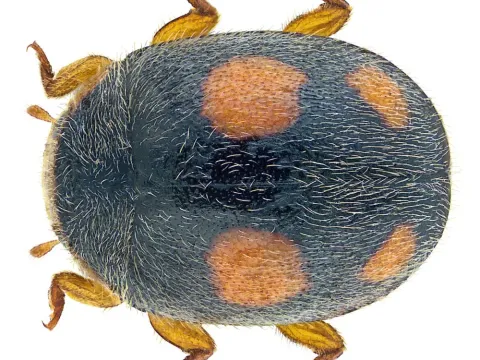
Platynaspis silvestrii
Platynaspis silvestrii
Platynaspis silvestrii is a specific species of insect belonging to the family Coccinellidae (lady beetles), order Coleoptera. Although many members of this family are recognized as beneficial predators, this particular species displays characteristics that classify it as a pest in certain agricultural contexts.
What the section contains
Platynaspis silvestrii
The adult insect typically exhibits a hemispherical body shape, which is standard for coccinellids. Its dorsal side is often marked with specific patterns that serve as a diagnostic feature for experts during field identification, distinguishing it from other ladybird species.
Larvae of this species possess a distinct morphology characterized by numerous tubercles and setae. These structures provide protection against predators and also assist in adhering to the host plant surfaces while the larvae feed on plant tissues.
The biological cycle follows a complete metamorphosis: egg, larva, pupa, and adult. The duration of each developmental stage is highly dependent on ambient temperature and humidity levels within the crop environment.
Accurate identification of Platynaspis silvestrii in the field often requires microscopic examination of the adult genitalia or precise morphological analysis to ensure it is not confused with beneficial species that might inhabit the same ecosystem.
The primary damage caused by Platynaspis silvestrii results from its feeding activity on young plant tissues. By piercing plant cells and consuming fluids, the insect causes physiological stress that hinders the normal development of the host plant.
The lesions caused by the insect's feeding act as entry points for various phytopathogens, including fungi and bacteria. This secondary infection often leads to localized necrosis and can eventually cause the death of entire leaves or stems.
In high-density populations, the damage is characterized by stunted growth and leaf distortion. This inhibits the plant's ability to perform photosynthesis efficiently, leading to a significant reduction in overall biomass and harvest potential.
The aesthetic value of ornamental crops is severely compromised by the feeding of this pest, as the visual damage to foliage is often irreversible and makes the plants unsuitable for market purposes.
The pest tends to cluster in specific areas of the plant, which often leads to uneven growth distribution across the field and complicates uniform management of the affected crop.
Early symptoms of infestation include the appearance of localized chlorotic spots on the leaf surface. As the pest population grows, these spots may merge, leading to widespread yellowing and wilting of the affected tissues.
The presence of exuviae (cast-off larval skins) on the stems or undersides of leaves is a clear indicator that the insect is undergoing its life cycle on the plant. This is a vital clue for scouts conducting regular field inspections.
Leaf curling, especially in young terminal shoots, often indicates that the larvae are active in these areas. The feeding activity disrupts the hormonal balance of the plant, causing the leaves to grow in a deformed manner.
Sticky secretions or residue on the leaf surface can also indicate an infestation. While this is common with sap-sucking insects, Platynaspis silvestrii can also contribute to a degraded surface quality of the plant parts.
- Chlorotic lesions on the foliage.
- Deformation and curling of apical shoots.
- Accumulation of exuviae on plant parts.
- Premature leaf drop in severe cases.
- Secondary fungal growth on feeding sites.
An integrated pest management (IPM) approach is recommended to control Platynaspis silvestrii. The strategy begins with regular monitoring using yellow sticky cards or visual assessments to determine the population density and potential threat level.
Cultural control practices play a significant role in reducing the impact of the pest. This includes maintaining clean fields by removing weeds that may serve as alternative hosts and ensuring proper plant spacing to prevent excessive humidity.
Biological control agents, such as specialized parasitoids or entomopathogenic fungi, can be effective in suppressing the pest population when applied at the correct stage of the insect's life cycle, particularly in organic farming.
Chemical intervention should be considered only when the economic injury threshold is reached. It is essential to choose insecticides that target the pest while minimizing harm to the beneficial insects that inhabit the same area.
Proper application technique is crucial; thorough coverage of the canopy, especially the underside of the leaves, is necessary to achieve effective control. Following manufacturer guidelines regarding rotation of active ingredients helps in preventing the development of resistance.