
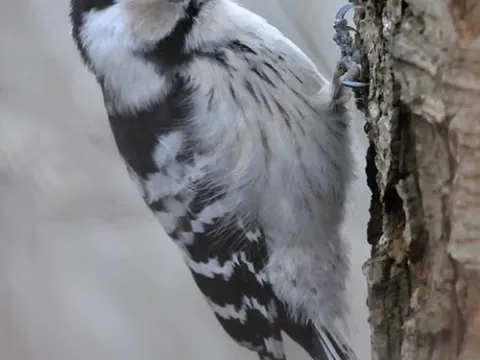
Lesser spotted woodpecker
Picoides analis
The lesser spotted woodpecker (lat. Picoides analis, formerly Dendrocopos minor) is the smallest member of the woodpecker family (Picidae) within the order Piciformes. This bird features a distinct black and white patterned plumage, providing effective camouflage against tree bark.
What the section contains
Lesser spotted woodpecker
Males are easily distinguished by a bright red crown patch, whereas females have a solid black head. The beak is relatively short and delicate compared to larger woodpecker species, meaning it is not adapted for deep drilling into solid, healthy wood.
Measuring rarely more than 15 centimeters in length and weighing only 20–25 grams, these birds are highly agile, allowing them to traverse even the thinnest branches with ease to forage for insects.
These birds typically inhabit orchards, parks, and woodland edges where they find old or infested wood. Their presence is often discreet, making it difficult to detect them until damage to the trees becomes visible.
Despite their diminutive size, their constant activity throughout the day can affect a large number of trees, especially during the spring season when nutritional requirements for protein are highest.
The primary damage to agricultural crops arises from physical trauma to the tree bark. While searching for wood-boring larvae such as bark beetles or jewel beetles, the woodpecker creates small, shallow wounds that expose the tree to fungal and bacterial pathogens.
Fruit trees like apple, pear, and stone fruits are the most susceptible, particularly if they are already weakened. Repeated foraging on the same branch can lead to localized necrosis and disruption of the cambium layer.
This interference with sap flow leads to the gradual decline of specific branches or sections of the canopy. Young saplings are particularly at risk, as their thin bark is easily pierced, leading to rapid health deterioration.
Furthermore, by preying on beneficial insects and entomophagous species, the woodpecker inadvertently disrupts the biological control balance of the orchard, allowing populations of secondary pests to surge.
Extensive damage to the bark reduces the tree's overall immune response and vigor, ultimately leading to decreased fruit quality and yields, making the trees more susceptible to climate-related stress.
The most common sign of activity is the presence of small, shallow holes in the bark, often arranged in horizontal rows. Unlike the work of larger woodpeckers, the damage appears as a surface-level cleaning rather than deep excavation.
Fresh wood chips or sawdust accumulated at the base of the tree serve as a reliable indicator of recent foraging activity. One may also observe sap or gum oozing from the spots where the bird has pierced the bark.
Inspect the canopy for branches that show signs of premature yellowing or wilting, particularly after a period of intense bird activity. These symptoms suggest that the foraging has severed the tree's vascular transport system.
The presence of the birds is often marked by a thin, high-pitched call or a rapid, very soft tapping sound that is difficult to hear from a distance.
- Rows of small, shallow holes on the bark
- Fresh sawdust at the base of the trunk
- Localized bark necrosis and sap leakage
- Premature wilting of individual skeletal branches
Proper orchard hygiene is the best preventive measure. Regular pruning and the removal of dead or diseased branches prevent the buildup of wood-boring insect populations that attract woodpeckers.
Utilizing visual deterrents such as reflective tapes, mirror devices, or holographic bird-scare objects can be highly effective in sunny weather, as they cause visual discomfort to the birds.
Implementing a regular preventive spraying schedule with systemic insecticides and fungicides reduces the population of target larvae (the woodpecker's food source), naturally discouraging them from visiting the orchard.
For high-value young trees, protective netting or wrapping the trunks in specialized mesh can physically prevent the bird from reaching the bark surface during critical seasons.
In cases of severe infestation, bio-acoustic devices that broadcast the distress calls of predatory birds can create a safe, non-toxic, and effective deterrent to keep the woodpeckers away from the crop area.