
Leucochroa
Leucochroa
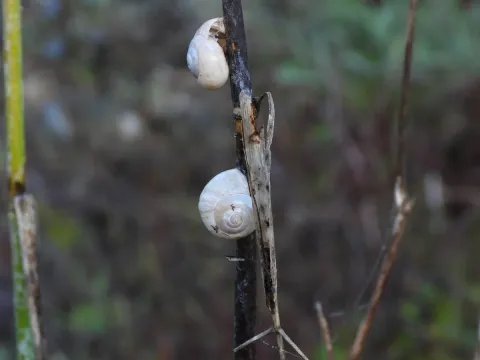
Leucochroa is a genus of land snails belonging to the family Hygromiidae. These mollusks are primarily found in arid and semi-arid climates, where they have evolved to withstand significant moisture stress.
What the section contains
Leucochroa
They are characterized by a sturdy, typically pale or whitish shell, which serves as a protective adaptation against intense heat and desiccation, allowing the animal to survive in harsh environments.
The life cycle of this pest is strictly tied to seasonal humidity. During dry spells, the snails enter an estivation state, attaching themselves to stalks or soil particles and sealing their shells to minimize water loss.
Activity resumes during cooler, wet periods when the snails emerge from their dormancy to forage. Breeding is triggered by moisture, leading to egg deposition in the soil and the emergence of a new generation.
Understanding their preference for microclimates is crucial for monitoring, as populations often cluster in areas with higher humidity or organic debris where they find temporary protection.
Leucochroa is a generalist feeder capable of causing significant damage to a wide range of horticultural and agricultural crops, including vegetables, cereals, and young vineyards.
These snails preferentially feed on succulent tissues, such as young leaves, tender stems, and seedlings. In severe infestations, they can strip plants entirely, leaving only bare stems behind.
Beyond physical consumption, the pest compromises plant health by depositing slime trails, which can serve as entry points or vectors for various fungal and bacterial pathogens.
In woody crops like orchards, they may feed on buds and young bark, which directly impacts the plant's development and future yield potential for the subsequent season.
Root crops are also susceptible; snails can burrow into the vegetables, leading to severe quality degradation that renders the harvest unmarketable.
The first indicator of infestation is usually the presence of irregular, ragged holes in leaf blades, particularly those located close to the soil surface or in sheltered areas.
Silver, glistening mucus trails on the ground, walkways, or plant stems are definitive signs that snails have been active in the area during the night or early morning hours.
During the day, especially in overcast weather, one may observe the snails clustered under weeds, rocks, or large plant leaves where moisture levels are slightly higher.
Stunted growth or the sudden wilting of seedlings without apparent root rot often indicates nocturnal feeding damage caused by these mollusks.
The accumulation of empty shells in specific garden patches or field margins is a strong indicator of a high population density established in that micro-habitat.
Effective management of Leucochroa requires an integrated approach that combines cultural practices with targeted chemical interventions when necessary.
Maintaining a clean field by removing weeds, crop residues, and piles of organic matter significantly reduces the available hiding spots and food sources for the pests.
Physical barriers, such as crushed stone, coarse sand, or diatomaceous earth applied around the base of vulnerable plants, can effectively hinder the movement of snails.
When populations exceed economic thresholds, the application of molluscicides containing iron phosphate is recommended, as it is generally safer for beneficial organisms than metaldehyde.
Promoting a biodiverse environment by encouraging natural predators, such as hedgehogs, toads, and ground beetles, helps maintain the population at a manageable, non-damaging level.