
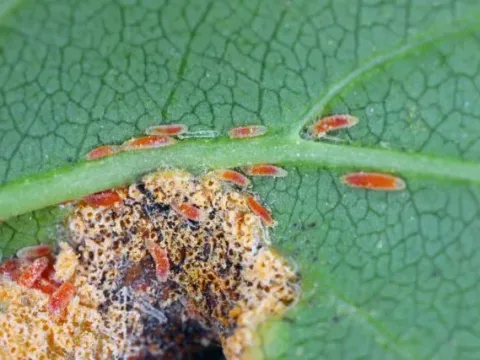
Rose gall midge
Phaenobremia rosivora
The rose gall midge (latin name Phaenobremia rosivora) is a small dipteran insect belonging to the Cecidomyiidae family. Adult midges are tiny, mosquito-like flies that rarely exceed 2 millimeters in length, making them difficult to spot.
What the section contains
Rose gall midge
The damage is primarily caused by the larval stage of the insect. The larvae are legless, whitish or pale yellow in color, and reach about 3 millimeters in length during their development inside the plant tissues.
Females lay their eggs directly into the soft, developing parts of the rose plant, typically focusing on young buds or the tips of growing shoots. The larvae feed on plant sap as they develop through several instars.
The life cycle of this pest is closely synchronized with the growth season of roses. Multiple generations can occur within a single summer, which leads to rapid infestations if left untreated.
The pest overwinters as a larva in the soil beneath the rose bushes, cocooning and pupating once temperatures begin to rise in the spring.
The rose gall midge primarily affects various species of garden roses. The pest prefers tender, actively growing plant parts that are rich in nutrients and moisture.
Flower buds are the most common targets. Larvae feed on the inside of the bud or the peduncle, causing the bud to darken, shrivel, and fail to open, effectively destroying the bloom.
Young, succulent shoot tips are also frequently attacked. The feeding larvae cause the tips to stop growing and become twisted or stunted, which ruins the appearance of the entire bush.
The economic and aesthetic impact is significant, as a severe infestation can prevent a rose bush from producing flowers throughout the season.
Weakened plants resulting from midge damage become more susceptible to secondary issues, such as fungal pathogens entering through the damaged plant tissues.
The activity of the rose gall midge begins in late spring when ambient temperatures consistently reach 15–18 degrees Celsius (around 60–65 degrees Fahrenheit).
The first signs of infestation typically coincide with the budding phase of roses, as this is the period when females are actively seeking sites for oviposition.
Mid-summer, especially during warm and humid weather, often sees a peak in population, as subsequent generations emerge and continue the cycle of damage.
As autumn approaches and day length decreases, the pest’s activity declines, and the larvae migrate to the soil to initiate the overwintering process.
Regular monitoring from May through August is essential for gardeners to detect the early onset of an infestation and implement timely control measures.
The primary symptom is the premature blackening and drying of rosebuds, which often appear scorched even though the plant has received adequate water.
If you inspect the inside of a damaged bud, you will likely find tiny, pale larvae gathered near the base of the petals, which is a definitive sign of an active midge infestation.
Stunted growth of new shoots and the visible twisting of stem tips are characteristic symptoms caused by the feeding activity of the larvae within the plant structure.
Small lesions or necrosis may also appear on the surface of the plant tissue where the female midge has made punctures to lay her eggs.
- Blackened, shriveled flower buds.
- Stunted and twisted shoot tips.
- Failure to produce new blooms.
- Visible presence of larvae inside plant parts.
Good sanitation is the first line of defense; gardeners should promptly remove and destroy any infested buds or shoot tips before the larvae finish their development and drop to the soil.
Cultivating the soil around the base of the rose bushes during the late autumn or early spring can help expose overwintering cocoons to predators and harsh weather conditions.
In cases of severe infestation, systemic insecticides are the most effective solution, as they circulate within the plant and target the larvae feeding inside the tissues.
Apply systemic treatments according to the product label during the periods of peak midge activity, ensuring thorough coverage of the new growth where eggs are typically laid.
Mulching with appropriate materials can act as a physical barrier, potentially limiting the ability of emerging adults to escape the soil and begin a new generation.