
Roseslug sawfly
Eriocampoides rosae
Description
How to identify
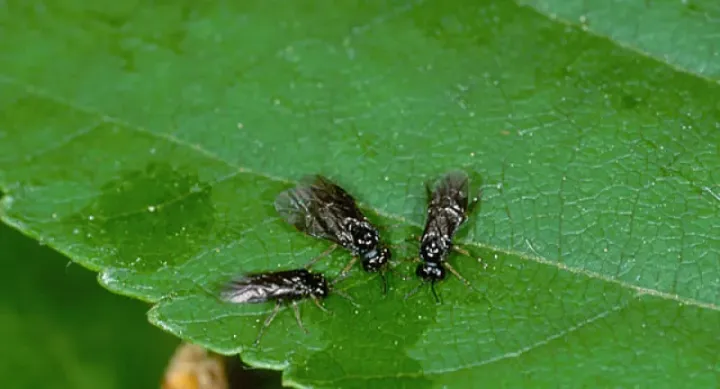
The roseslug sawfly (scientific name Caliroa rosae) belongs to the Hymenoptera order, specifically the Tenthredinidae family. The adult insect is a small, shiny black wasp-like creature measuring approximately 5 mm in length.
The larvae, which are the primary destructive stage, resemble small slugs, hence the name. They possess a yellowish-green body covered in a translucent, slimy substance that acts as a protective layer against predators and desiccation.
Adults emerge in the spring, coinciding with the initial leaf flush of their host plants. Females use an ovipositor to insert eggs into the leaf tissue, typically on the underside, making detection difficult during early development.
The life cycle involves complete metamorphosis: egg, larva, pupa, and adult. In many regions, there are two generations per year, which significantly increases the potential for cumulative damage to rose bushes throughout the growing season.
Pupation occurs within the soil, where they form small cocoons. Overwintering takes place in this stage, with adults emerging when temperatures rise and environmental conditions become suitable for reproduction.
What it damages
The primary hosts are cultivated roses, although wild species like wild briar can also be affected. The pest demonstrates a high degree of host specificity to plants within the Rosaceae family.
Larvae feed exclusively on the leaf parenchyma, leaving the veins intact. This behavior results in a characteristic "skeletonized" appearance of the foliage, as the leaf loses its green chlorophyll-rich tissue.
In cases of severe infestation, large portions of the canopy can be destroyed. This depletion of photosynthetic surface area weakens the plant, reducing its vigor and impacting its ability to store energy for the winter.
The aesthetic value of the rose garden is significantly compromised when foliage becomes lace-like, brown, and brittle. This often leads to premature defoliation, which stresses the bush considerably.
Continuous attacks over several seasons can lead to severe physiological decline, making the roses more susceptible to secondary stressors, including opportunistic fungal pathogens and extreme weather conditions.
When it appears
The first generation typically emerges in late spring or early summer, following the bloom of the first foliage. Peak larval activity is often observed during the month of June.
A second generation frequently appears later in the summer, from July through August. This second wave can be more damaging due to the warmer temperatures that accelerate larval development and metabolism.
Environmental conditions, particularly mild temperatures and moderate humidity, are optimal for the growth and survival of these larvae. Excessive heat may occasionally slow their activity levels.
As autumn approaches, the larvae drop from the foliage to the soil to begin their overwintering process. By late summer or early fall, active feeding on the plants generally ceases.
Regular scouting starting in mid-spring is essential for timely detection. Monitoring the undersides of leaves for the presence of the slimy larvae is the most effective way to prevent widespread damage.
Signs of infestation
The earliest signs of infestation are small, transparent patches on the leaves. These "windows" are created when larvae eat the upper layer of the leaf while leaving the bottom epidermis or veins untouched.
Upon closer inspection, one will find the slug-like larvae residing on the underside of the leaves. Their presence is often betrayed by the shimmering, moist trails they leave behind as they move.
As the larvae grow, the skeletonized areas expand and turn brown. Eventually, the entire leaf may wither, turn yellow or brown, and fall off the bush, leaving the plant looking thin and unhealthy.
The presence of fine, dark excrement on the foliage beneath the infested leaves is another indicator of active feeding by the sawfly larvae.
Observing a sudden lace-like pattern on rose leaves is a definitive sign of Caliroa rosae. Immediate action at this stage is necessary to preserve the plant's health for the remainder of the season.
Control measures
Cultural control involves thorough cultivation of the soil around the base of the bushes in autumn or early spring, which can disturb and destroy overwintering pupae.
Mechanical control, such as hand-picking the larvae or spraying the foliage with a strong jet of water, is highly effective for small home gardens and allows for non-chemical management.
Biological control agents, such as insecticidal soaps or neem oil, are effective against young larvae and have minimal impact on beneficial pollinators, making them a preferred choice in integrated management.
Chemical control should be employed only if populations exceed threshold levels. Systemic insecticides are effective when applied at the first signs of larval activity, ensuring coverage of the leaf undersides.
- Insecticidal soaps
- Neem oil
- Spinosad-based products
- Pyrethroid insecticides
Discussion
No discussions yet — be the first.