
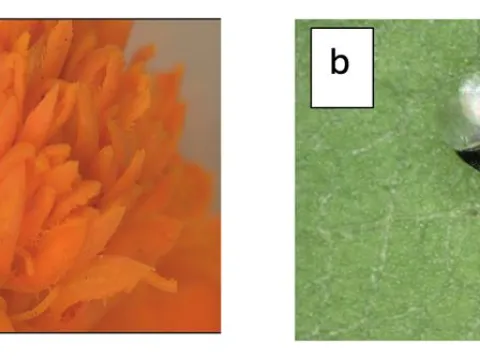
Strawberry thrips
Neophysopus fragariae
The strawberry thrips (Neophysopus fragariae) belongs to the order Thysanoptera and the family Thripidae. This tiny insect, approximately 1 mm in length, features a slender body ranging in color from light yellow to dark brown.
What the section contains
Strawberry thrips
Adults possess two pairs of narrow wings fringed with fine hairs, which give them their characteristic appearance. Larvae resemble adults but are smaller in size and lack fully developed wings.
The lifecycle includes egg, larva, propupa, pupa, and adult stages. They typically overwinter as adults in the soil or under plant debris near strawberry fields.
Reproduction occurs through both sexual and parthenogenetic pathways. Under favorable conditions, the development of one generation takes two to three weeks, allowing for multiple generations per season.
Detecting this pest is challenging due to their small size and cryptic behavior. Often, their presence is only confirmed through indirect indicators of tissue damage.
Strawberry thrips primarily damage cultivated strawberries (Fragaria x ananassa) and various wild strawberry species. They can also occasionally be found on other Rosaceae family plants.
These insects feed on cell sap from young leaves, flower buds, and developing fruit. Heavy infestations can cause significant damage to both vegetative and reproductive plant organs.
The damage manifests as leaf distortion, where foliage becomes curled, crumpled, and yellowish. This stress slows plant growth and significantly reduces overall plantation productivity.
Feeding on buds and flowers often leads to premature wilting or the development of deformed, hard berries with poor market quality, resulting in substantial yield losses.
Beyond direct feeding damage, strawberry thrips act as potential vectors for various plant viruses, which can threaten the entire crop if populations remain unmanaged.
The activity of strawberry thrips begins in early spring as soon as the soil warms up. Overwintered adults emerge from their shelters to begin feeding on emerging tissue.
The peak population density usually coincides with the strawberry blooming period. During this time, thrips colonize flower buds, causing internal tissue damage that is critical for crop development.
During the summer, hot and dry weather facilitates rapid population growth, as high temperatures accelerate the development rate of each successive generation.
By late summer and autumn, as temperatures decline and days shorten, the insects migrate into the soil to enter winter diapause.
Monitoring the pest is most effective during early morning or evening hours using blue sticky traps, which are highly attractive to this species.
An early sign of infestation is slight whitening of leaf tissue at the sites of feeding punctures. Over time, these spots coalesce, creating silvery or white patches on the leaves.
The underside of affected leaves often displays small black droplets, which are the excrement of the thrips and a clear indicator of a thriving colony.
Flower distortion and necrotic spots on petals are definitive signs of an infestation. Shaking a flower over a white sheet of paper often reveals tiny, mobile insects.
Leaf curling into a boat-like shape is another typical symptom, making the foliage brittle and susceptible to premature drying.
Delayed fruit development and uneven coloration or "woody" texture in berries are late-stage symptoms indicating high infestation levels requiring immediate intervention.
Agricultural management practices include regular soil cultivation and the removal of weeds that serve as alternative hosts for thrips during the off-season.
Implementing crop rotation and utilizing certified disease-free planting material significantly lowers the risk of initial field colonization.
Blue sticky traps are highly recommended for monitoring and mass trapping within the field during the critical flowering period.
- Application of biological insecticides such as avermectins.
- Usage of systemic chemical treatments during the budding phase.
- Deployment of predatory mites (e.g., Amblyseius) for biological control.
- Thorough cleanup of plant debris immediately after the harvest season.
It is essential to apply pesticide treatments during the evening to protect pollinators, such as bees, which are vital for successful strawberry fruit set.