
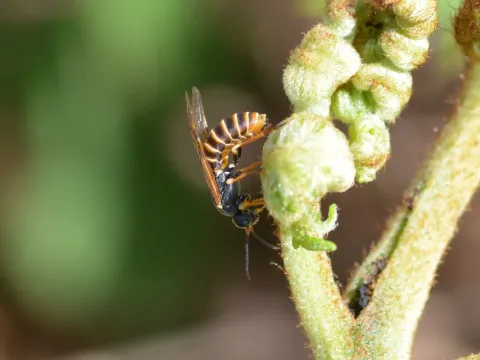
Strongylogaster
Strongylogaster
Strongylogaster is a genus of insects within the family Tenthredinidae, commonly known as common sawflies, belonging to the order Hymenoptera.
What the section contains
Strongylogaster
The adults are small, wasp-like insects that lack the narrow waist characteristic of true wasps, which is a distinguishing feature of the suborder Symphyta.
The larvae, often referred to as false caterpillars, possess distinct thoracic legs and abdominal prolegs, allowing them to cling effectively to the undersides of leaves.
Coloration of these larvae is typically adapted to blend with the foliage, ranging from light green to greyish-green, making detection quite challenging for gardeners.
Proper identification usually relies on microscopic examination of wing venation in adults or specific setal patterns on the larvae body.
These pests primarily target various fern species, causing significant aesthetic and structural damage to both wild and cultivated ornamental varieties.
Larvae feed by consuming the leaf tissue, leading to irregular holes or complete skeletonization of the fronds, leaving only the primary veins intact.
Severe infestations can lead to total defoliation, which prevents the fern from accumulating necessary energy reserves for the following season.
Damage to the developing croziers (fiddleheads) in the spring can permanently deform the plant's growth pattern for the remainder of the year.
Persistent feeding stress weakens the root system, making the host plants more susceptible to environmental stressors like drought and secondary pathogens.
The life cycle of Strongylogaster is closely synchronized with the emergence of new fern fronds in temperate climate zones.
Adult activity begins in the spring, coinciding with the warming temperatures and the onset of plant growth in the garden.
After mating, females insert their eggs into the leaf tissue, and the subsequent larval stage lasts for several weeks during the late spring and summer.
Most species complete a single generation per year, though temperature fluctuations may influence the speed of larval development.
As the season progresses, mature larvae drop to the soil to pupate, forming cocoons where they remain in diapause through the winter months.
The initial signs of an infestation include the appearance of small, irregular notches along the margins of the fern fronds.
A tell-tale sign is the presence of dark, granular frass pellets on the surface of the fronds or on the soil directly beneath the infested leaves.
If you disturb the plant, larvae may curl into an S-shape, a defensive mechanism common to many sawfly species, making them easier to spot.
Sudden yellowing or wilting of individual fronds can indicate larval feeding that has damaged the structural integrity of the leaf stalk.
Close inspection of the underside of leaves during early morning or dusk is the most effective way to detect the larvae before significant damage occurs.
Cultural control measures involve meticulous cleaning of garden beds in the autumn, including the removal of dead foliage where pupae might overwinter.
For small-scale infestations, manual collection and disposal of larvae are highly effective and environmentally friendly solutions.
Biopesticides containing active biological agents, such as specific bacteria or fungi, can provide effective control with minimal impact on non-target species.
In cases of heavy infestation, application of registered insecticides during the early larval stages is recommended to prevent extensive foliage loss.
- Monitor plants weekly for signs of damage.
- Encourage local predators like spiders and birds.
- Water plants properly to boost resilience.
- Apply treatments during cooler hours.