
Macadamia nut borer
Neodrepta luteotactella
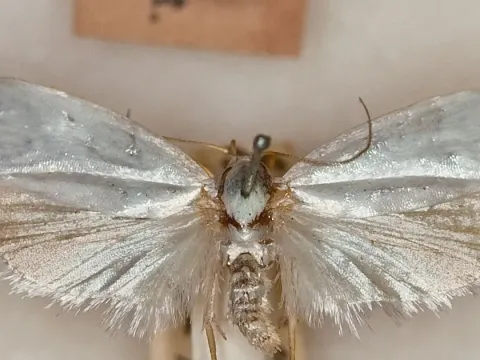
The Macadamia nut borer (Neodrepta luteotactella) is a significant insect pest belonging to the Xyloryctidae family. It is known to specifically target macadamia plantations, causing substantial economic losses in key growing regions.
What the section contains
Macadamia nut borer
The adult moth has a wingspan of approximately 20–25 mm. Its forewings exhibit a mottled appearance with yellowish or ochre patches, providing effective camouflage against the bark and stems of the host tree.
The life cycle involves four stages: egg, larva, pupa, and adult. The larval stage is responsible for all the damage, as they feed on the generative and vegetative parts of the macadamia tree.
These moths are typically crepuscular or nocturnal, making them difficult to detect during daylight hours without the use of specialized trapping methods or pheromone monitoring.
The biological development of this species is highly dependent on environmental temperature, allowing the population to increase rapidly when weather conditions are favorable for their reproduction.
The larvae primarily feed on macadamia nuts, boring into the husks and kernels. This feeding activity renders the nuts unmarketable, as the kernel is destroyed or severely damaged by the borer.
Besides the nuts, larvae are known to bore into young shoots and stems, creating galleries underneath the bark. This activity disrupts nutrient transport and weakens the overall health of the tree.
Secondary infections by fungi and bacteria often follow larval infestation, causing the nuts to rot on the tree and leading to significant post-harvest losses if not managed correctly.
Infestation rates can become very high if left uncontrolled, resulting in a dramatic reduction in the harvestable yield of high-quality macadamia nuts.
Young, developing nuts are particularly susceptible to attack, and heavy infestation can lead to premature nut drop, significantly impacting the productivity of the entire orchard.
The most visible sign of infestation is the presence of larval frass (excrement) mixed with webbing on the surface of the nuts or stems. This debris is usually very noticeable upon close inspection.
Silk galleries, which serve as protective tunnels for the larvae, can be found on the branches or near the base of the nuts. These structures are clear indicators of active feeding in the vicinity.
Small entry holes on the husk, often accompanied by gum exudation (sap bleeding), suggest that a larva has bored into the interior of the nut to complete its development.
The yellowing or wilting of young terminals and shoots indicates that the larvae have compromised the plant's vascular tissue, which is a critical sign that requires immediate action.
Adult moth activity can be monitored using light traps or pheromone traps, providing an early warning system for growers to initiate targeted protection measures.
Integrated Pest Management (IPM) is the most effective approach to control Neodrepta luteotactella. This includes regular monitoring of moth populations to time pesticide applications precisely.
Chemical control focuses on the use of insecticides during the period when larvae are emerging and before they bore deep into the nut, where they are protected from direct spray contact.
Cultural control practices, such as the removal and destruction of infested nuts and pruned branches, are essential to reduce the population density of the pest for the following season.
- Use of pheromone traps for population monitoring.
- Sanitation by removing dropped and infested nuts.
- Strategic timing of insecticidal sprays.
- Biological control using native parasitoids or natural enemies.
Maintaining a clean orchard floor and pruning infected limbs significantly lowers the risk of severe infestations, helping to secure a consistent and healthy macadamia yield each year.