
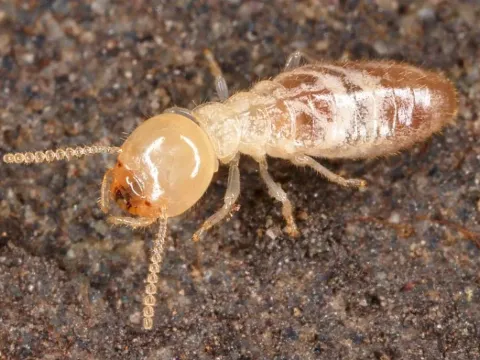
Giant northern termite
Mastotermes darwiniensis
The giant northern termite (Mastotermes darwiniensis) is considered one of the most primitive, yet biologically advanced and destructive termite species globally. It belongs to the family Mastotermitidae, order Blattodea.
What the section contains
Giant northern termite
Worker termites measure approximately 10-12 mm in length and possess strong mandibles. The royal caste can reach larger sizes, contributing to the colony's high resilience and long lifespan.
A unique biological feature of this species is its ability to reproduce through parthenogenesis, allowing populations to rebound rapidly after eradication attempts, making them very difficult to eliminate.
They prefer a cryptic, subterranean lifestyle, often avoiding open air. Unlike many other species, they rarely build large mounds above ground, instead nesting deep within tree trunks or in the soil.
Their high mobility allows them to forage over large distances, rapidly colonizing new agricultural areas and threatening various high-value crops.
This species is a highly destructive polyphagous feeder. It is a significant threat to tropical agriculture, capable of causing devastating losses in both plantations and local forests.
Mastotermes darwiniensis targets a wide variety of living trees, including mango, citrus, and nut plantations. They burrow into the trunk, destroying the internal structure and causing the tree to collapse.
Agricultural field crops like sugarcane and vegetables are also frequently attacked. The termites consume the stems and roots, causing the plants to wilt and die prematurely.
Beyond live plants, this termite is notorious for attacking infrastructure. They feed on wooden fences, irrigation pipes, and can even damage plastic coatings on electrical cables.
In cases of severe infestation, the damage can be total. Since the termites destroy the root system first, the recovery of the affected plantation is often impossible without extensive soil treatment.
The most common sign of infestation is the presence of mud-covered tunnels (carton tubes) on the surface of tree trunks or stems, which the termites use to travel safely.
Hollowed-out wood is a clear indicator of long-term feeding activity. If you tap on a tree or post and hear a hollow sound, it is highly likely that the internal structure has been compromised.
Sudden wilting of healthy-looking plants without signs of leaf-eating insects often points to root system destruction caused by underground termite activity.
Small exit holes near the base of the plant or in the surrounding soil indicate that the colony is actively foraging or expanding its tunnel network in the immediate area.
When examining damaged wood, you will often find that the soft cellulose tissues have been completely removed, leaving behind a fragile, skeletonized structure.
Control of Mastotermes darwiniensis requires a professional approach using slow-acting bait systems. These baits are carried back to the nest by workers, ensuring the death of the queen and the entire colony.
Establishing chemical barriers in the soil around plantation boundaries using modern termiticides helps prevent foraging parties from entering new areas of the crop.
Good agricultural practices are essential, including the systematic removal of stumps, fallen logs, and infested debris that serve as breeding grounds and food sources for the colony.
When installing infrastructure like vineyard trellises or supports, use termite-resistant or chemically treated materials to reduce the likelihood of attracting the insects.
- Regular monitoring using cellulose-based bait stations.
- Application of biological agents, such as entomopathogenic fungi.
- Localized fumigation in areas where colony centers are detected.