
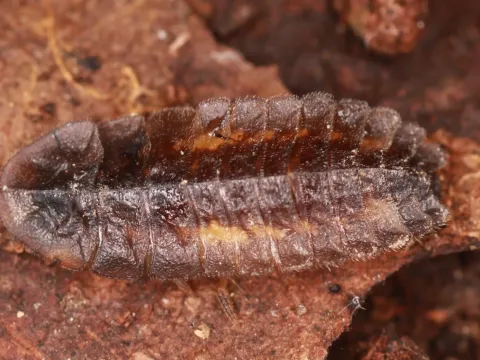
Glowworm beetle
Lamprorhiza
Glowworms of the genus Lamprorhiza belong to the order Coleoptera and the family Lampyridae. These insects exhibit significant sexual dimorphism, where males are winged and capable of flight, while females often remain larviform and flightless.
What the section contains
Glowworm beetle
The adult body is elongated, usually dark in color, featuring a distinct pronotum shield. Larvae have flattened, segmented bodies that facilitate movement through soil, leaf litter, and vegetation during their search for prey.
Bioluminescence is the defining characteristic of this family. Light is emitted from the ventral part of the abdomen and is primarily used for mate signaling. The intensity and rhythm of the glow can vary significantly between different species.
Agronomists identify the presence of these beetles using light traps, which are particularly effective for capturing flying males. Females are generally detected during nocturnal inspections of moist, shaded areas of the soil surface.
The life cycle involves complete metamorphosis, consisting of egg, larva, pupa, and adult stages. The larval stage is the longest and the most active in terms of foraging behavior within the agroecosystem.
While adult Lamprorhiza beetles are generally regarded as beneficial predators, their larval stage can occasionally become a nuisance in agricultural settings if population levels are exceptionally high.
Their primary food source consists of terrestrial mollusks, such as slugs and snails, which are well-known agricultural pests. In this capacity, the glowworm acts as a natural biological control agent, reducing mollusk pressure on crops.
Damage to plants typically occurs when the availability of slugs and snails is insufficient, forcing larvae to feed on the root tissues of young seedlings or ornamental plants. This can lead to plant wilting and stunted growth.
Crops with delicate root systems, such as young vegetable transplants, are most susceptible to this type of collateral damage. Root tissue injury also creates entry points for various soil-borne pathogens and fungal infections.
A balanced agro-monitoring strategy is essential to assess whether the glowworm population is providing a net benefit by suppressing mollusks or if they are becoming a direct threat to crop development.
The seasonal activity of Lamprorhiza is heavily influenced by soil moisture levels and ambient temperature. Peak adult activity usually occurs during warm summer months, aligning with the mating season.
Larvae are active throughout the growing season, particularly after periods of high rainfall. They favor humid environments, often congregating in damp soil, under mulching layers, or within thick vegetative cover.
During prolonged drought, larvae burrow deeper into the soil to escape desiccation. Their developmental cycle can span multiple years depending on environmental conditions, with pupation often occurring in late spring.
The transition to the pupal stage represents a period of reduced mobility. This specific timeframe is critical for farmers to conduct targeted soil tillage, which can disrupt the development of the next generation.
Monitoring local weather patterns allows for the prediction of peak larval activity, enabling better timing for irrigation and site maintenance to minimize the potential impact on sensitive crop stages.
The most reliable sign of Lamprorhiza presence is the characteristic bioluminescent glow observed in the root zone of crops during nighttime. This visual cue helps pinpoint high-density areas.
The presence of shallow tunnels or burrows in the soil near the base of plants indicates larval foraging activity. These tunnels are often associated with areas where mollusk populations have been depleted.
Visible surface necrosis or tissue degradation on the root collar of seedlings can serve as a diagnostic sign that larvae are feeding on plant tissues due to a lack of preferred molluscan prey.
A significant reduction in slug and snail populations, coupled with the observation of glowworms, suggests the insects are actively performing their ecological role as natural predators in the garden.
Nocturnal visual inspections using a flashlight provide the most straightforward method for identifying the insects and assessing the scale of their population within the cultivated area.
Managing excessive populations of Lamprorhiza requires an integrated approach that prioritizes habitat modification over intensive chemical interventions.
Improving soil drainage is a primary control measure. By reducing excessive moisture, the environment becomes less hospitable for the moisture-dependent larvae, encouraging them to migrate elsewhere.
Chemical control should be avoided or strictly limited, as these beetles are natural enemies of slugs. Excessive pesticide use would disrupt the balance of the ecosystem and potentially remove a valuable natural predator.
Regular cultivation and loosening of the soil in inter-row spaces help disrupt the larval environment and destroy their hiding spots under the soil surface or organic matter.
Managing crop residues and reducing excessive mulching during peak activity periods minimizes the shelter available to the larvae, making the garden less attractive for their colonization and development.