
Red coffee mite
Tetranychus coffeae
The Red coffee mite (Tetranychus coffeae) is a member of the spider mite family (Tetranychidae) within the Acariformes order. It is a microscopic arthropod that typically requires magnification for accurate identification.
What the section contains
Red coffee mite
Adult mites are characterized by a distinct reddish or reddish-brown coloration, which makes them visible against the green foliage if observed closely.
The life cycle encompasses several stages: egg, larva, protonymph, deutonymph, and adult. The duration of this cycle is temperature-dependent and can be as short as 10 to 14 days under optimal conditions.
Unlike many other Tetranychid species that favor the underside of leaves, this specific mite often concentrates on the upper surface of the leaves to feed and lay eggs.
The population growth rate is remarkably high, allowing the mite to reach damaging levels very quickly during favorable warm and dry weather conditions.
The primary host for this pest is the coffee plant, although it is known to be a polyphagous species capable of feeding on various other plants.
Additional host plants include tea, cacao, cotton, citrus trees, and numerous ornamental plants found in tropical and subtropical nurseries.
The mite damages the plant by piercing the epidermal cells and extracting cellular fluids, which leads to the destruction of chloroplasts and impaired photosynthesis.
Severe infestations result in a loss of plant vigor, reduced growth, and can significantly decrease the yield of coffee beans in agricultural production.
In nursery settings, heavy pressure from these mites can cause young seedlings to wilt or even die, leading to substantial economic losses for growers.
The seasonal activity of the Red coffee mite is dictated by temperature and humidity, with peak populations occurring during hot and dry spells.
In regions with distinct dry seasons, the mite population tends to escalate as moisture levels drop and natural predators become less effective in regulating the population.
Within controlled environments such as greenhouses, the pest can remain active and reproduce throughout the year, provided temperatures stay above 25 degrees Celsius.
High humidity and rainfall serve as natural deterrents, as they facilitate the development of entomopathogenic fungi that can naturally suppress mite numbers.
Initial dispersal of the mite to new hosts is often facilitated by wind currents or through human activity, including the transport of infested plant material.
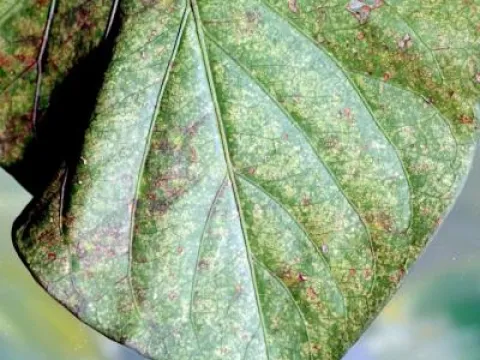
The first symptoms are identified by the presence of tiny, pale chlorotic spots on the leaf surface, which eventually coalesce into larger, bronzed areas.
A classic sign of infestation is the «rusty» or bronze appearance of leaves caused by extensive cell destruction, which distinguishes it from other types of damage.
As the infestation progresses, leaves lose their turgor, curl at the edges, and may drop prematurely, leaving the plant sparse and vulnerable to further stress.
While some web formation may occur, Tetranychus coffeae does not always produce heavy, dense webbing, which can lead to delayed detection if only searching for webs.
Stunted development of new shoots and a general decline in the plant's aesthetic and productive value are common indicators of established mite colonies.
Effective management requires an Integrated Pest Management (IPM) approach that combines cultural, biological, and chemical strategies for optimal results.
Cultural practices include ensuring adequate plant hydration to reduce stress, removing alternative weed hosts from the vicinity, and strict quarantine of incoming plant stock.
Biological control methods involve the introduction of predatory mites, such as Phytoseiulus persimilis or members of the Amblyseius genus, which are natural enemies.
Chemical control should be executed with acaricides. It is critical to rotate chemical classes to minimize the risk of the mite population developing resistance.
- Regular monitoring of foliage using a hand lens.
- Maintenance of adequate humidity levels in greenhouse environments.
- Use of selective acaricides that spare natural predators.
- Application of entomopathogenic fungi as a biological alternative.
- Prompt isolation and treatment of detected infested plants.