
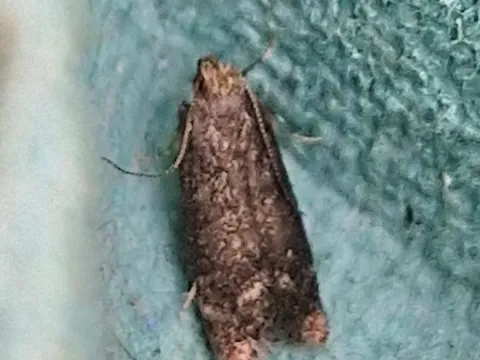
Gelechia vepretella
Gelechia vepretella
Gelechia vepretella is a small moth species belonging to the Gelechiidae family. These moths are known for their ability to hide effectively within the foliage of their host plants.
What the section contains
Gelechia vepretella
Adult moths possess brownish-gray wings with a characteristic notch on the hind margin. This camouflage coloration allows them to blend in seamlessly with the bark of blackberry canes.
The larvae are active feeders, initially pale yellow and turning greenish as they mature. They are known for their high mobility and quick reaction when disturbed, often dropping from the leaf surface.
The life cycle typically involves overwintering as pupae, hidden in sheltered areas such as bark crevices or plant debris, which helps them survive colder temperatures.
As nocturnal insects, adult moths are active during the night, performing mating and oviposition, which makes daytime inspection of the foliage less effective for spotting the adults.
The primary host for this pest is the blackberry plant, both cultivated varieties and wild types. It can occasionally affect other closely related Rosaceae plants in the garden.
Damage is caused by the larvae, which feed on the leaf parenchyma. They create silk-lined nests by rolling or folding leaves, protecting themselves while consuming the plant tissue.
Stunted growth of apical shoots is a common consequence of larval feeding. This interference with the plant's development can delay flowering and berry ripening.
In cases of severe infestation, the larvae may feed on young fruit buds, leading to direct crop loss and significantly reducing the commercial value of the yield.
Weakened plants are more susceptible to secondary infections, as the feeding sites provide entry points for various fungal pathogens common in moist berry patches.
The most noticeable sign of a Gelechia vepretella infestation is the presence of rolled or webbed leaves at the tips of the shoots, which appear deformed.
Small, dark granular frass (excrement) found inside the leaf rolls or on the lower leaves indicates that larvae are actively feeding within the vicinity.
The appearance of irregular holes, known as "window-paning," where the green tissue is consumed but the upper epidermis remains intact, is a hallmark of this pest.
Yellowing and subsequent browning of the foliage during the summer months are often indicators that the larvae have caused extensive damage to the vascular tissues.
Observation of the adult moths during evening dusk hours near the blackberry rows serves as a warning sign of an upcoming generation of larvae.
Sanitation is the most effective preventative measure. Pruning and destroying infested shoots early in the season prevents the pest from spreading throughout the planting.
Removing all leaf litter and mulch from the base of the plants in late autumn is crucial to disrupt the overwintering cycle of the pupae.
Biological control using Bacillus thuringiensis sprays is highly recommended, as it specifically targets lepidopteran larvae while remaining safe for beneficial insects.
Chemical control should be applied sparingly, ideally before the flowering stage, to ensure that pollinating insects are not harmed during the treatment process.
- Regular monitoring of terminal shoots during the spring growth phase.
- Implementation of pheromone traps to track moth population levels.
- Encouraging natural predators such as lacewings and parasitic wasps.