
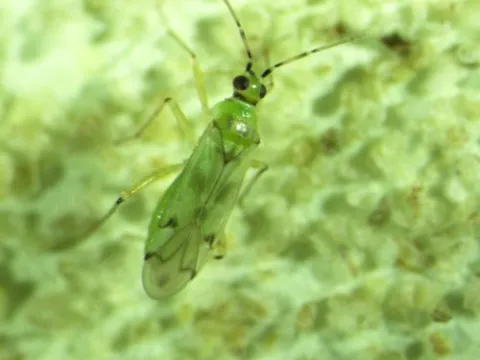
Engytatus volucer
Engytatus volucer
Engytatus volucer is a small insect belonging to the Miridae family within the order Hemiptera. Adult bugs are typically 3 to 5 mm long with an elongated, slender body structure.
What the section contains
Engytatus volucer
Their coloration is generally light green to yellowish, providing excellent camouflage against the foliage of host plants. They possess long, thin legs and antennae that are characteristic of this species.
The nymphs (immature stages) resemble adults in appearance but lack functional wings. They pass through five instars before reaching adulthood, feeding actively throughout their development.
Adults are capable of flight, allowing them to migrate efficiently between plants and across agricultural plots, which facilitates rapid colonization of new areas.
Due to their small size and cryptic habits, these bugs often hide on the undersides of leaves or within plant buds, making them difficult to detect during early infestation stages.
The primary hosts for Engytatus volucer are plants within the Solanaceae family, including tomatoes, peppers, and eggplants. They may also be found on various weed species.
The bugs use their piercing-sucking mouthparts to penetrate plant tissues and extract cellular fluids. This feeding habit depletes the plant of vital resources needed for growth.
During feeding, the insects inject saliva containing enzymes into the plant tissue. This process often causes localized necrosis, which impairs photosynthesis and overall plant vigor.
High population densities can lead to the damage of flower buds, causing them to abscise prematurely. This directly reduces fruit set and leads to significant yield losses in commercial production.
Feeding sites created by the bugs can also serve as entry points for secondary pathogens, including bacteria and fungi, which may lead to further plant decay.
The life cycle and activity of Engytatus volucer are closely regulated by environmental temperatures. They thrive in warm and humid conditions, which are ideal for their reproduction.
In outdoor environments, activity usually begins in late spring or early summer as temperatures rise. In greenhouse settings, the population can remain active throughout the year.
Multiple generations can occur during a single growing season. Population peaks are typically observed during the hottest summer months when developmental rates are at their maximum.
As temperatures drop in the autumn, the activity of the bugs declines. They may enter a state of diapause or move to more sheltered locations on weeds or plant debris.
Effective pest management must account for these seasonal cycles, prioritizing early-season monitoring to prevent the population from reaching economic threshold levels.
The first signs of infestation include the appearance of small, light-colored chlorotic spots on the leaves, which are the direct result of the bugs puncturing leaf tissues.
Affected leaves may show signs of yellowing, curling, or deformation. If not treated, the foliage may dry out and die, leading to stunted overall plant growth.
Close inspection of the underside of the leaves often reveals the presence of bugs, their small dark excrement spots, and the discarded skins left behind during the molting process.
A reduction in the growth rate and general poor health of the plant are often correlated with heavy infestations of this pest, particularly in the younger, more succulent parts of the plant.
- Light-colored spotting on leaves.
- Deformed or curled young leaves.
- Premature dropping of flower buds.
- Presence of nymphs on the lower leaf surface.
Using yellow sticky traps is a critical monitoring strategy that helps agronomists detect the early arrival of Engytatus volucer before significant damage occurs.
Cultural control methods involve strict weed management, specifically the removal of solanaceous weeds near production areas to eliminate potential breeding sites.
Chemical control may involve the application of systemic or contact insecticides registered for use against sucking insects, ensuring careful rotation to avoid resistance.
Biological control agents, such as predatory bugs of the genus Macrolophus, can be utilized in integrated pest management programs to suppress populations naturally.
At the end of the growing season, thorough sanitization of greenhouses and post-harvest soil treatment are essential to reduce the carry-over of the pest to the next cycle.