
Monarch butterfly
Danaus menippe
The Monarch butterfly (Danaus menippe / Danaus plexippus) is a well-known lepidopteran from the Nymphalidae family. Adult butterflies are characterized by vivid orange wings with prominent black veins and white-spotted margins.
What the section contains
Monarch butterfly
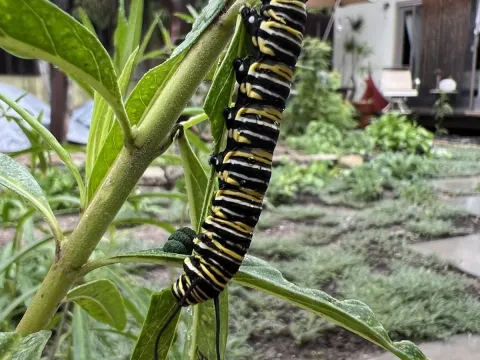
The larvae, or caterpillars, are easily recognized by their striking warning colors: alternating bands of yellow, black, and white across their cylindrical bodies.
Pupation occurs in a smooth, light green chrysalis featuring gold-colored spots, usually suspended from the underside of leaves or nearby solid structures.
The species is famous for its long-distance migration patterns, where individuals travel thousands of miles to reach overwintering grounds.
The complete metamorphosis includes the egg, larval, pupal, and adult stages, with the entire cycle duration heavily influenced by local temperature conditions.
Larvae feed exclusively on plants belonging to the Apocynaceae family, with the genus Asclepias (milkweed) being their primary host.
Caterpillars consume large quantities of leaf tissue, often starting from the edges, which can lead to significant defoliation in specialized garden plantings.
While not a major agricultural pest for crops, they can be highly problematic in nurseries or botanical collections where milkweed is intentionally cultivated.
Only the larval stage causes damage to plant biomass; adult butterflies feed on nectar and are considered beneficial pollinators for many floral species.
The ingestion of cardiac glycosides from milkweed plants makes the larvae toxic to many predators, which limits the effectiveness of natural biological control.
Monarch activity begins during the spring as temperatures rise, signaling the start of the breeding season for the newly emerged generation.
Multiple generations may develop throughout the warm season, with the population density peaking during the mid-summer months when food resources are plentiful.
As autumn approaches and day length decreases, the butterflies begin their migration process toward warmer climates for the winter period.
In greenhouses or controlled environments, development can proceed year-round provided that host plants are available and temperatures remain stable.
Egg-laying and larval emergence are perfectly synchronized with the phenological stage of milkweed plants, ensuring immediate access to nutrition.
The primary indicator of a Monarch presence is the appearance of jagged or stripped leaf edges on milkweed plants in the garden.
Accumulation of dark, granular frass on the leaves and soil surface directly beneath the feeding site indicates the presence of active larvae.
Brightly colored caterpillars visible on the foliage are the most direct evidence of infestation within a given area.
The discovery of empty chrysalis casings hanging from stems confirms that a successful pupation cycle has been completed in the vicinity.
Localized tissue loss on leaves without evidence of viral or fungal blight suggests grazing by lepidopteran larvae.
In smaller landscapes, hand-picking the caterpillars is the most effective and eco-friendly method for managing their population numbers.
For larger areas, biological insecticides based on Bacillus thuringiensis are highly effective against larvae while being safe for non-target species.
Cultural control involves monitoring the growth of wild milkweed and managing its density to prevent it from becoming a reservoir for the insects.
Refraining from the use of broad-spectrum chemical pesticides is crucial to protect the ecosystem and support beneficial insects that provide natural control.
- Manual removal of caterpillars from ornamental plantings.
- Application of microbial control agents when necessary.
- Routine inspection of host plants during the growing season.