
Tetanocera ferruginea
Tetanocera ferruginea
Description
How to identify
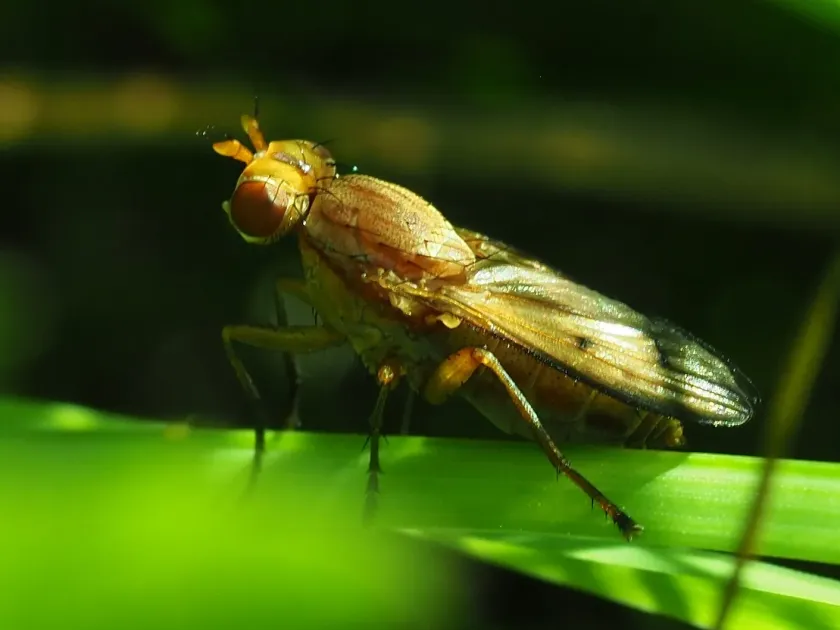
Tetanocera ferruginea is a species of marsh fly belonging to the family Sciomyzidae. Adults are small insects characterized by a distinct yellowish-brown body coloration.
The wings typically exhibit a rusty or brownish hue with a net-like pattern, which serves as a primary diagnostic feature for identifying this specific species in the field.
The larvae of this species are primarily semi-aquatic, possessing elongated bodies well-adapted to surviving in high-moisture environments and along the edges of water bodies.
The adult fly possesses a highly developed licking-type mouthpart, which is common among various Sciomyzidae species inhabiting wetlands.
The developmental cycle is intrinsically tied to saturated soil conditions, where the larvae undergo their transformation stages, including pupation within protective casings.
What it damages
While adult flies do not typically cause direct physical damage to cultivated plants, they are significant indicators of environmental imbalance in agricultural areas.
Larval activity in the soil can indirectly affect root systems, especially in areas suffering from poor drainage where plants are already under environmental stress.
The primary ecological role of these larvae is predating on mollusks; however, their presence in large numbers signals that the soil moisture levels are suboptimal for crops.
Crops grown in waterlogged soils become increasingly susceptible to various secondary pests and diseases, which can be exacerbated by the presence of specific entomofauna.
Excessive moisture-associated pest populations require careful monitoring to prevent potential losses in field productivity and crop health.
When it appears
Adult activity peaks during the warmer months, typically from late spring through early autumn, when soil temperatures favor larval growth and development.
The highest population density is often observed following periods of heavy rainfall, which create the ideal saturated conditions necessary for the fly’s reproductive cycle.
These flies overwinter primarily in the pupal or adult stage, remaining within protective plant debris until favorable weather conditions return in the following season.
The speed of generational turnover is heavily influenced by regional humidity levels and the amount of precipitation occurring throughout the agricultural growing season.
Monitoring for adult flies should commence early in the spring, once the soil has begun to warm up and moisture levels remain high in low-lying areas.
Signs of infestation
The presence of abundant mollusk populations in the root zone is a primary indicator, as these serve as the main food source for the marsh fly larvae.
Adult flies can be spotted during morning hours resting on vegetation or near wet soil patches where they seek out environments suitable for egg-laying.
Damage to roots or the root crown in waterlogged fields is often accompanied by the presence of larvae within the upper layers of the soil.
General crop decline in areas with poor drainage often highlights conditions that are perfectly suited for the proliferation of this marsh fly species.
The discovery of specific tunnel marks in decaying plant tissues located in damp environments can provide additional evidence of larval activity.
Control measures
The most effective strategy for managing these insects involves comprehensive land reclamation and the improvement of field drainage systems.
Agronomic practices, such as regular inter-row cultivation, disrupt the larval habitat and significantly hinder the successful pupation of the flies.
Effective weed management helps reduce localized humidity at the root level, making the field environment less attractive for fly colonization.
Implementing biological control measures to manage mollusk populations indirectly limits the food supply for the larvae, thereby controlling the fly population naturally.
- Improvement of soil drainage infrastructure.
- Regular soil moisture monitoring and management.
- Removal of plant debris to eliminate overwintering sites.
Taxonomy
- Latin name
- Tetanocera ferruginea
- Order
- Diptera (flies)
- Family
- Sciomyzidae
- EPPO code
- TTNCFE
Discussion
No discussions yet — be the first.