
Sciomyzid fly
Sciomyza
Description
How to identify
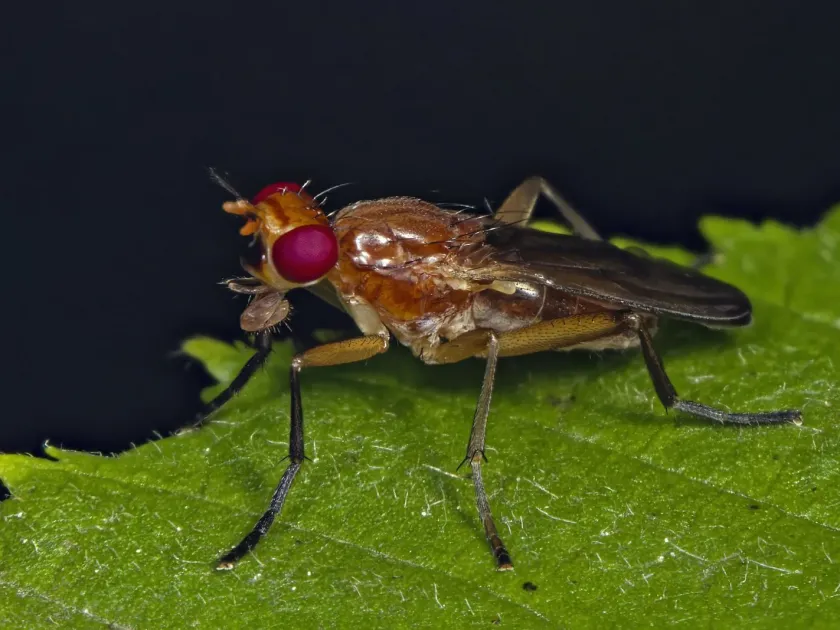
The Sciomyzidae family, commonly known as marsh flies or snail-killing flies, belongs to the order Diptera. These insects are distinguished by their slender bodies and often patterned, delicate wings.
Adult flies typically range from 3 to 10 mm in size. Their anatomy is perfectly adapted for navigating through dense, moist vegetation near water bodies or damp soil patches.
The larvae are particularly notable for their specialized mouthparts, which are designed to hunt and consume various species of aquatic and terrestrial mollusks.
Identification is primarily based on the presence of the flies in wet habitats and their association with snail populations, which are essential for the larval life cycle.
Distinguishing Sciomyzidae from other related fly families usually requires expert entomological examination of wing venation and thoracic bristles.
What it damages
Sciomyzid flies are not categorized as primary pests of agricultural crops. They do not consume plant tissue, meaning they cause no direct mechanical damage to roots, stems, or leaves.
Their ecological impact is mainly centered on predatory interactions with snails and slugs. By reducing these mollusk populations, they can occasionally act as beneficial biological control agents.
In most agricultural settings, the presence of these flies is considered neutral. They represent a natural component of biodiversity in moist farmland environments.
Concerns regarding these flies usually arise only if their habitat requirements overlap with commercial water-dependent crops, but even then, they are not a direct threat to yield.
No economic threshold for Sciomyzidae infestation exists in conventional agronomy, as they do not require management actions to protect harvest quality.
When it appears
The activity cycle of marsh flies is strictly temperature-dependent. Adults emerge in early spring as soon as temperatures allow for the activation of their snail prey.
During the summer months, they reach their peak population density. Continuous moisture levels are crucial for the development of multiple generations throughout the season.
As autumn approaches, the flies prepare for overwintering. They seek refuge in sheltered micro-habitats such as decaying organic matter, soil crevices, or dense debris.
The number of generations per year is highly variable, depending on regional climatic conditions and the duration of the frost-free period.
Overwintering success is a limiting factor for their population size, and they remain in a state of diapause until environmental conditions become favorable again.
Signs of infestation
Signs of Sciomyzidae activity include the discovery of empty mollusk shells in wet areas, which often exhibit specific signs of larval predation.
Adult flies can be spotted by visual inspection of damp vegetation near irrigation canals or drainage ditches during the peak growth season.
Changes in the local snail population are the most significant indicator of Sciomyzidae presence. A decline in slug and snail density can often be attributed to these flies.
There are no diagnostic symptoms on plants associated with this family, as they do not feed on crops or transmit plant-specific pathogens.
Farmers can monitor their presence through simple sweep netting in wetland or low-lying areas of the field to determine the overall health of the local ecosystem.
Control measures
As Sciomyzidae are not harmful to crops, specific control measures are generally unnecessary and not recommended in professional agricultural practice.
To reduce their numbers on farmland, managing water excess is the most effective approach. Proper field drainage makes the habitat unsuitable for snail-killing fly larvae.
Cultural practices that improve soil aeration and reduce weed growth around water edges help maintain an environment less conducive to these insects.
The use of broad-spectrum insecticides is discouraged, as it disrupts the biological balance and eliminates predatory insects that control actual agricultural pests.
Integrated Pest Management (IPM) strategies emphasize observing their role as natural predators rather than targeting them for elimination.
Taxonomy
- Latin name
- Sciomyza
- Order
- Diptera (flies)
- Family
- Sciomyzidae
- EPPO code
- SCIZSP
Discussion
No discussions yet — be the first.