
Coremacera
Coremacera
Description
How to identify
Coremacera is a genus of flies belonging to the family Sciomyzidae, commonly known as snail-killing flies or marsh flies.
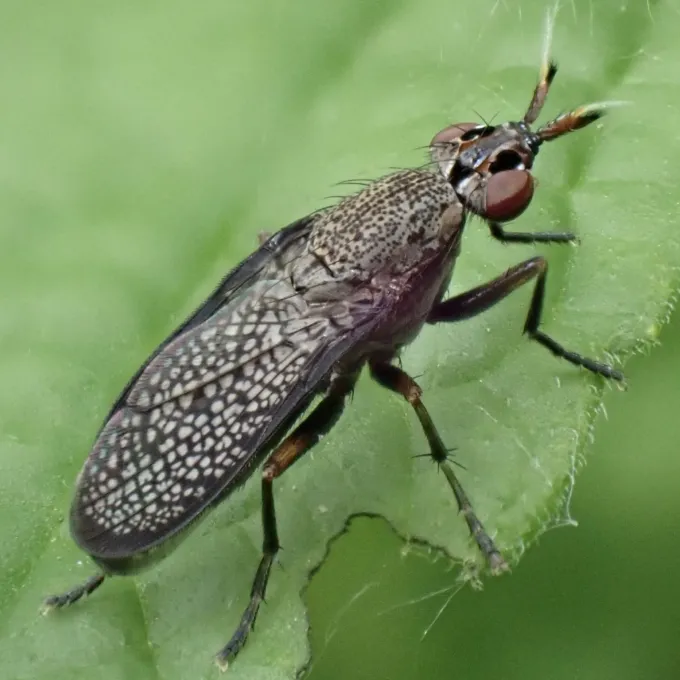
These flies are characterized by patterned wings, which provide excellent camouflage when they rest on vegetation.
Adult flies are medium to large in size, with well-developed compound eyes that help them locate their specific habitats.
The morphology of the head and mouthparts is specialized, allowing them to interact with their environment efficiently.
Identification at the species level usually requires detailed examination of adult anatomical structures, particularly the terminalia.
What it damages
It is crucial to note that Coremacera does not cause damage to agricultural crops, as the larvae are specialized predators of gastropods.
These insects are considered beneficial, as they target slugs and snails that are notorious pests of garden plants and crops.
By preying on mollusks, these flies provide a natural form of biological control, helping to reduce the overall population of garden pests.
Farmers and gardeners should recognize these flies as allies rather than enemies, as they minimize the need for chemical molluscicides.
No agricultural damage is attributed to this genus, making them a neutral or positive component of the agricultural ecosystem.
When it appears
Adult Coremacera are typically observed during the warmer months, corresponding with the peak activity of their prey, the snails.
They are most frequently found in humid environments such as meadows, wetlands, and shaded areas near water sources.
The life cycle involves larval development within the host or in the moist substrate where the mollusks dwell.
Overwintering usually occurs in the pupal stage, buried in the soil or protected under decaying organic matter.
Emergence in spring is triggered by rising temperatures and the increased availability of suitable moisture levels.
Signs of infestation
Signs of their presence include a reduction in the populations of snails and slugs in moist, sheltered areas of the garden.
Dead snail shells found in clusters may suggest high activity of snail-killing fly larvae in the immediate vicinity.
Adult flies can often be seen resting on low-lying vegetation or on the stalks of plants during early morning or evening hours.
The absence of damage on vegetable leaves confirms that the presence of these flies does not negatively impact crop health.
There are no specific markings or plant symptoms associated with this species, as they do not interact with plant tissues.
Control measures
No control measures are necessary, as Coremacera is an essential part of the natural control of slug populations.
Gardeners are encouraged to avoid broad-spectrum pesticides to prevent the destruction of these beneficial predatory flies.
Maintaining diverse habitats with some level of moisture will ensure these flies remain a permanent part of the local ecosystem.
If mollusk control is needed, selective methods should be used to avoid harming the natural predators of these pests.
Sustainable gardening practices generally support the continued presence and activity of these beneficial insect species.
Taxonomy
- Latin name
- Coremacera
- Order
- Diptera (flies)
- Family
- Sciomyzidae
- EPPO code
- CRMESP
Discussion
No discussions yet — be the first.