
Coremacera marginata
Coremacera marginata
Description
How to identify
Coremacera marginata is a species of marsh fly belonging to the Sciomyzidae family, which are well-known for their unique ecological role as snail-killing flies.
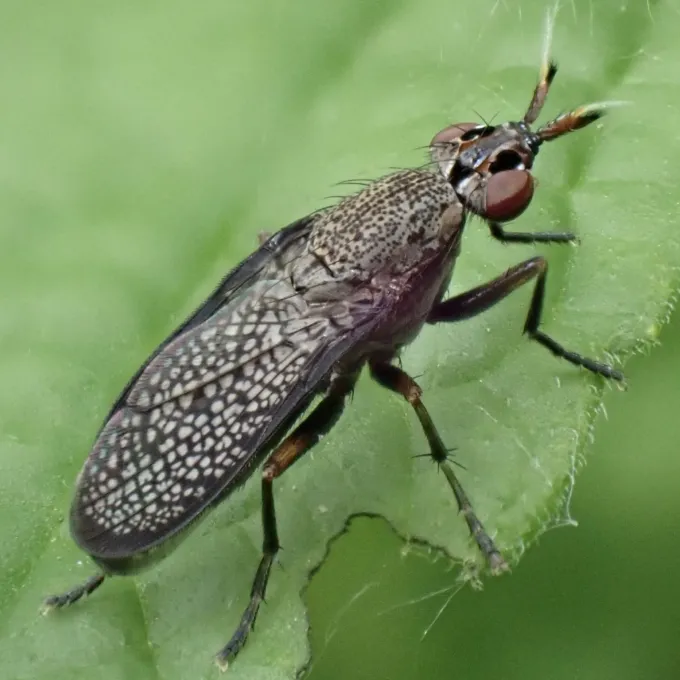
Adult flies are relatively small, typically measuring between 7 to 10 mm in length, and are easily identified by the distinct mottled or spotted pattern on their wings.
The body coloration is usually brownish or yellowish-gray, providing excellent camouflage against soil surfaces, fallen leaves, and plant stems.
Their life cycle includes a complete metamorphosis, where larvae specifically target various species of gastropod mollusks, including terrestrial slugs and snails.
They are commonly found in humid habitats, such as wetlands, meadows with high soil moisture, and dense garden areas where their prey thrives.
What it damages
This species does not cause damage to agricultural crops; instead, it acts as a specialized predator that assists in controlling harmful snail and slug populations.
In a farming context, Coremacera marginata serves as a natural biological control agent, reducing the number of mollusks that would otherwise consume valuable young crops.
Because they are not pests, direct control or eradication measures against this fly species are counterproductive and unnecessary for crop management.
The presence of these flies indicates a healthy, functioning ecosystem where natural predation plays a significant role in managing agricultural pests.
Farmers should consider these insects as allies rather than threats, as their larvae effectively feed on the mollusks that often destroy seedlings and leaves.
When it appears
Adult activity peaks during the warmer months, typically from late spring through the end of the summer, aligning with the activity cycle of their mollusk prey.
In the peak of summer, when moisture levels are high, these flies are most active and can be seen resting on vegetation or moving across damp soil.
Larval development is tied to the availability of moisture, so they are most abundant in years with moderate to high rainfall or on well-irrigated agricultural land.
During the cooler months of autumn and winter, the flies undergo diapause, often overwintering in protected locations in the soil or under leaf litter.
The emergence of the new generation in spring is synchronized with the first appearance of young slugs, ensuring an immediate food source for the developing larvae.
Signs of infestation
One of the primary signs of this fly's presence is a noticeable reduction in the population of slugs and snails within a particular area of the field.
Adult flies can be spotted by careful inspection of the lower parts of plants, particularly in shaded or damp corners of the garden or field.
The presence of empty, partially consumed snail shells is a clear indicator that marsh fly larvae are successfully predating on the mollusk population.
A lack of fresh damage to vegetable leaves, despite environmental conditions being suitable for slugs, may point to effective natural control by Coremacera marginata.
Observing the distinct wing pattern during the early morning hours can help distinguish these beneficial flies from common household or field pests.
Control measures
No specific control measures are required for Coremacera marginata, as they are considered beneficial insects rather than agricultural pests.
The best management strategy is to avoid the unnecessary use of broad-spectrum insecticides, which can harm these natural predators and disrupt biological pest control.
Maintaining balanced soil moisture levels through proper drainage helps manage slug habitats without the need for chemical intervention.
Encouraging biodiversity by preserving natural edges and diverse vegetation around fields supports the population of marsh flies and other beneficial arthropods.
Integrated Pest Management (IPM) practices should prioritize the conservation of these flies to maintain natural pressure on slug and snail infestations throughout the growing season.
Taxonomy
- Latin name
- Coremacera marginata
- Order
- Diptera (flies)
- Family
- Sciomyzidae
- EPPO code
- CRMEMA
Discussion
No discussions yet — be the first.