
Marsh fly
Tetanocera
Description
How to identify
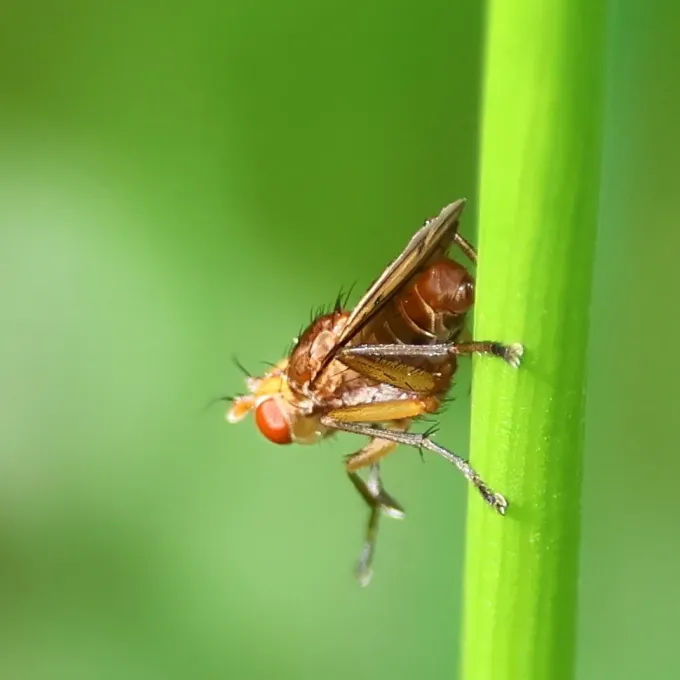
The marsh fly belongs to the family Sciomyzidae. Adults are typically recognizable by their slender bodies and patterned wings that provide excellent camouflage.
They generally range from 5 to 10 mm in length, with coloration varying from light yellow to deep brown, allowing them to blend into marshy vegetation.
Their head structure is distinct, often featuring prominent eyes that aid in their specialized hunting behavior targeting mollusks.
Larvae are highly adapted predators that dwell in moist environments and consume snails, playing a key role in their regulation.
Taxonomically, these insects are valued as biological control agents for snail populations in various ecosystems.
What it damages
Marsh flies are not considered direct pests of agricultural crops as they do not feed on plant tissues, leaves, or roots.
Their primary diet consists strictly of land and aquatic snails, making them beneficial in areas where snail populations become problematic.
While they are not crop-damaging, their presence indicates a high level of moisture in the field environment, which may indirectly influence crop health.
There is no documented economic damage caused by Tetanocera species to common row crops or horticultural plants.
In fact, their predatory nature on mollusks often makes them an ally for farmers dealing with snail-infested crops near water bodies.
When it appears
Activity typically begins in late spring when temperatures rise and moisture levels remain consistent for snail reproduction.
Adult flies are most active during the summer months, aligning with the peak breeding season of their gastropod prey.
The life cycle involves multiple generations per season, allowing the population to expand rapidly when environmental conditions are favorable.
As autumn approaches, the flies seek out debris or soil crevices to enter diapause and survive the winter months.
Environmental humidity is the most critical factor influencing the seasonal appearance and population density of this fly.
Signs of infestation
The most reliable sign of their presence is the discovery of empty, damaged snail shells in the field, often near the soil surface.
Visual identification of adults on vegetation is possible, especially during the quiet morning hours when they are less active.
No damage to the crops themselves will be seen, which distinguishes their presence from that of true herbivorous pests.
Increased soil moisture or the presence of irrigation ditches often correlates with higher concentrations of these flies.
Finding the larvae requires searching in very damp, shaded areas or directly within the shells of live or dead snails.
Control measures
Active control measures are rarely necessary for Tetanocera as they do not pose a threat to plant health or yields.
If their presence is undesirable for ecological or specific management reasons, improving field drainage is the most effective approach.
Regular cultivation and soil turning can disrupt the life cycle of the larvae by removing their hunting grounds and shelter.
Avoid broad-spectrum chemical insecticides, as these disrupt natural biological controls that benefit the farm ecosystem.
Maintaining a balanced environment helps keep populations of all insects, including marsh flies, at manageable levels without chemical intervention.
Taxonomy
- Latin name
- Tetanocera
- Order
- Diptera (flies)
- Family
- Sciomyzidae
- EPPO code
- TTNCSP
Discussion
No discussions yet — be the first.