
White-eyes
Zosterops
Description
How to identify
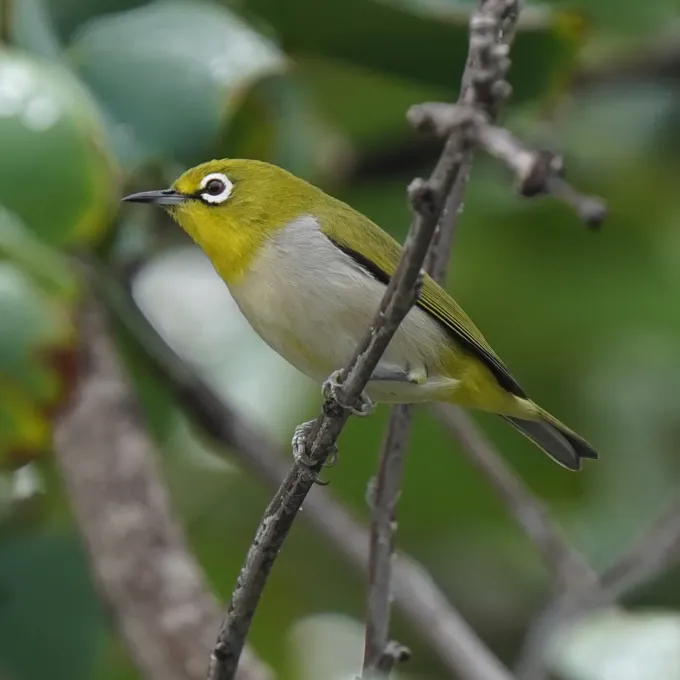
White-eyes (Zosterops) are a genus of small passerine birds in the Zosteropidae family, characterized by a prominent ring of white feathers around the eyes.
While primarily insectivorous in their natural habitat, these birds are opportunistic feeders that often target agricultural crops when natural food sources are scarce.
They are highly social birds that forage in large, fast-moving flocks, making them a significant challenge to manage in orchards.
Their small size allows them to access sheltered areas within the foliage of fruit trees that larger birds might avoid.
Though they contribute to pest control by eating insects, their destructive impact on ripening fruits outweighs these benefits during the harvest season.
What it damages
White-eyes pose a serious threat to viticulture and fruit farming, particularly causing damage to grapes, figs, citrus, and various stone fruits.
They use their beaks to puncture the skin of ripe fruits, consuming the sweet pulp inside and leaving the fruit susceptible to secondary infections.
The damage often results in rapid decay of the fruit, making the remaining produce on the tree or vine unmarketable.
In large-scale farming, the economic loss can be severe due to the sheer number of birds in a single flock attacking the crop simultaneously.
Their selective feeding behavior means they target the highest quality fruits, leading to a decrease in both yield quantity and grade.
When it appears
The risk of white-eye infestation is highest during the peak ripening season, when fruit sugar content is at its highest level.
In many regions, this correlates with the late summer and early autumn months, coinciding with the harvest of critical commercial crops.
Their movement patterns are often linked to regional migrations and the availability of wild fruits in surrounding areas.
Environmental stressors such as hot, dry weather can intensify the frequency of their visits to orchards as they seek out moisture-rich fruit.
Daily foraging occurs primarily during the cool hours of the morning and evening when the birds are most active.
Signs of infestation
The most diagnostic sign is the presence of small, precise punctures in the skin of fruits and berries throughout the orchard.
Accumulated bird droppings on foliage and fruit clusters near the damage sites serve as a clear indicator of avian activity.
Increased prevalence of fruit rot spreading rapidly from the puncture sites caused by the birds' feeding.
The characteristic high-pitched calls and social chatter of flocks moving rapidly between tree canopies.
Premature fruit drop, often with visible signs of pecking, littering the ground beneath the canopy.
Control measures
Physical exclusion remains the most effective method, utilizing protective netting draped over trees or along vineyard rows.
Visual deterrents, such as reflective holographic tape and predator decoys, can offer short-term relief from flock harassment.
Bioacoustic systems that broadcast distress calls or predator sounds are useful for managing larger areas of cultivation.
Effective orchard management includes the prompt removal of fallen or overripe fruit to avoid attracting additional flocks to the site.
- Exclusion netting for trees and vines
- Reflective tapes and visual scarecrows
- Bioacoustic distress call players
- Early harvest protocols
Taxonomy
- Latin name
- Zosterops
- Family
- Zosteropidae
- EPPO code
- ZOSTSP
Discussion
No discussions yet — be the first.