
Yamatocallis tokyoensis
Yamatocallis tokyoensis
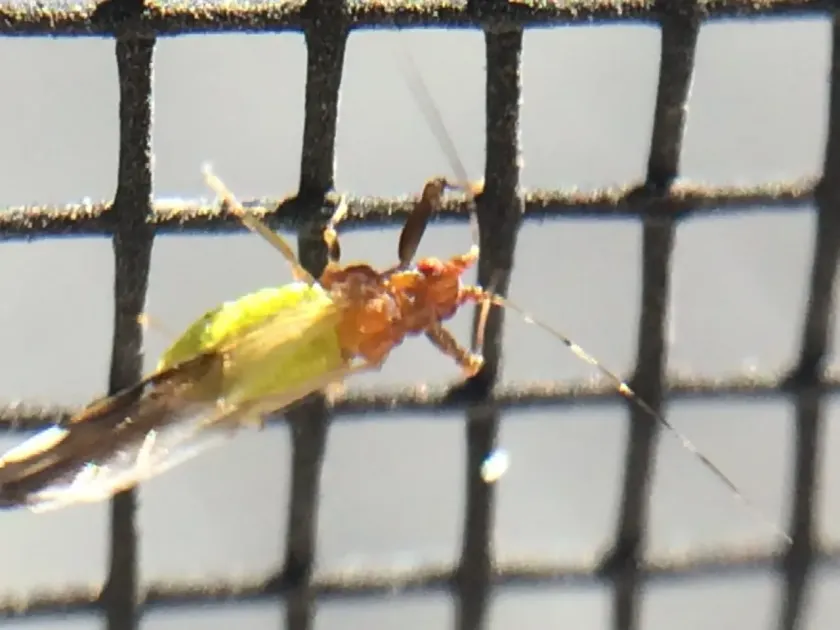
Description
How to identify
Yamatocallis tokyoensis is a specialized species of aphid belonging to the family Aphididae. It is primarily recognized as a pest affecting various species of maple trees.
Adult insects are typically small, measuring about 2–3 millimeters in length. Their coloration often ranges from pale green to brownish, providing effective camouflage on leaf veins.
The life cycle of this species involves both apterous (wingless) and alate (winged) forms. The winged adults are responsible for the dispersal of the colony to nearby host plants during the summer months.
As a member of the order Hemiptera, it possesses piercing-sucking mouthparts specifically evolved for extracting plant sap from the phloem of host trees.
Nymphs resemble smaller versions of adults and undergo several molting stages before reaching maturity, continuously feeding throughout their development.
What it damages
This aphid species predominantly attacks trees of the genus Acer, including highly ornamental varieties like Japanese maples.
Colonies are usually situated on the underside of leaves and along young shoots, where they aggregate in large numbers to maximize nutrient intake.
The primary damage is caused by the depletion of essential sap, which leads to leaf curling, chlorosis, and the general physiological weakening of the host tree.
Beyond nutrient depletion, the pest facilitates the development of secondary infections by creating micro-wounds in the leaf tissue, allowing pathogens to enter.
Heavy infestations significantly reduce the ornamental value of maple trees, making them unsuitable for landscape design and botanical collections.
When it appears
The activity of Yamatocallis tokyoensis typically commences in the spring, coinciding with the flushing of new leaves which provide the initial food source.
Population levels often reach their peak during the mid-summer period, when environmental conditions are optimal for rapid reproduction and multiple generations.
During the summer, the rapid turnover of generations can lead to exponential growth of the population if left uncontrolled by natural predators or human intervention.
As autumn approaches, reproduction slows down, and the insects transition into stages capable of surviving the winter, often residing in bark crevices or near buds.
Effective management requires early detection in the spring to prevent the establishment of dense colonies that are harder to treat later in the season.
Signs of infestation
Early signs of infestation include the curling or twisting of leaf margins and the appearance of pale, yellowish spots where the aphids have been feeding.
A sticky substance known as honeydew is frequently found on the leaves below the aphid colonies, acting as a clear indicator of their presence.
The presence of sooty mold, a black fungal growth, is a common secondary sign that thrives on the honeydew excreted by the aphids.
Stunted growth of new shoots and premature leaf drop are characteristic symptoms of severe stress caused by long-term aphid feeding.
Upon closer inspection, one can identify clusters of small, yellowish or brownish aphids along the primary and secondary veins on the underside of leaves.
Control measures
Systemic insecticides applied to the roots or foliage are considered the most effective chemical method for controlling these hidden-feeding pests.
Integrated pest management suggests prioritizing biological control by encouraging natural predators such as lady beetles, lacewings, and parasitic wasps.
Proper horticultural practices, including balanced fertilization and timely pruning of heavily infested branches, help to maintain the tree's vigor and resistance.
- Regular monitoring of maple foliage from late spring onwards.
- Targeted application of insecticides when colonies are first spotted.
- Cleaning honeydew-affected leaves to reduce the risk of sooty mold.
Routine inspections are essential for maintaining the health of valuable maple specimens and preventing the spread of the pest within a garden environment.
Taxonomy
- Latin name
- Yamatocallis tokyoensis
- Order
- Hemiptera (bugs, aphids, leafhoppers)
- Family
- Aphididae
- EPPO code
- DRENTO
Discussion
No discussions yet — be the first.