
Yamatocallis sauteri
Yamatocallis sauteri
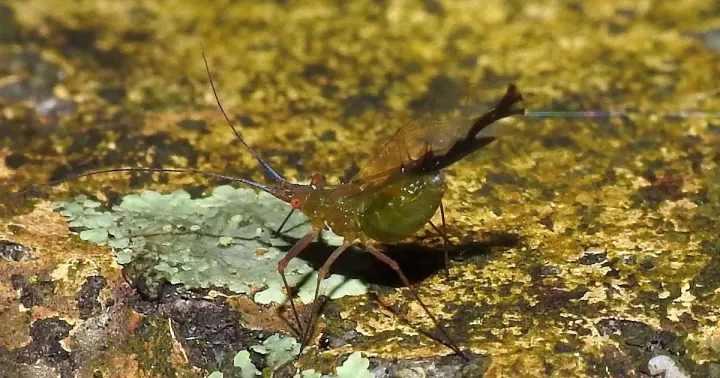
Description
How to identify
Yamatocallis sauteri is a specialized species of aphid belonging to the family Aphididae. This pest is primarily recognized for its association with maple trees (genus Acer), where it completes its lifecycle.
The insect possesses the typical morphological features of aphids, such as delicate wings in alate forms and specialized feeding apparatus for piercing plant tissues. Its size makes it challenging to detect without close inspection.
The lifecycle of this species is synchronized with the phenology of the maple tree. It typically overwinters in the egg stage on the bark, allowing it to hatch synchronously with the emergence of young leaves.
Reproduction is primarily asexual during the warmer months, allowing populations to grow rapidly through multiple generations within a single season.
Entomological classification is based on specific characteristics of the siphunculi and venation patterns, which are essential for accurate field identification by agricultural specialists.
What it damages
Yamatocallis sauteri primarily feeds on the phloem sap of maple trees. The feeding process occurs predominantly on the undersides of leaves and on young, tender shoots.
This persistent extraction of nutrients leads to the weakening of the host plant, resulting in reduced growth rates and poor vigor. Severe infestations often lead to premature leaf drop.
The secretion of honeydew by the aphids creates a sugary substrate that promotes the growth of sooty mold, a fungus that interferes with the tree's ability to perform photosynthesis efficiently.
In addition to direct physiological damage, the aphids may act as vectors for viral pathogens, further complicating the health status of the infested trees.
Repeated yearly infestations can lead to a general decline in the tree's health, making it more susceptible to other biotic and abiotic stresses such as drought or secondary infections.
Signs of infestation
The presence of honeydew, a sticky substance on leaves and branches, is the most common diagnostic sign of an aphid infestation. This substance often leaves a shiny sheen on the foliage.
Sooty mold colonization, appearing as a dark, charcoal-like layer on leaves and bark, is a secondary sign that indicates a significant aphid population density.
Leaf curling, yellowing (chlorosis), and general distortion are typical reactions of the tree to the loss of sap and the injection of aphid saliva during feeding.
Increased activity of ants, which are attracted to the honeydew, is a strong indicator that an aphid colony is present and actively feeding in the upper parts of the tree.
The discovery of exuviae (cast skins) left behind after molting serves as clear physical evidence of the pest's recent life cycle stages on the host plant.
Control measures
Management of Yamatocallis sauteri relies on the timely application of systemic insecticides that target sucking insects while minimizing impact on beneficial predatory species.
Biological control remains a highly effective strategy, encouraging the presence of natural enemies like ladybirds, hoverflies, and lacewings which feed on aphid colonies.
Horticultural practices such as maintaining optimal soil moisture and proper nutrition help the trees develop natural defenses against pest pressure.
Regular monitoring during the spring and early summer allows for early intervention, which is crucial for preventing the population from reaching economic threshold levels.
- Use of insecticidal soaps for light infestations.
- Application of systemic pesticides when pest levels are high.
- Promoting a healthy ecosystem to attract natural aphid predators.
- Removing heavily infested branches to reduce the initial population size.
Taxonomy
- Latin name
- Yamatocallis sauteri
- Order
- Hemiptera (bugs, aphids, leafhoppers)
- Family
- Aphididae
- EPPO code
- DRENSA
Discussion
No discussions yet — be the first.