
Maple aphid
Yamatocallis acerisucta
Description
How to identify
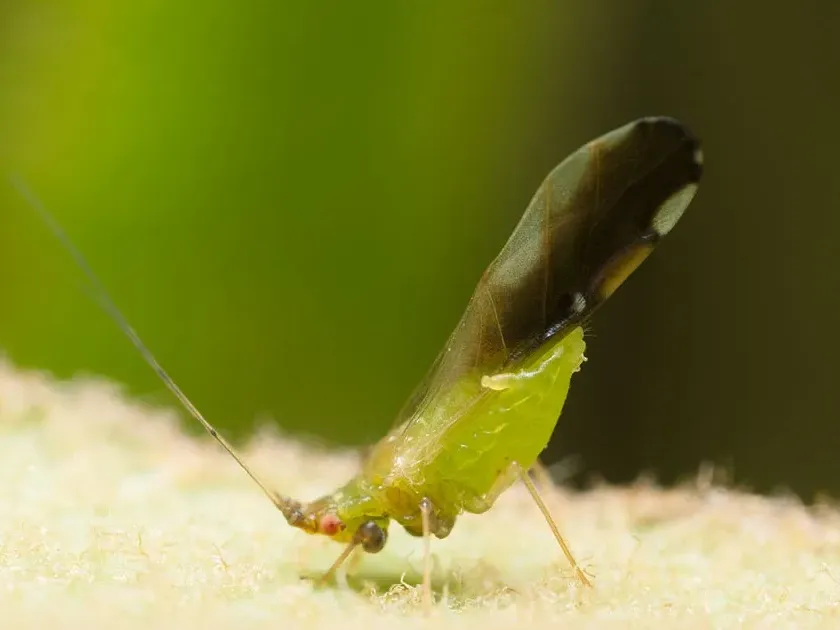
The maple aphid, Yamatocallis acerisucta, is a small insect belonging to the family Aphididae, specialized in feeding on maple tree sap.
Adults typically exhibit a spindle-shaped body, with colors ranging from pale green to yellow, which helps them blend in perfectly with the leaf underside.
The life cycle includes both winged and wingless forms, allowing the population to colonize new parts of the tree canopy efficiently during the growth season.
A distinctive feature of this species is the presence of long, slender siphunculi (tubes) on the abdomen, typical of the Drepanosiphinae subfamily.
Their rapid reproductive rate allows them to build significant colony densities quickly when environmental temperatures are conducive to growth.
What it damages
The primary host plants for this pest are various Acer species, where they feed extensively on young shoots and the undersides of leaves.
By constantly extracting plant fluids, the aphid drains the tree's energy, which can lead to stunted growth and reduced vigor in heavily infested specimens.
High infestation levels in nurseries and park settings can significantly degrade the aesthetic value of the trees and impact their structural development.
Persistent feeding causes the leaves to weaken, potentially leading to premature leaf drop if the aphid population remains unchecked throughout the summer.
The indirect damage is equally significant, as the insects promote the growth of sooty mold on the honeydew they excrete, further blocking leaf surface area.
When it appears
Activity begins in early spring as soon as the buds break, with the hatching of nymphs from overwintered eggs located on the bark.
The peak of population activity typically occurs during June and July, when stable, warm weather conditions facilitate multiple generations.
Throughout the summer, the population is dynamic, with winged morphs (alatae) appearing to disperse and colonize neighboring host plants.
As autumn approaches, the aphid produces sexual forms that mate and lay overwintering eggs in crevices on the woody parts of the tree.
The egg stage is the only part of the life cycle that survives the winter, showing high tolerance to freezing temperatures and environmental stress.
Signs of infestation
The earliest signs of an infestation include the curling or yellowing of leaves, which occurs as a direct response to the insects feeding on the vascular tissue.
Sticky honeydew secretions found on the foliage and branches indicate the presence of large aphid colonies and are a primary symptom for early detection.
A black, sooty residue (sooty mold) growing on top of the honeydew is a common late-stage indicator that the infestation has been present for some time.
Close inspection of the underside of leaves reveals clusters of these small insects, which are often grouped along the main veins.
Increased activity of ants patrolling the branches is often a reliable clue, as ants are known to tend to aphids to harvest their sugary secretions.
Control measures
Effective management of Yamatocallis acerisucta requires an integrated approach that prioritizes tree health and targeted pest suppression.
In home gardens, a strong stream of water can be used to physically dislodge aphid colonies, providing immediate relief for smaller, manageable trees.
For more severe cases, systemic insecticides may be necessary to ensure long-term protection, especially for young or vulnerable trees in nurseries.
Always time insecticide applications to avoid harming beneficial pollinator insects, preferably by spraying during the late evening or early morning.
- Encouraging natural predators like ladybugs, lacewings, and hoverflies.
- Monitoring trees regularly during the spring flush of growth.
- Applying horticultural oils in early spring to target overwintering eggs.
Taxonomy
- Latin name
- Yamatocallis acerisucta
- Order
- Hemiptera (bugs, aphids, leafhoppers)
- Family
- Aphididae
- EPPO code
- YAMAAC
Discussion
No discussions yet — be the first.