
Tridactylid
Xya
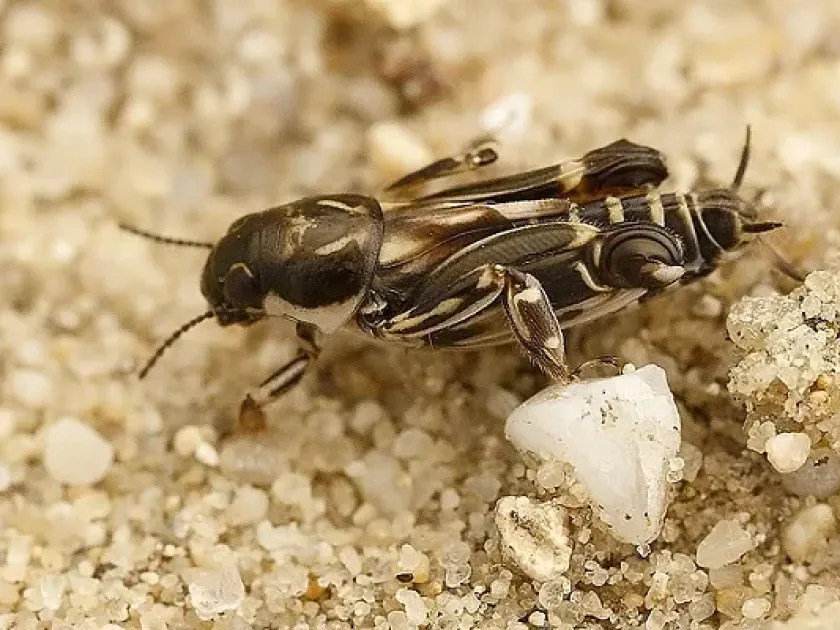
Description
How to identify
The tridactylid (genus Xya) belongs to the family Tridactylidae, within the order Orthoptera. These are minute, jumping insects that physically resemble a miniaturized mole cricket, though they are significantly smaller in overall size.
These insects feature characteristically thickened hind femurs, adapted for making sudden, powerful jumps. The body of the pest is smooth, shiny, and usually colored in dark or brownish tones, which aids in camouflage within the soil.
A primary distinguishing feature of the genus Xya is their affinity for moist habitats. They possess developed wings, allowing them to fly in search of favorable conditions for reproduction and feeding.
The biology of these insects is closely tied to the shorelines of water bodies, where they spend the majority of their life cycle. Larvae are visually very similar to adults, but they differ in smaller size and the lack of fully developed reproductive organs.
During their development, tridactylids undergo several molting stages, gradually increasing in size and acquiring the morphological characteristics typical of mature specimens.
What it damages
Tridactylids primarily damage vegetable crops, cereals, and young seedlings of ornamental plants. Harm is caused by both adults and larvae, which actively feed on the underground parts of plants.
They pose the greatest threat to crops located in close proximity to water bodies or in waterlogged areas where the soil remains loose and saturated with moisture.
The insects chew through the tender roots of young seedlings, which leads to immediate plant death or significant developmental delays. Seeds remaining in the soil are also damaged, reducing the field emergence rate of crops.
Due to the high activity of the pest within the soil layer, the root system is subjected to mechanical damage, which opens pathways for secondary infections, such as root rot and fungal diseases.
Under conditions of mass proliferation, tridactylids can destroy a significant portion of crops at early vegetation stages, requiring immediate agronomic intervention.
When it appears
The life cycle of the tridactylid is directly dependent on soil temperature regimes. Pest activity begins with the warming of the upper soil layer in the spring, when insects emerge from their overwintering sites.
The most active period for feeding and reproduction occurs during the second half of spring and early summer. During this time, soil moisture is optimal, facilitating their rapid movement and the search for host plants.
Throughout the summer months, the population can reproduce over several generations if weather conditions remain moderately humid and warm. Heat and drought force the insects deeper into the soil or to migrate toward water bodies.
In autumn, as temperatures drop, adults and larvae begin preparing for winter. They burrow into the soil to a depth where freezing is minimal, ensuring the survival of the species until the next season.
Monitoring pest density during the initial seedling emergence period allows for the prediction of potential damage and timely response to the threat.
Signs of infestation
The first sign of plot infestation is the appearance of small holes in the soil on the garden surface. These burrows may be grouped, indicating areas of high pest concentration.
Wilting of young seedlings without visible signs of damage on the above-ground parts often indicates that the root has already been compromised from underground. When such a plant is unearthed, a severed root collar can be found.
The presence of the insects themselves can be noticed during a visual inspection of moist soil after irrigation or rain. Their characteristic jumping when disturbed is a reliable indicator of a Xya population presence.
A reduction in crop density on plots bordering water bodies is a warning sign that requires checking the soil for the presence of tridactylid larvae or adults.
Sometimes, next to the habitats of tridactylids, small soil mounds or "ejecta" can be seen, resembling miniature traces of subterranean pest activity.
Control measures
The primary control measure involves practicing crop rotation and preventing soil waterlogging. Drainage measures significantly reduce the attractiveness of the site to this moisture-loving pest.
Deep autumn plowing helps destroy the insect's overwintering sites by bringing them to the surface, where they succumb to natural predators or sudden temperature fluctuations.
Applying permitted soil insecticides during periods of high activity can significantly reduce the population. It is important to select systemic products that do not accumulate in the final harvest.
Utilizing biological control agents, including entomopathogenic fungi or nematodes, is an environmentally safe alternative to chemical treatments in fields and gardens.
- Regular cultivation of inter-row spaces.
- Removal of weeds along the banks of water bodies.
- Application of barrier protection methods for seeds before sowing.
Taxonomy
- Latin name
- Xya
- Order
- Orthoptera (locusts)
- Family
- Tridactylidae
- EPPO code
- XYAXSP
Discussion
No discussions yet — be the first.