
Pygmy mole cricket
Neotridactylus
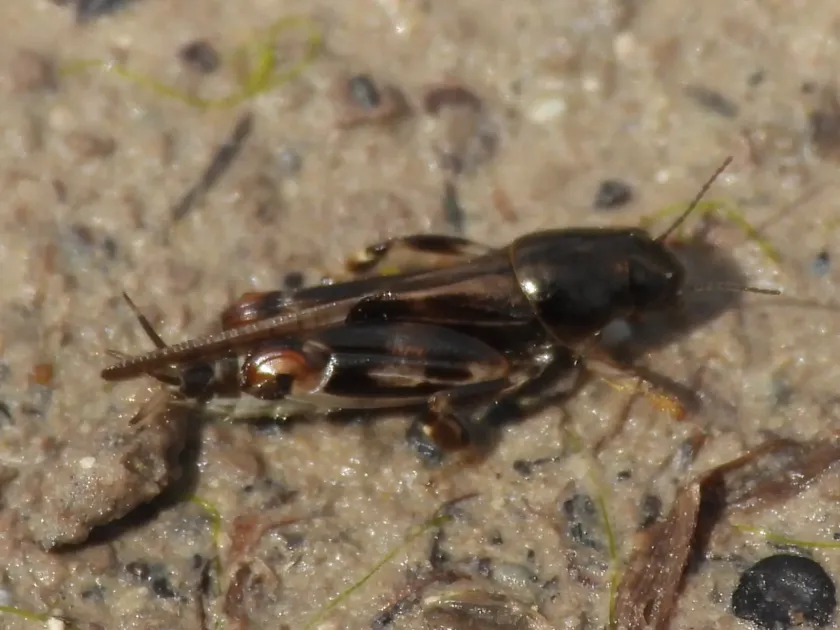
Description
How to identify
The pygmy mole cricket (genus Neotridactylus) belongs to the order Orthoptera and the family Tridactylidae. These are tiny insects that resemble miniature crickets or mole crickets but are significantly smaller, with adults typically measuring between 5 and 10 mm in length.
A distinctive feature of this genus is their strongly developed hind legs, adapted for jumping long distances when threatened. Their coloration ranges from dark brown to nearly black, which provides excellent camouflage on damp soil surfaces.
The life cycle of this species is closely linked to moist habitats. They favor the banks of water bodies, wet sandy soils, and areas with a high concentration of organic matter where they can thrive and reproduce.
The biology of these insects remains partially studied, but it is known that they lead a secretive lifestyle, creating small tunnels in the upper soil layer. Adults are capable of short flights under favorable weather conditions.
Reproduction occurs within the soil, where females lay their eggs. Nymphs pass through several developmental stages, resembling the adults but differing in size and the absence of fully developed wings in early stages.
What it damages
Pygmy mole crickets damage a wide range of agricultural crops, particularly those grown on irrigated land or in river floodplains. Young seedlings of cereals, vegetables, and certain fodder grasses are the most vulnerable.
The damage is primarily caused by mechanical destruction of the root system and the hypocotyl of the plants. These insects chew through tender roots, leading to stunted growth, wilting, and often the complete death of the seedling.
This pest is especially dangerous during the early stages of vegetation when the root system is not developed enough to compensate for feeding damage. Injured plant tissues often become entry points for secondary fungal infections.
Under high population density, pygmy mole crickets can significantly reduce crop stand uniformity, directly impacting overall yields. Patchy field damage is a characteristic indicator of an infestation.
In addition to direct feeding, these insects disrupt the soil structure around roots, which can lead to desiccation of the rhizosphere and impair the plant's ability to uptake water and nutrients.
Signs of infestation
The primary indicators of a pest presence are sudden gaps in rows where young plants yellow and die without obvious causes. Upon inspecting the root zone, one can observe distinct signs of gnawed tissue.
On the soil surface, especially in areas of high infestation, one might notice tiny, characteristic holes leading into the ground. These micro-tunnels often go unnoticed due to the small size of the insect.
Damaged plants show increased sensitivity to drought, as the compromised root system fails to maintain proper water balance. Wilting seedlings in dry weather are a clear signal for a detailed soil inspection.
Visually spotting the insects themselves is difficult due to their jumping ability and camouflage. The best monitoring method involves careful excavation of the top 2-5 cm of soil near wilting plants.
During evening hours or immediately after irrigation, moisture-loving individuals may emerge on the surface, making them more visible to agronomists conducting night inspections with flashlights.
Control measures
The foundation of pygmy mole cricket control is the use of agronomic practices. Ensuring a level field surface and thorough soil cultivation is crucial, as it disrupts the tunnels and egg-laying sites.
Managing the water regime is essential: avoiding stagnant water in low-lying areas and timely inter-row cultivation significantly reduce the survival rate of nymphs within the soil profile.
Chemical control involves the application of soil-applied insecticides when pest populations exceed economic injury levels. Products should have contact-stomach activity and the ability to penetrate the upper soil layer.
Crop rotation helps prevent the long-term buildup of the pest in specific fields. Rotating crops with varying water requirements creates unfavorable conditions for the permanent establishment of Neotridactylus colonies.
The use of insecticidal seed treatments can serve as a preventive measure in fields with a history of high pest pressure, providing a protective barrier for the primary root system of the emerging seedlings.
Taxonomy
- Latin name
- Neotridactylus
- Order
- Orthoptera (locusts)
- Family
- Tridactylidae
- EPPO code
- NTRISP
Discussion
No discussions yet — be the first.