
Xiphydria longicollis
Xiphydria longicollis
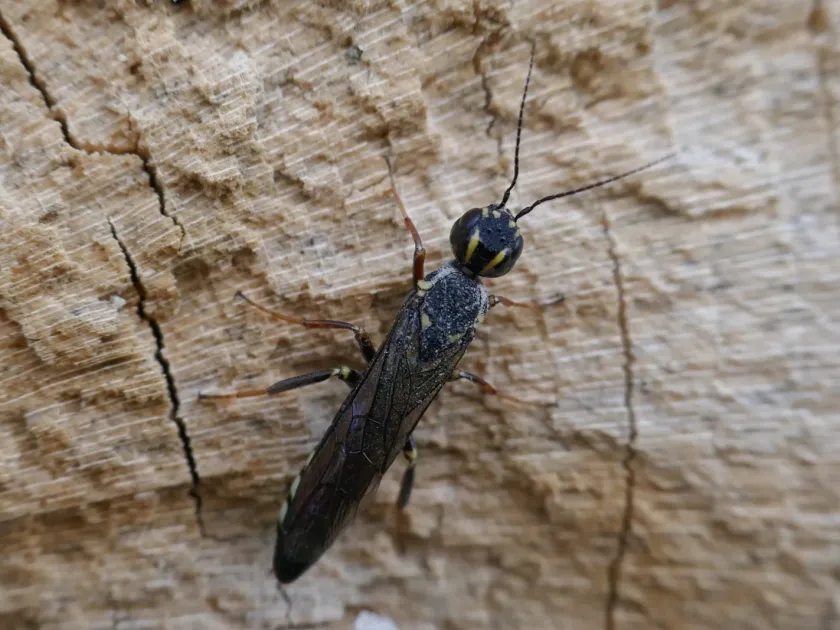
Description
How to identify
Xiphydria longicollis belongs to the family Xiphydriidae, order Hymenoptera. Unlike many other wasps, it lacks the characteristic thin "wasp waist" between the thorax and the abdomen, giving it a more robust appearance.
The adult insect is dark, nearly black, and exhibits a subtle metallic sheen. A distinctive morphological feature is its elongated pronotum (prothorax), which is the key diagnostic character for this specific species.
The larvae are legless, cylindrical, and white. They possess highly developed, chitinized mouthparts capable of excavating galleries deep within the wood of host trees.
Adult females have a specialized, hardened ovipositor used to drill into the bark and deposit eggs directly into the living or dying woody tissue of the host plant.
Because they spend most of their life cycle inside the stem, adults are rarely seen except during the brief period of emergence and mating, usually during the spring and summer months.
What it damages
This pest primarily attacks deciduous trees, including birch, alder, elm, and various fruit trees such as apple and pear. It often targets stressed, declining, or mechanically damaged trees.
Larvae feed by boring long, winding galleries through the xylem and sapwood. This internal tunneling disrupts the tree's vascular system, hindering the transport of water and nutrients.
The structural integrity of the affected wood is significantly compromised. Large infestations can cause branches or even entire trunks to snap during windstorms or under the weight of fruit.
The wounds created by the larvae serve as entry points for pathogens, including wood-decaying fungi, which often accelerate the decline of the host plant.
If left unchecked, a severe infestation can weaken a healthy tree to the point of death within a few years, making early detection critical for garden maintenance.
When it appears
Adult emergence typically occurs during the summer, ranging from late May through mid-July, depending on the climatic conditions and the geographical region.
After mating, the female selects a suitable host tree, often favoring spots with bark cracks or previous physical damage, and deposits her eggs deep into the wood.
Upon hatching, the larvae immediately begin tunneling. The larval stage is lengthy and can last from one to several years depending on the nutritional quality of the wood and the tree's health.
Pupation occurs within a prepared chamber in the wood gallery. This transformation happens just before the adult insect chews its way to the surface.
The insects leave the tree by creating circular exit holes, which are a definitive sign that the life cycle of the current generation has been completed.
Signs of infestation
The most reliable indicator of an infestation is the presence of perfectly circular exit holes, usually 2 to 3 mm in diameter, found on the trunks or larger branches.
Fine, powdery frass (wood dust) appearing at the base of the tree or accumulating in bark crevices is a clear sign that larvae are active within the timber.
Wilting, yellowing leaves, and the death of individual branches (dieback) often suggest that the internal vascular system has been compromised by the galleries.
Slight depressions in the bark or localized peeling can also occur as the larvae undermine the tissues, sometimes inviting secondary infestation by fungi.
- Circular emergence holes.
- Accumulation of wood frass.
- Branch dieback and wilting.
- Bark cracks and depressions.
Control measures
Cultural control is the most effective strategy: keep trees healthy through proper irrigation and fertilization, and perform regular pruning to remove weak or damaged limbs.
Sanitation is vital; heavily infested trees should be removed and destroyed to prevent the pest from spreading to the rest of the orchard or nearby forests.
During the adult flight period, applying contact insecticides to the bark can help prevent females from laying eggs, though timing is essential for success.
Systemic insecticides, applied via trunk injections, can be used in high-value trees to target larvae already feeding within the wood galleries.
Protecting the bark from mechanical damage and sunscald is a crucial preventive measure, as the pest specifically targets compromised tissue for egg deposition.
Taxonomy
- Latin name
- Xiphydria longicollis
- Order
- Hymenoptera
- Family
- Xiphydriidae
- EPPO code
- XIPYLO
Discussion
No discussions yet — be the first.