
Xiphydria
Xiphydria
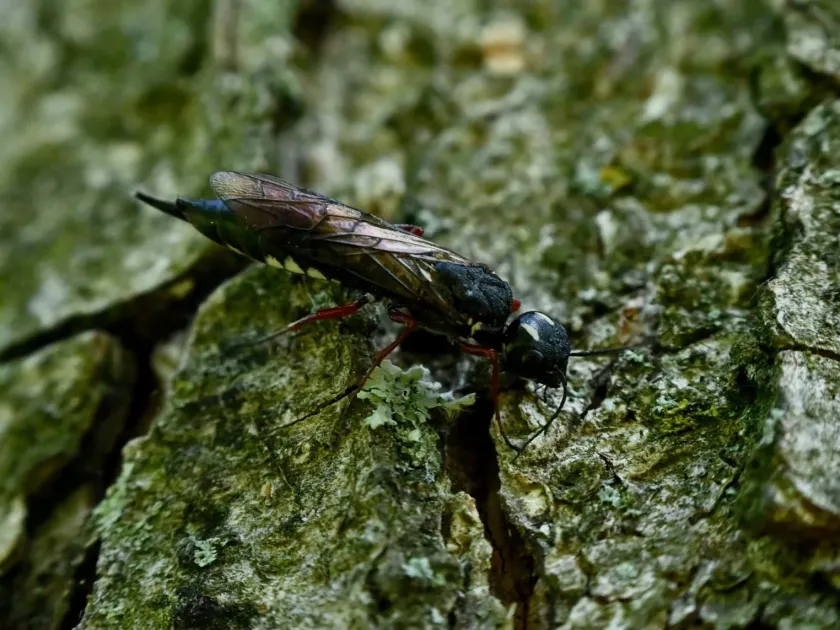
Description
How to identify
Xiphydria is a genus of insects belonging to the family Xiphydriidae, commonly known as wood wasps. They are characterized by a slender body, often black with white or yellowish markings on the head, legs, and abdomen.
One of the most distinct morphological features of Xiphydria is their elongated neck and the specific positioning of the antennae, which are inserted below the level of the eyes. Adults do not feed and live for a short duration focused on reproduction.
The larvae are white, legless, and cylindrical in shape with a well-developed head capsule. They spend their entire developmental period inside the wood, creating narrow galleries filled with fine frass.
Identification of specific species can be challenging, as the genus includes many varieties, but they all share similar ecological niches and behaviors that classify them as significant wood-boring pests.
These insects are considered primary xylophages, capable of attacking both stressed trees and relatively healthy specimens, posing a continuous threat to forestry and orchards.
What it damages
Xiphydria primarily attacks various deciduous tree species. Common hosts include maple, alder, birch, willow, linden, elm, and fruit trees such as apple and pear.
While the pest typically prefers trees that are already physiologically weakened, they can invade healthy trees during peak population cycles, leading to significant decline and canopy thinning.
The most severe damage is caused by the larvae, which tunnel deep into the trunk and branches. These galleries disrupt the xylem and phloem, impairing the transport of water and nutrients.
Tunneling activities often compromise the structural integrity of the wood and create entry points for secondary pathogens, such as wood-decay fungi, which further degrade tree health.
In ornamental gardens or commercial orchards, heavy infestation leads to branch dieback and, eventually, the death of the entire tree if the infestation is not managed early.
When it appears
The flight period of adult Xiphydria typically occurs from late spring through the first half of summer. During this time, females actively seek suitable host trees to deposit their eggs.
The female inserts her ovipositor directly into the bark and wood of the trunk or larger branches, depositing eggs in clusters. A single female can lay dozens of eggs across different areas.
After hatching, the larvae penetrate the wood, where they remain for their entire larval life cycle, which may span from one to three years depending on the climate and host tree condition.
Pupation takes place inside the wood, within a specialized chamber created by the larva just before it transforms into an adult wasp.
Once the transformation is complete, the adult chews its way out, leaving a characteristic circular exit hole, and the cycle continues.
Signs of infestation
The most visible sign of an infestation is the presence of small, circular exit holes, approximately 2-4 millimeters in diameter, scattered across the bark of the trunk or thick branches.
During inspections, you may find traces of "frass" (sawdust-like material) ejected by the larvae or trapped under the bark, which indicates active boring activity within the tree.
General signs of tree distress, such as yellowing leaves, early senescence, twig dieback, and stunted annual growth, often accompany a severe infestation.
Sometimes, localized resin or sap flow can be observed at the site where the female oviposited, as the tree attempts to seal the mechanical injury.
Because the larvae are deep within the wood, external signs are often minimal until the infestation is advanced, making regular monitoring of tree health essential.
Control measures
Effective control relies heavily on integrated management practices, emphasizing prevention and the maintenance of high tree vigor to deter attacks.
- Prompt removal and destruction of heavily infested trees or branches to reduce local population levels.
- Systemic insecticide treatments applied during the adult flight period to prevent egg-laying.
- Optimizing tree health through regular irrigation, mulching, and proper fertilization to enhance natural resistance.
- Using pheromone traps for monitoring and reducing the population of adult wasps.
- Encouraging natural predators such as insectivorous birds and parasitic wasps that target the larvae.
It is vital to remove dead wood and fallen logs from the garden, as these serve as ideal breeding grounds for Xiphydria and other wood-boring insects.
Chemical intervention is most effective during the brief window when adults are active, before they have the opportunity to lay eggs deep within the tree's tissues.
In cases of major outbreaks, consulting with a professional arborist is recommended to assess the feasibility of saving infested trees versus the necessity of removal.
Taxonomy
- Latin name
- Xiphydria
- Order
- Hymenoptera
- Family
- Xiphydriidae
- EPPO code
- XIPYSP
Discussion
No discussions yet — be the first.