
Xiphydria camelus
Xiphydria camelus
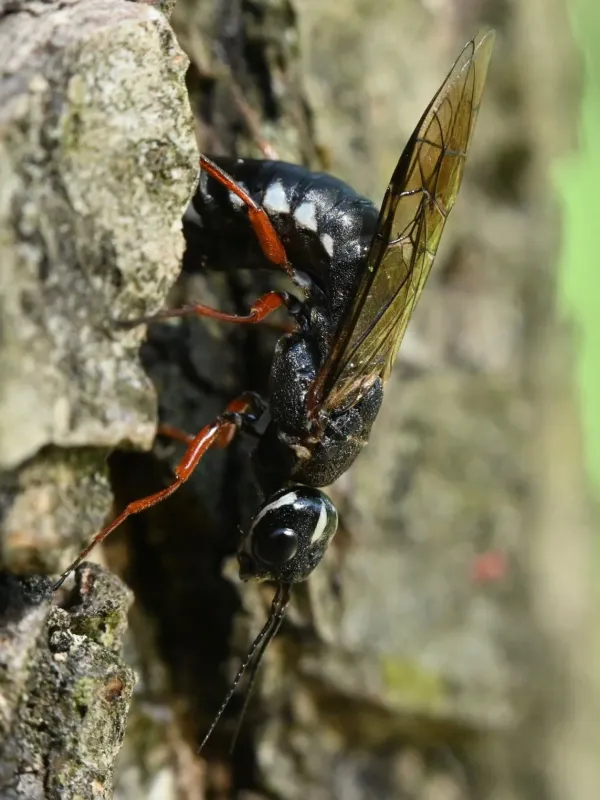
Description
How to identify
Xiphydria camelus is a species of wood-boring wasp belonging to the family Xiphydriidae within the order Hymenoptera.
The adult insect is characterized by a slender, glossy black body, typically measuring between 10 and 18 millimeters in length.
They possess distinctive light-colored markings on their abdomen and legs, which help in their visual identification in the field.
Larvae are cylindrical and white, featuring a strong head capsule and mandibles specifically adapted for tunneling through wood.
Unlike other woodwasps, Xiphydria camelus females carry symbiotic fungi in specialized organs, which they introduce into the wood during egg-laying.
What it damages
The primary hosts for Xiphydria camelus include various broad-leaved trees, most notably alder, birch, willow, and occasionally hazel.
The pest typically targets stressed, weakened, or injured trees, often ignoring healthy specimens that possess stronger physiological defenses.
Damage occurs when larvae bore extensive tunnels throughout the wood, which significantly compromises the structural integrity and commercial value of the timber.
The introduction of fungi by the female wasp accelerates wood decay, which facilitates the nutritional intake for the larvae but kills the tree tissue.
In high-density populations, the infestation can lead to the rapid decline and death of host trees, particularly in managed forestry environments.
When it appears
The adult flight period typically takes place from late May through July, depending on local temperature and climate patterns.
Mating occurs shortly after emergence, followed by the female's search for suitable egg-laying sites on the trunks or thick branches of host trees.
The lifecycle from egg to adult is relatively long, often lasting up to two years, as the larvae develop slowly within the dense wood tissue.
Larval development concludes with pupation, which occurs inside the wood in the spring prior to the final emergence of the adult wasp.
Adults emerge through small, circular exit holes, leaving behind characteristic markings that indicate the completion of their reproductive cycle.
Signs of infestation
Detection is often difficult until exit holes become visible on the bark, as the initial entry points made by females are very subtle.
Internal wood damage is indicated by winding galleries packed tightly with fine wood frass, which is a signature behavior of this specific woodwasp.
Staining of the wood around the galleries, caused by the symbiotic fungi, is a common internal diagnostic feature visible during tree inspection.
Visible decline symptoms include yellowing of leaves, premature leaf drop, and dieback in the crown of the affected tree.
In cases of heavy infestation, one may observe the presence of exit holes on the surface of the bark, which confirm the successful emergence of a new generation.
Control measures
Effective management begins with strict forest hygiene, including the prompt removal and disposal of dead or highly stressed trees.
Avoid leaving freshly cut timber in the vicinity of living trees, as this material is a prime target for female wasps seeking egg-laying sites.
Monitoring using pheromone traps can help track population levels and identify the timing for necessary chemical interventions in ornamental or high-value areas.
Encouraging tree health through proper irrigation and soil nutrition enhances natural resistance, making trees less attractive to boring insects.
In cases where chemical treatment is necessary, apply appropriate systemic or contact insecticides to the trunks during the peak adult flight period.
Taxonomy
- Latin name
- Xiphydria camelus
- Order
- Hymenoptera
- Family
- Xiphydriidae
- EPPO code
- XIPYCA
Discussion
No discussions yet — be the first.