
California dagger nematode
Xiphinema californicum
Description
How to identify
The California dagger nematode (Xiphinema californicum) is a member of the Dorylaimida order and Longidoridae family. It is a microscopic, soil-dwelling worm that feeds exclusively on the roots of plants.
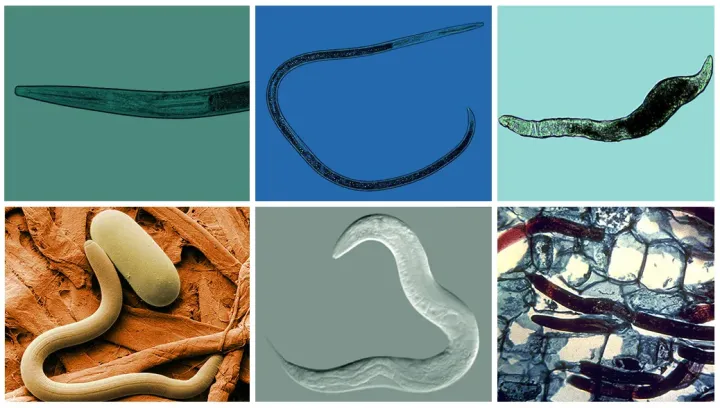
The organism is characterized by an elongated, needle-like body structure, typically measuring between 2 and 5 mm in length. Its most notable feature is a long, hollow stylet used to pierce plant root cells.
This nematode reproduces sexually within the soil environment. The life cycle consists of an egg stage, four successive juvenile stages, and the adult phase, with development rates highly dependent on soil temperature and moisture levels.
As an ectoparasite, the nematode feeds from the exterior of the roots. This feeding habit is particularly problematic because it facilitates the transmission of various soil-borne plant viruses, which are often more damaging than the physical feeding injury itself.
Due to its microscopic size, field identification is impossible. Reliable diagnosis requires specialized laboratory extraction techniques followed by microscopic examination or molecular identification of the nematodes from soil and root samples.
What it damages
California dagger nematodes primarily target perennial crops, with grapevines, orchard trees, and various fruit crops being highly susceptible. The damage can be severe in both agricultural and horticultural settings.
Direct feeding causes necrotic lesions and the death of root tips. This weakens the plant's overall vascular system, reducing its ability to absorb water and essential nutrients from the soil, which leads to decreased growth and production.
Beyond physical damage, the nematode acts as a vector for viruses like the Grapevine fanleaf virus. The resulting viral infection causes systemic disease that can ruin the productivity of entire vineyards or orchards over several years.
Nursery stock serves as a major pathway for infestation. When infected plants are transplanted to previously clean soil, they introduce the nematode and often the virus, causing long-term agricultural impact.
Plants struggling with nematode infestation show reduced vigor and resilience, making them significantly more vulnerable to environmental stresses like drought or heavy winter frosts.
When it appears
The activity of Xiphinema californicum is tightly linked to seasonal soil temperature fluctuations. They are most active and feed heavily when soil temperatures range from 15°C to 25°C (59°F to 77°F).
During the primary growing season, when root development is at its peak, the nematode population typically concentrates in the rhizosphere to exploit active, succulent root tips for nutrition.
As winter approaches or if soil conditions become excessively dry, the nematodes move deeper into the soil profile to find more stable moisture and temperature conditions, entering a state of reduced metabolic activity.
Spring and autumn are considered the most critical periods for sampling and monitoring. During these times, the nematodes are generally closer to the surface, making them easier to detect during soil analysis.
Seasonal patterns of movement are essential for farmers to understand, as scheduling non-chemical or preventative interventions during peak activity windows can significantly increase their efficacy.
Signs of infestation
The most common symptoms include overall stunted growth, yellowing (chlorosis) of foliage, and reduced vine or tree vitality. The plants appear as if they are suffering from nutrient deficiencies or chronic water stress.
When roots are inspected, they often show signs of stunted development, with reduced branching and occasional darkening or rotting of root tips caused by secondary bacterial or fungal colonization.
Viral transmission symptoms may include leaf deformity, vein banding, or short internodes in grapevines. These signs usually appear in patches throughout the field as the nematode population spreads outward from a focal point.
Yield reduction is a hallmark of the infestation, with affected plants producing significantly fewer or lower-quality fruits. Eventually, plants may decline to the point where they are no longer economically viable to maintain.
- Generalized loss of vigor and stunted growth.
- Foliar chlorosis and early leaf fall.
- Reduced fruit quality and quantity.
- Localized patches of dying or struggling plants.
- Specific viral symptoms if a virus has been introduced.
Control measures
Strict phytosanitary practices are the first line of defense. Ensuring all nursery stock is certified and nematode-free is critical to preventing the initial introduction of the pest into clean fields.
Pre-planting soil fumigation is a common management strategy for high-value perennial crops. While expensive and environmentally intensive, it remains one of the few ways to significantly reduce high nematode populations in the soil.
Integrated management includes proper weed control. Many common weeds serve as reservoir hosts, allowing nematode populations to persist in the field even after the main crop has been removed.
Biological control, using predatory organisms or beneficial fungi that target nematodes, is being explored as part of sustainable management but requires consistent soil health management to be effective.
Enhancing soil organic matter and overall soil health helps plants tolerate nematode feeding pressure better, allowing them to maintain acceptable growth rates even in the presence of low to moderate populations.
Taxonomy
- Latin name
- Xiphinema californicum
- Order
- Nematodes
- Family
- Longidoridae
- EPPO code
- XIPHCA
Discussion
No discussions yet — be the first.