
Longidorus africanus
Longidorus africanus
Description
How to identify
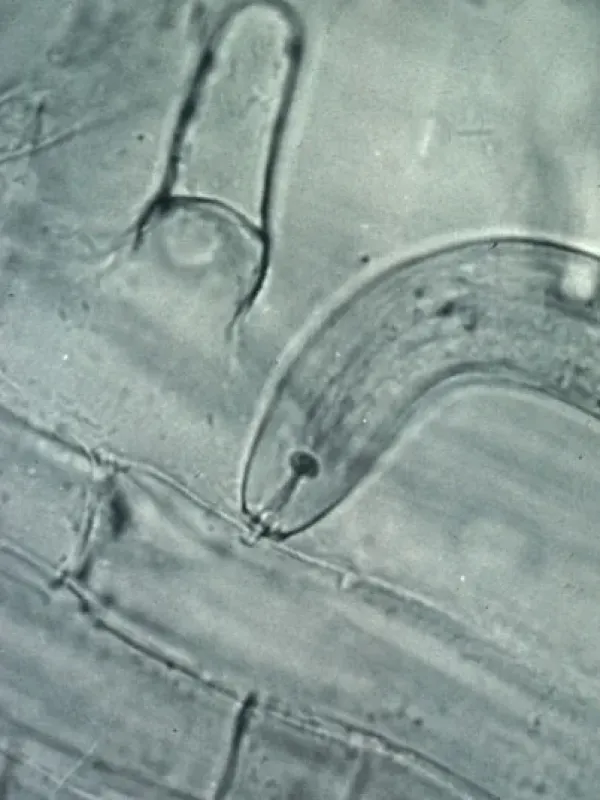
Longidorus africanus is a species of plant-parasitic nematode belonging to the family Longidoridae. These organisms are commonly referred to as needle nematodes due to their long, slender bodies and a specialized, elongated feeding stylet.
They are migratory ectoparasites that live in the soil and feed on root tips. Adults are microscopic, yet they can be observed through specialized laboratory equipment used for nematode extraction.
The life cycle of Longidorus africanus involves several developmental stages, including an egg, four juvenile stages, and the adult phase, all occurring within the soil matrix.
These nematodes thrive in a variety of soil types and are highly sensitive to soil moisture and temperature, which dictate their vertical movement in the rhizosphere.
Beyond direct feeding damage, they are recognized as vectors for various plant viruses, which often causes more economic loss than the physical root damage alone.
What it damages
The host range of Longidorus africanus is broad, affecting a wide range of agricultural commodities, including vegetables, fruits, and nursery crops.
Feeding at the root tips causes tissue necrosis and the formation of characteristic galls or stunted, club-shaped root tips, which restrict the plant's nutrient and water uptake.
Infection by these nematodes often leads to systemic viral diseases, as they transmit soil-borne viruses while feeding on the roots.
Impacted plants exhibit symptoms such as reduced vigor, stunted aerial growth, and chlorosis, which significantly lowers the overall marketable yield.
In perennial crops and nursery systems, heavy infestations can lead to long-term decline and permanent damage to root structures.
Signs of infestation
Symptoms in the field appear as patches of stunted or unevenly growing plants, reflecting the patchy distribution of nematode populations in the soil.
Underground symptoms include severely reduced root systems, lack of fine root hairs, and distinct swelling or malformation at the tips of the roots.
Aerial parts of the plant display signs of nutrient deficiency, such as yellowing or wilting, despite adequate irrigation and fertilizer application.
The presence of Longidorus africanus should be suspected when plants show slow recovery after stress and do not respond positively to standard fertilization.
Confirmation of the pest requires a diagnostic soil test and expert identification by a qualified nematologist.
Control measures
Integrated pest management (IPM) for Longidorus africanus focuses on preventing the spread of infested soil through contaminated machinery and agricultural products.
Crop rotation remains a primary strategy, avoiding susceptible hosts and utilizing non-host cover crops to starve the population over time.
In intensive production systems such as glasshouses, soil solarization or chemical fumigation is frequently employed to reduce high nematode densities.
Maintaining soil health through the addition of organic matter can encourage predatory organisms that naturally suppress nematode populations.
- Strict sanitation protocols for equipment moving between fields.
- Testing of soil prior to planting high-value or long-term perennial crops.
- Application of biological control agents that target soil-borne pathogens.
- Effective weed control to eliminate alternative hosts during fallow periods.
Taxonomy
- Latin name
- Longidorus africanus
- Order
- Nematodes
- Family
- Longidoridae
- EPPO code
- LONGAF
Discussion
No discussions yet — be the first.