
Longidorus
Longidorus
Description
How to identify
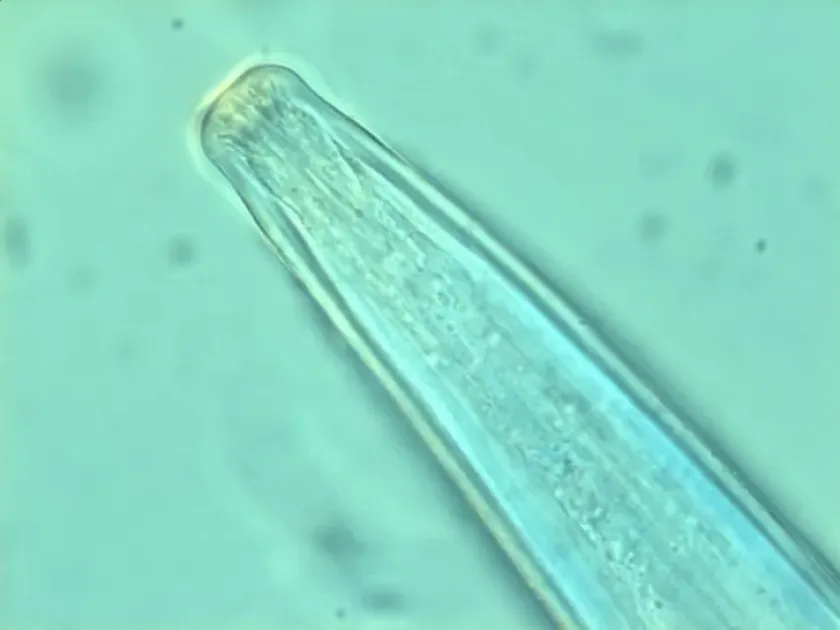
Longidorus is a genus of migratory ectoparasitic nematodes belonging to the family Longidoridae and the order Dorylaimida. These microscopic organisms are commonly known as needle nematodes due to their extremely long, needle-like stylet used for feeding.
Adult Longidorus individuals can reach lengths of up to 10–12 millimeters, making them some of the largest plant-parasitic nematodes. They appear as slender, white, or transparent worm-like organisms that thrive in the soil environment.
The life cycle of these nematodes consists of an egg stage, four larval stages, and an adult phase, all occurring within the soil. They are ectoparasites, meaning they do not enter the plant roots but feed on the outer cells of the root tips.
Reproductive success and growth rates are highly dependent on soil moisture and temperature. These nematodes are capable of surviving for extended periods, even in deep soil layers, making them difficult to eradicate once a field is infested.
They are spread passively through the movement of infested soil, contaminated agricultural equipment, and the transport of nursery stock with root-associated soil. Once established, they can persist in the soil for years even in the absence of a preferred host.
What it damages
Longidorus species have a broad host range, damaging various crops such as strawberries, raspberries, fruit trees, and vegetables. They primarily target the root tips, leading to significant physiological stress for the host plant.
Feeding damage results in the characteristic formation of galls or stunted, club-shaped root tips. This root inhibition prevents the plant from absorbing adequate water and essential nutrients, leading to stunted growth and reduced vigor.
The most critical impact of Longidorus is their role as vectors for nepoviruses (nematode-transmitted polyhedral viruses). These viruses can cause severe symptoms such as mosaic patterns, ringspot formations, and overall yield decline.
Infested areas in fields or orchards often show patchy growth, where affected plants fail to respond to irrigation or fertilizers. This erratic performance is a hallmark sign of underlying nematode pressure.
The cumulative economic impact is severe, as these nematodes not only reduce yield quantity and quality but also make the soil unsuitable for high-value sensitive crops, necessitating costly soil treatments or land abandonment.
Control measures
Managing Longidorus requires an integrated pest management approach. The most critical control strategy is the use of nematode-free planting material to prevent the introduction of these pests into clean soils.
Crop rotation with non-host plants or cover crops that suppress nematode populations can be an effective long-term strategy. Certain species of marigolds are known to have antagonistic properties against various plant-parasitic nematodes.
In high-pressure situations, soil fumigation with specialized nematicides is the most reliable method for reducing population density before planting. This process must be conducted according to local environmental regulations.
Sanitation practices, such as thoroughly cleaning farm machinery and tools before moving them between fields, are essential to prevent the spread of soil-borne nematodes within and between agricultural sites.
Regular soil analysis and diagnostic testing for the presence of Longidorus are crucial for early detection. Monitoring allows producers to make informed decisions about site selection and the necessity of pre-plant soil treatments.
Taxonomy
- Latin name
- Longidorus
- Order
- Nematodes
- Family
- Longidoridae
- EPPO code
- LONGSP
Discussion
No discussions yet — be the first.