
Xiphinema brasiliense
Xiphinema brasiliense
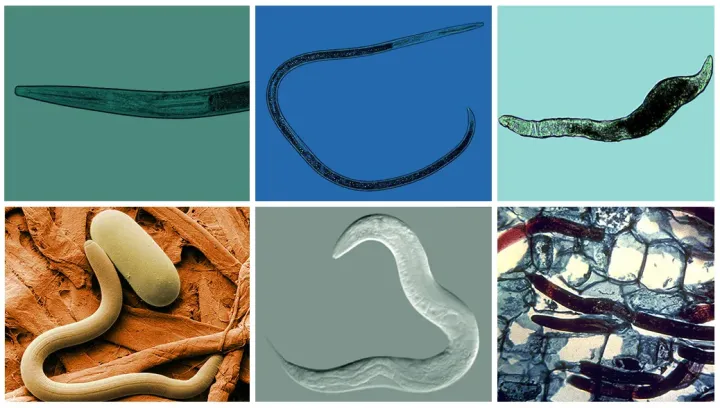
Description
How to identify
Xiphinema brasiliense is a plant-parasitic nematode belonging to the family Longidoridae and the order Dorylaimida. It is recognized by its elongated body and a long, protrusible stylet used to pierce plant root cells.
These organisms are microscopic and transparent, making it impossible to detect them in the field without specialized laboratory soil extraction techniques.
Identification is based on morphological characteristics of the labial region and tail shape, which require high-magnification microscopy and expert taxonomic knowledge.
They move through soil pores to locate suitable host roots, where they congregate to feed on the cytoplasm of the root tip cells.
Standard detection involves taking soil samples from the rhizosphere and using the Baermann funnel method or centrifugal flotation to isolate the nematodes.
What it damages
Xiphinema brasiliense infests a wide range of crops, including perennial fruit trees, grapevines, citrus, and various vegetable species.
The primary damage occurs when the nematode uses its stylet to feed, which causes direct mechanical injury and cellular disruption in the root tissues.
A significant risk associated with this species is its ability to transmit plant-pathogenic viruses, leading to systemic viral diseases that severely impair crop health.
Constant feeding stress weakens the root system, making the plants less efficient at water and nutrient uptake, which exacerbates symptoms during drought conditions.
Over time, high population densities can lead to the stunting of entire orchards or fields, significantly reducing the economic viability of the agricultural operation.
Signs of infestation
Symptoms of infestation include general chlorosis, reduced vigor, and stunted growth patterns, often appearing in irregular patches across the field.
Root system examination usually reveals structural abnormalities, such as necrotic lesions, swollen tips, or an overall reduction in fine root density.
Because the plants are less capable of nutrient absorption, they often display symptoms of deficiency even when soil fertility levels are adequate.
In cases where viral transmission has occurred, foliage may exhibit characteristic mottling, ringspots, or mosaic patterns typical of the transmitted virus.
Affected plants are progressively weakened, showing signs of premature leaf senescence and a decline in fruit quality and yield over several seasons.
Control measures
The most effective management strategy is to utilize nematode-free planting material, ensuring that new orchards are not established with infested stocks.
Implementing crop rotation with non-host plants or cover crops that exhibit bio-fumigant properties can help suppress population levels in the soil.
Maintaining long fallow periods and keeping fields free of weeds prevents the nematode from finding a host, thereby gradually reducing the population density.
In high-value agricultural systems, pre-plant soil fumigation with approved nematicides may be necessary to minimize the initial impact of the pest.
- Using resistant or tolerant plant cultivars where available.
- Sanitizing farm machinery to prevent the spread of infested soil.
- Applying biological control agents, such as beneficial fungi or bacteria.
Taxonomy
- Latin name
- Xiphinema brasiliense
- Order
- Nematodes
- Family
- Longidoridae
- EPPO code
- XIPHBS
Discussion
No discussions yet — be the first.