
Wiseana fuscomaculatus
Wiseana fuscomaculatus
Description
How to identify
Wiseana fuscomaculatus, commonly known as a species of ghost moth or porina moth, belongs to the family Hepialidae. Adult moths are typically brown, mottled, and have a wingspan typical for the family.
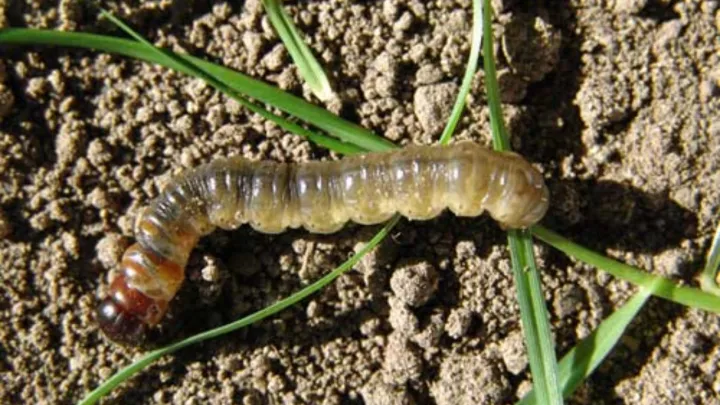
The larvae are subterranean, often called "porina caterpillars." They are robust, cylindrical, and possess a hardened, dark head capsule adapted for tunneling through soil.
Their bodies are usually earthy in color, which serves as a highly effective camouflage against predators while they are near the surface.
These larvae spend most of their life cycle in vertical tunnels in the soil, which they line with silk to create a protected micro-environment.
The life cycle is univoltine, meaning there is typically one generation per year, though specific developmental timing varies by local climate.
What it damages
The larvae are notorious for causing extensive damage to pastures, grasslands, and fodder crops such as alfalfa and various species of clover.
Feeding primarily at night, the caterpillars consume the crown and root systems of plants, effectively severing them from their nutrient source.
This damage leads to patches of dying or wilted vegetation, which eventually creates significant gaps in the forage coverage.
High infestation densities can lead to the total destruction of pastures, necessitating expensive reseeding and loss of grazing capacity.
Root damage also predisposes plants to secondary pathogens, further compromising crop health and vigor in already stressed conditions.
When it appears
Adult moths emerge in late spring to early summer, after which they mate and females scatter eggs across the grass canopy.
The larvae hatch shortly thereafter and begin developing, with the most aggressive feeding phase occurring during the cooler, wetter months of autumn and winter.
Feeding continues into early spring, a period when the larvae are at their largest and most destructive, just before the pupation process begins.
Pupation typically takes place within the existing soil tunnels, marking the transition phase before the next generation of adults emerges.
Soil moisture plays a critical role in survival; dry conditions during the egg-laying period are often detrimental to the population.
Signs of infestation
The most visible sign of an infestation is the appearance of bare patches of soil amidst a previously healthy, lush green pasture.
Close inspection of the ground reveals small, silk-lined holes or tunnels that serve as the daytime shelters for the larvae.
One may notice "frass" or pellet-like caterpillar droppings near the entrance of these tunnels, indicating active feeding in the vicinity.
Plants affected by the pest often show signs of wilting or yellowing, and they can be pulled out of the soil with very little resistance.
- Irregular patches of missing vegetation.
- Presence of silk-lined tunnels in the soil.
- Recovery of larvae from soil samples at a depth of 5-15 cm.
Control measures
Integrated Pest Management (IPM) strategies are essential, focusing on cultural practices to minimize the favorability of the environment for the moth.
Grazing management, including maintaining appropriate stock levels, can make the pasture less attractive to egg-laying moths.
Biological control agents, such as entomopathogenic nematodes, have proven effective in reducing larval populations in soil without environmental contamination.
Chemical control, if necessary, requires precise timing to coincide with the period when larvae are active near the surface, usually early in the season.
Monitoring the flight of adult moths through light traps or pheromone lures helps agronomists predict population spikes and plan timely interventions.
Taxonomy
- Latin name
- Wiseana fuscomaculatus
- Order
- Lepidoptera (butterflies)
- Family
- Hepialidae
- EPPO code
- WISEFU
Discussion
No discussions yet — be the first.