
Endoclita
Endoclita
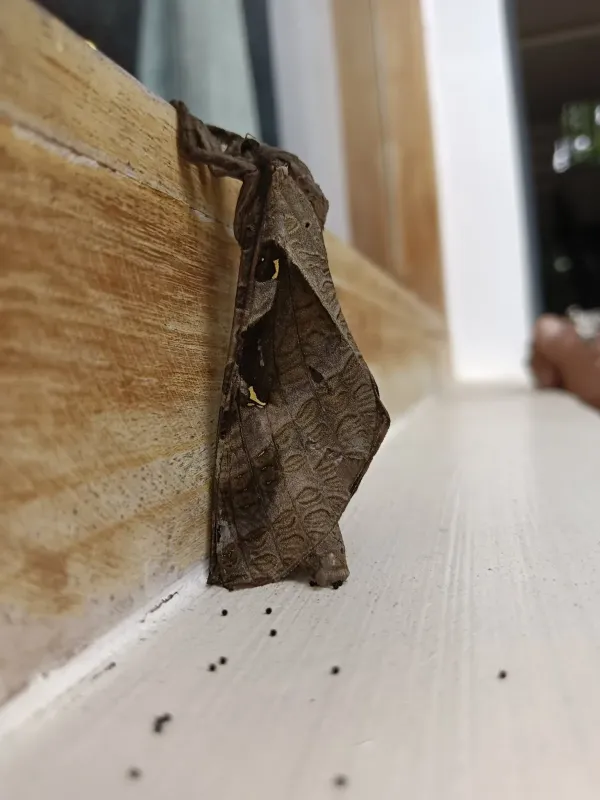
Description
How to identify
The genus Endoclita belongs to the Hepialidae family, commonly known as ghost moths or swift moths, characterized by their cryptic nature.
Adult moths are typically nocturnal, often showing camouflage patterns that help them hide effectively on tree trunks during the day.
Larvae are the primary destructive stage, spending most of their life cycle tunneling through the woody parts of their host plants.
These moths are widely distributed in tropical and temperate regions, with many species showing a high level of host specificity or broad polyphagy depending on the environment.
The taxonomic classification places them within the order Lepidoptera, and their larvae possess powerful mandibles adapted for boring into tough plant tissues.
What it damages
Endoclita larvae cause significant damage by boring deep, structural tunnels into the stems and branches of trees and shrubs.
This internal boring disrupts the vascular system, preventing the effective transport of water and nutrients throughout the plant.
Affected plants often show stunted growth, reduced fruit production, and in severe cases, the snapping of limbs due to structural weakness caused by the tunnels.
Young plantations are at the greatest risk, as larval tunnels can easily girdle a main stem, leading to the rapid death of the entire tree.
Secondary colonization by fungal pathogens often occurs within the tunnels, further accelerating the decline of the host plant beyond the initial mechanical damage.
Signs of infestation
The presence of frass (larval excrement) and wood shavings at the base of the trunk or caught in bark crevices is a classic sign of infestation.
Small holes on the surface of the bark, sometimes covered by webbing or silk, indicate the entry points where larvae have bored into the wood.
Wilting, yellowing of leaves, and dieback of specific branches suggest that internal boring has compromised the tree's circulation system.
Trees may also produce sap or gum at the site of entry, which is a common defensive reaction to the mechanical injury caused by the larvae.
Checking the bark for signs of structural scarring or abnormal growths can help identify areas where larvae have been active over a long period.
Control measures
Sanitation is key; pruning and destroying heavily infested branches helps to remove the larvae from the orchard and prevents further spread.
For localized infestations, physical intervention such as inserting a flexible wire into the tunnel can effectively kill the larva inside.
Chemical control can be difficult due to the larvae's protected environment, but systemic insecticides applied as soil drenches or trunk injections may offer relief.
Integrated Pest Management (IPM) practices, including the use of pheromone traps, are recommended to monitor moth flights and time potential control efforts accurately.
Maintaining high plant health through irrigation and balanced nutrition enhances the tree's resilience, allowing it to better tolerate or heal from minor larval attacks.
Taxonomy
- Latin name
- Endoclita
- Order
- Lepidoptera (butterflies)
- Family
- Hepialidae
- EPPO code
- ENDLSP
Discussion
No discussions yet — be the first.