
Wiseana
Wiseana
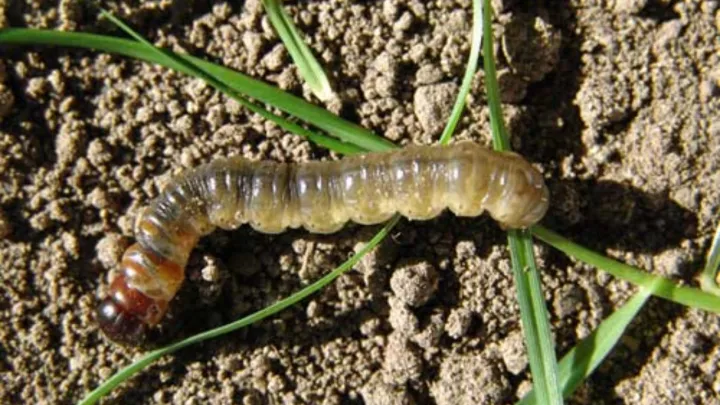
Description
How to identify
Wiseana is a genus of moths belonging to the family Hepialidae, commonly referred to as porina moths in agricultural contexts.
These insects are notorious for their larvae, which live in vertical burrows in the soil and emerge at night to feed on pasture foliage.
The adult moths are typically nocturnal, with a mottled brown appearance that provides excellent camouflage against grass and soil backgrounds.
The life cycle usually spans one year, with the larval stage persisting for several months, making it the most significant period of crop damage.
These pests thrive in humid environments and are particularly common in high-producing pastures, where the soil moisture supports their larval development.
What it damages
The primary hosts for Wiseana larvae include a wide variety of grasses and clover species, which are essential for livestock grazing.
Larvae feed by cutting stems and leaves at or near the ground level, often pulling the plant material down into their burrows to feed later.
Seedling crops and newly sown pastures are at the highest risk, as the loss of plant cover can lead to total crop failure in affected patches.
Severe infestations result in significant pasture degradation, reducing overall forage availability and potentially necessitating expensive reseeding.
Beyond immediate foliage loss, the physical disturbance of the soil by burrowing larvae can impede root establishment in young plants.
Signs of infestation
The most visible sign of an infestation is the appearance of bare patches of soil within an otherwise healthy, lush pasture area.
Close inspection of these bare patches often reveals vertical silk-lined tunnels in the soil, which serve as the permanent homes for the larvae.
Increased bird activity on pastures, especially during daytime, is a common indicator that birds are feeding on the larvae emerging from the soil.
Accumulation of larval frass (droppings) near the burrow entrances is another reliable indicator of active feeding and a growing population.
In cases of heavy infestation, the turf may feel loose underfoot due to the extensive network of burrows created by a large number of larvae.
Control measures
Maintaining short pasture cover through grazing or mowing can expose larvae to natural predators and harsh environmental conditions, limiting survival.
Biological control using entomopathogenic nematodes is a highly effective, environmentally friendly solution for managing Wiseana populations.
Chemical control can be implemented using insecticide applications when larval activity is high, though it must be carefully timed with environmental regulations.
Light traps are recommended for monitoring adult moth flights, which allows farmers to predict the potential for future larval outbreaks accurately.
Good pasture management and crop rotation help disrupt the life cycle of the moth, significantly reducing the pest density over time.
Taxonomy
- Latin name
- Wiseana
- Order
- Lepidoptera (butterflies)
- Family
- Hepialidae
- EPPO code
- WISESP
Discussion
No discussions yet — be the first.