
Vertigo pusilla
Vertigo pusilla
Description
How to identify
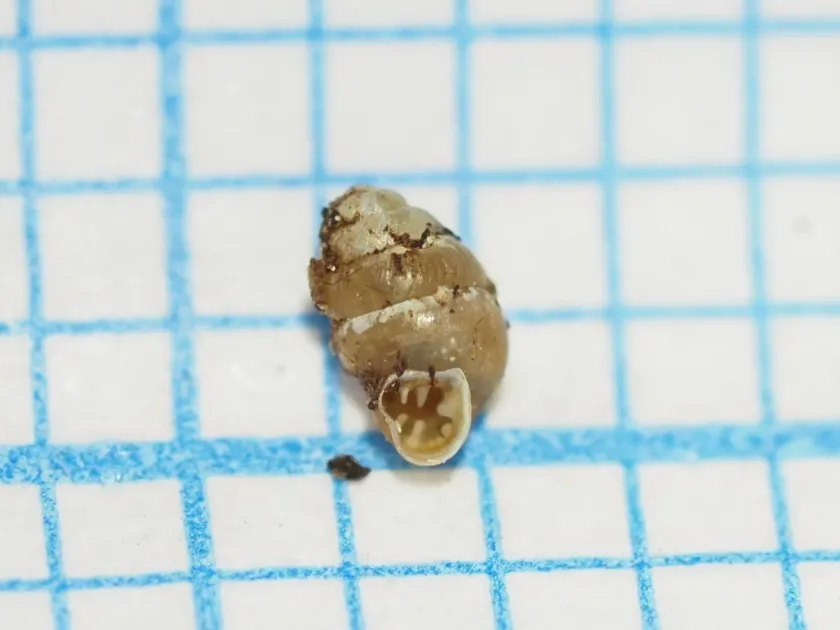
Vertigo pusilla is a minute terrestrial gastropod belonging to the family Vertiginidae. The shell of this pest is distinctively dextral, measuring only 2–2.5 mm in height, with a cylindrical shape characterized by prominent tooth-like folds within the aperture.
Visually, the mollusk appears as a tiny dark-brown snail with a glossy shell surface. Due to its extremely small size, it often escapes detection during casual inspections, which frequently leads to delayed treatment of the affected area.
Systematically, this species is classified under the order Stylommatophora. Unlike larger slugs, this species prefers moist, shaded habitats, hiding under leaf litter, debris, or at the base of plant stems.
The activity of the snail is directly correlated with environmental humidity. During dry spells, the mollusks enter a state of dormancy, attaching themselves firmly to the substrate, which makes them highly resilient to adverse weather conditions.
The sensory organs of the mollusk enable efficient navigation through dense vegetation. It avoids direct sunlight and remains active primarily during the night or under overcast weather conditions.
What it damages
This species is a polyphagous pest capable of damaging a wide variety of cultivated plants. The primary damage is inflicted on young vegetable seedlings, ornamental plants, and berries, where the snail rasps the epidermis of the leaves.
In high humidity and dense planting conditions, Vertigo pusilla can cause significant damage to the lower leaves of cabbage, lettuce, and other leafy vegetables. Damage appears as small pin-sized holes or superficial necrotic spots on the leaf surface.
In addition to physical damage, the pest contributes to the spread of fungal and bacterial infections. The minute wounds left by the mollusk's radula on stems and leaves serve as entry points for various plant pathogens.
Significant losses are observed in greenhouses and hoop houses, where the microclimate is ideal for the mollusk's reproduction. In these environments, they can quickly destroy delicate seedlings by feeding on tender plant tissues.
Ornamental crops also suffer from Vertigo pusilla activity, leading to loss of marketability. Damaged leaves become deformed, and the overall growth and development of the root system are slowed due to impaired photosynthesis.
When it appears
The peak activity of Vertigo pusilla occurs during moist spring and autumn months. The mollusks begin to emerge and feed once ambient temperatures consistently exceed +10°C.
During the summer, when heat and drought conditions prevail, the activity of the pest significantly decreases. They retreat into the deeper soil layers, under stones, or beneath dense leaf mulch where moisture levels remain sufficient for survival.
Reproduction takes place throughout the entire growing season, with population peaks observed in late summer and early autumn. Optimal soil and air humidity stimulate the population to emerge onto the surface.
Adults and eggs overwinter in soil crevices or under plant debris. With the arrival of the first warm days in spring, the population resumes feeding, quickly colonizing young crop plantings.
Population density is strongly dependent on agricultural practices. Gardens that undergo regular sanitation, weed control, and debris removal experience significantly fewer outbreaks of this species.
Signs of infestation
The first sign of an infestation is the presence of characteristic small perforations on leaves. Unlike caterpillars, this mollusk leaves faint, shiny mucous trails on the leaf surface that can be seen upon drying.
The presence of the snails can be confirmed by inspecting the undersides of leaves, especially those touching the soil. During daylight hours, the snails often hide in leaf axils or within small clumps of damp soil.
Monitoring can be improved using traps made of damp burlap or boards placed on the soil surface overnight. In the morning, individuals can be found gathered under these objects seeking shelter from the light.
The presence of a silvery dried film on leaves is reliable evidence of gastropod activity. This trail is particularly visible on darker leaves under morning light conditions.
Sudden wilting of seedlings without apparent root damage may also indicate feeding by these mollusks in the root zone. Regular monitoring of the garden in evening hours allows for the detection of the pest before mass damage occurs.
Control measures
Management of Vertigo pusilla begins with sound cultural practices. Weeding, regular soil cultivation, and the removal of plant debris deprive the mollusks of their necessary breeding sites and shelter.
Mechanical barriers are an effective protective measure. Applying lime, wood ash, or dry sand around garden beds creates a deterrent for the soft-bodied pests, as their bodies are highly sensitive to abrasive and alkaline materials.
Biological control includes encouraging natural predators such as hedgehogs, toads, lizards, and ground beetles. Maintaining an ecological balance in the garden allows for the natural suppression of mollusk populations.
In cases of high pest density, molluscicides based on metaldehyde or iron phosphate may be used. These baits should be applied in areas of snail concentration according to label instructions to avoid harming non-target organisms.
In greenhouse settings, maintaining proper humidity is crucial. Proper ventilation and drip irrigation delivered directly to the root zone reduce the attractiveness of the environment for the snail, limiting its ability to thrive.
Taxonomy
- Latin name
- Vertigo pusilla
- Order
- Molluscs
- Family
- Vertiginidae
- EPPO code
- VRTGPU
Discussion
No discussions yet — be the first.