
Truncatellina
Truncatellina
Description
How to identify
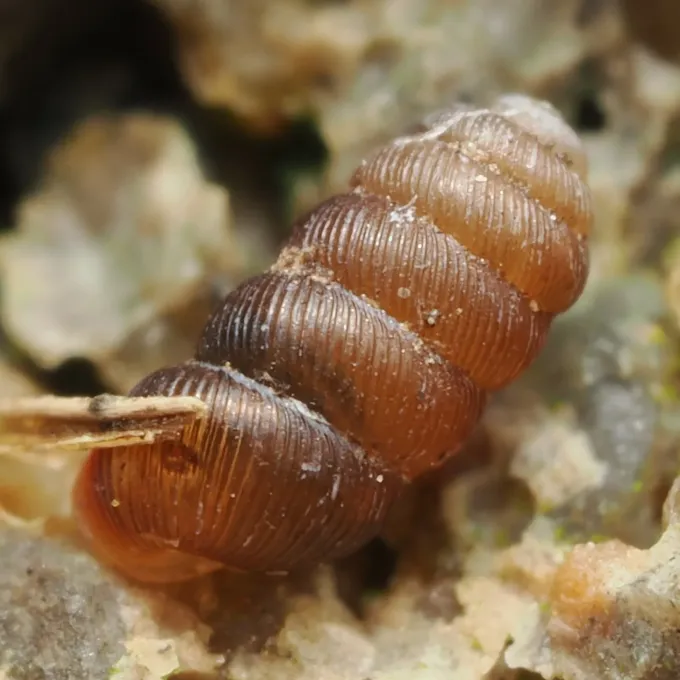
Truncatellina is a genus of minute land snails belonging to the family Vertiginidae. These snails are extremely small, with shells typically ranging from 2 to 3 millimeters in length.
The shells of these mollusks are generally cylindrical or conical with a rounded apex, often exhibiting a horn-colored or brownish hue, which provides excellent camouflage.
They belong to the order Stylommatophora. A defining taxonomic feature of the genus is the presence of specific lamellae or folds within the shell aperture, essential for accurate species identification.
These snails thrive in habitats with moderate moisture and calcium-rich substrates. They are typically elusive, remaining hidden in leaf litter or beneath vegetation to avoid desiccation.
While often part of diverse ecosystems, their presence in high density within agricultural environments can categorize them as localized pests.
What it damages
The primary damage caused by Truncatellina involves feeding on delicate plant tissues, specifically targeting the cotyledons and early true leaves of young seedlings.
These snails create irregular holes in leaf surfaces, which not only stunts the growth of the plants but also leaves them susceptible to secondary infections by bacteria or fungi.
In nursery or greenhouse settings, their feeding can severely damage the stem or crown of the plant, potentially leading to total seedling failure.
High populations can result in significant aesthetic and commercial losses, particularly in vegetable production or ornamental plant nurseries.
Because they are so small, their impact is often overlooked until substantial damage has already occurred, making early detection difficult for farmers.
When it appears
The activity of Truncatellina is highly dependent on humidity levels. Peak activity occurs during wet spring and autumn seasons when moisture is abundant.
During the peak of summer or in drought conditions, these snails enter a state of dormancy, hiding deep within soil crevices or beneath heavy debris to conserve moisture.
In greenhouses, where irrigation is frequent and temperatures are maintained, their development and reproductive cycles can persist year-round.
Reproduction is triggered by increased soil moisture, with snails laying small clutches of eggs in secluded, damp locations.
They overwinter as adults, burrowing into the soil or finding protected niches under decaying vegetation, emerging once conditions become favorable again.
Signs of infestation
Visible signs of an infestation include irregularly shaped holes in the leaves of young crops located near the soil line.
The presence of dried, silvery mucus trails on the soil surface or plant stems is a classic indicator of mollusk presence, even if the pests themselves remain hidden.
Finding tiny shell casings scattered on the soil or underneath leaf debris is a strong indicator of a well-established colony.
Wilting of seedlings without apparent root disease often indicates damage to the crown or hypocotyl, likely caused by these small mollusks feeding.
Close inspection of the underside of leaves during morning hours or after irrigation often reveals the snails themselves, as they are most active during these times.
Control measures
Cultural control is the most effective starting point; this involves removing debris, excess mulch, and weeds that provide refuge for the snails.
Mechanical barriers such as ash, lime, or specialized copper tape can be used around garden beds to deter movement of snails toward the crops.
Molluscicides, such as those containing ferric phosphate, can be used as a targeted control measure if the infestation level reaches an economic threshold.
Optimizing irrigation practices, such as moving from overhead watering to drip irrigation, reduces surface moisture and discourages snail activity.
Promoting a healthy environment for natural predators such as frogs, toads, and carabid beetles can provide effective long-term biological control of the population.
Taxonomy
- Latin name
- Truncatellina
- Order
- Molluscs
- Family
- Vertiginidae
- EPPO code
- TRNCSP
Discussion
No discussions yet — be the first.