
Vertigo
Vertigo
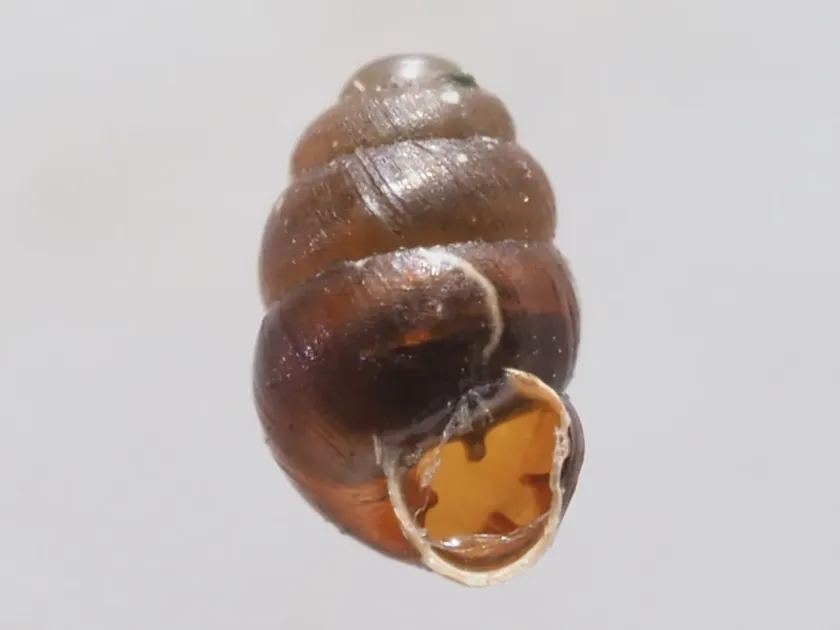
Description
How to identify
The genus Vertigo belongs to the family Vertiginidae, a group of minute land snails known for their extremely small shells.
Adult shells are typically between 1.5 mm and 3 mm in height, featuring a cylindrical or ovate shape often decorated with teeth-like lamellae in the aperture.
Their bodies are generally dark-colored and they possess the ability to retract entirely within their shells during unfavorable environmental conditions.
They inhabit humid environments, including leaf litter, moss, and damp soil, making them elusive to casual observation in agricultural settings.
These mollusks rely on high atmospheric and soil moisture to maintain their vital functions, which restricts their activity to damp microclimates.
What it damages
Vertigo snails cause damage by rasping the surface of leaves and tender stems with their radula, often targeting seedlings in greenhouses.
On young plants, they create irregular holes and pitted surface areas, which can stunt plant growth and reduce overall vigor during the early growth stages.
While they rarely consume whole leaves, the repeated grazing causes mechanical injury that makes the plant susceptible to secondary pathogen infection.
Large populations on leafy greens or ornamental foliage can significantly diminish the aesthetic and market value of the crop.
Their feeding activity is most destructive when plants are in their fragile, early vegetative stages, leading to potential seedling loss.
When it appears
Activity levels of Vertigo are highly correlated with precipitation patterns and environmental humidity throughout the growing season.
Springtime, with its frequent rainfall and mild temperatures, marks the start of their most active feeding and reproductive cycle.
During the summer, if conditions become dry, they aestivate by burying themselves in soil or hiding within protected, damp organic debris.
Fall rains typically stimulate a second period of activity as temperatures drop and the microclimate becomes more favorable again.
They overwinter in sheltered locations such as leaf litter, cracks in the soil, or dense weed clusters to survive frost periods.
Signs of infestation
The most common sign of infestation is the presence of silvery, dried mucus trails left behind as the snails move across the plant surfaces.
Feeding marks appear as shallow pits or small holes in the epidermis, often concentrated on the underside of leaves or near the base of the plant.
Observing small, empty shells in the soil near the root zone during damp mornings confirms the presence of these tiny mollusks.
Visible stress or wilting in seedlings that do not have obvious root issues might suggest nocturnal feeding by these land snails.
- Silvery slime trails on foliage and containers.
- Small, irregular perforations in young leaves.
- Discovery of minute shells in moist soil or mulch.
Control measures
Cultural control is the most effective approach, focusing on reducing humidity and removing hiding spots such as weeds and debris.
Implementing proper spacing between plants ensures better air circulation, which helps keep the soil surface drier and less attractive to snails.
Creating physical barriers using dry substrates like wood ash or crushed shells can deter their movement toward susceptible plants.
If population densities are high, molluscicide baits based on iron phosphate can be applied strategically to reduce the infestation without harming non-target organisms.
Monitoring should be conducted during evening hours or damp days when these snails are most active and likely to be found on the plants.
Taxonomy
- Latin name
- Vertigo
- Order
- Molluscs
- Family
- Vertiginidae
- EPPO code
- VRTGSP
Discussion
No discussions yet — be the first.